
Catalogue Search | MBRL


Are you sure you want to remove the book from the shelf?

{{itemTitle}}
4
result(s) for
"Number concept Popular works."
Sort by:

Making numbers count : the art and science of communicating numbers
\"Understanding numbers is essential -- but humans aren't built to understand them. Chip Heath outlines specific principles that reveal how to translate a number into our brain's language. This book is filled with examples of extreme number makeovers, vivid before-and-after examples that take a dry number and present it in a way that people click in and say \"Wow, now I get it!\" This book will help math-lovers and math-haters alike translate the numbers that animate our world - allowing us to bring more data, more naturally, into decisions in our schools, our workplaces, and our society.\"-- Publisher's description.
Book

Misconceptions of Students in Learning Mathematics at Primary Level
The study was designed to identify the misconceptions of the students in learning mathematics at primary level. For this, curriculum of mathematics from class I to IV was used to develop a test inclusive of all the conceptual areas of mathematics from class I to Class IV. The curriculum of class V was left out because the sample students were planned to take into the study who were studying in class V. Twelve sample schools from Faisalabad district were selected randomly equal in number from all the three tehsils of Faisalabad. Test was conducted personally by the researchers. There were eight conceptual areas determined and included in the test viz.
Journal Article
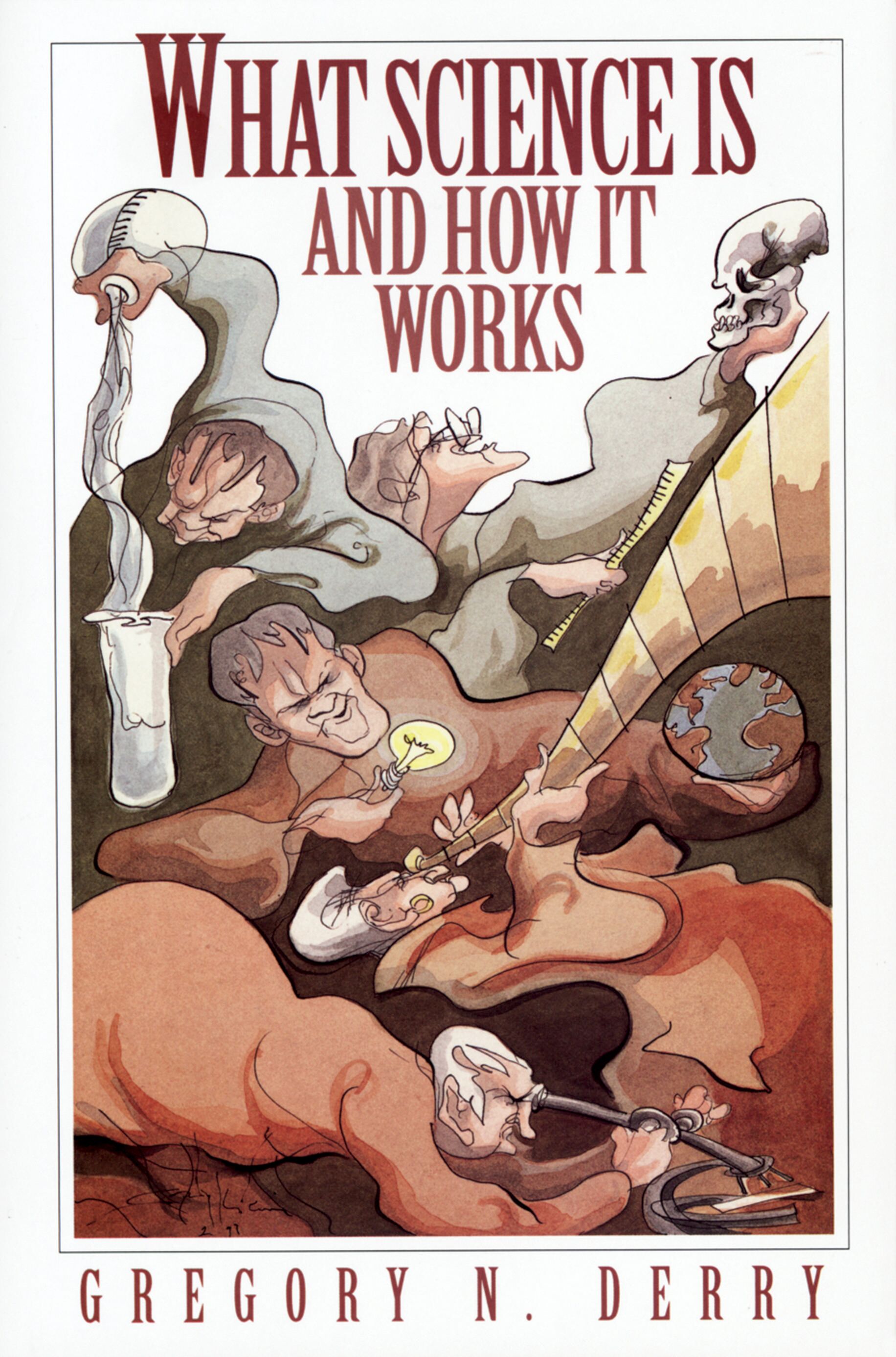
What Science Is and How It Works
How does a scientist go about solving problems? How do scientific discoveries happen? Why are cold fusion and parapsychology different from mainstream science? What is a scientific worldview? In this lively and wide-ranging book, Gregory Derry talks about these and other questions as he introduces the reader to the process of scientific thinking. From the discovery of X rays and semiconductors to the argument for continental drift to the invention of the smallpox vaccine, scientific work has proceeded through honest observation, critical reasoning, and sometimes just plain luck. Derry starts out with historical examples, leading readers through the events, experiments, blind alleys, and thoughts of scientists in the midst of discovery and invention. Readers at all levels will come away with an enriched appreciation of how science operates and how it connects with our daily lives.
An especially valuable feature of this book is the actual demonstration of scientific reasoning. Derry shows how scientists use a small number of powerful yet simple methods--symmetry, scaling, linearity, and feedback, for example--to construct realistic models that describe a number of diverse real-life problems, such as drug uptake in the body, the inner workings of atoms, and the laws of heredity.
Science involves a particular way of thinking about the world, and Derry shows the reader that a scientific viewpoint can benefit most personal philosophies and fields of study. With an eye to both the power and limits of science, he explores the relationships between science and topics such as religion, ethics, and philosophy. By tackling the subject of science from all angles, including the nuts and bolts of the trade as well as its place in the overall scheme of life, the book provides a perfect place to start thinking like a scientist.
eBook

Gaumont Hitchcock
This chapter contains sections titled:
Studio Contrasts
Pre‐Gaumont Hitchcock Films
The Sextet: Gaumont British
The Sextet: Narrative Structures
The Sextet: Visual Style
The Sextet: Heroes and Couples
Generic Contexts: Literature and Cinema
“Gaumont Hitchcock” and Hitchcock
Works Cited
Book Chapter