
Catalogue Search | MBRL


Are you sure you want to remove the book from the shelf?

{{itemTitle}}
16
result(s) for
"Numidia"
Sort by:
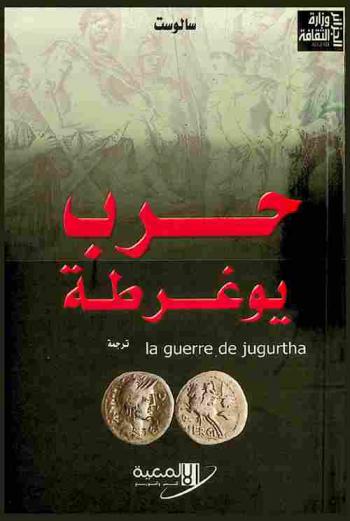
حرب يوغرطة
كتاب حرب يوغرطة هو كتاب تاريخي مهم، تم تألفه ونشره سنة 41 ق. م، ويحتوي على مقدمة فلسفية عميقة، ثم يسرد تاريخ القائد والملك الأمازيغي يوغرطة، الذي يسمى يوغر تنب الأمازيغية، ثم وقائع الحرب التي دارت بنه وببن روما، ويعترف المؤرخ الروماني سالوست في هذا الكتاب بعظمة هذا الملك الأمازيغي الشاب الذي أظهر مقاومة بطولة في مقاتلة الرومان لم يبديها أي قائد في عصره ضد إمبراطورية الرومان.
Book

Vermina y la herencia masesilia de Sífax. Nuevo enfoque y perspectivas
El presente estudio aborda la figura de Vermina, hijo de Sífax y último representante del linaje masesilio, a partir de las fuentes literarias, numismáticas y arqueológicas disponibles. Su reinado, tradicionalmente eclipsado por el de Masinisa, revela una compleja estrategia de legitimación política y continuidad dinástica tras la derrota de su padre. El análisis de sus acuñaciones y su política diplomática sugiere un proceso de adaptación consciente a los modelos helenísticos y a la diplomacia romana, reflejando al mismo tiempo la pervivencia de una identidad regia númida autónoma. La investigación examina también la figura de Arcobarzanes, nieto de Sífax, como posible continuador de la herencia masesilia, y propone que el poder de Vermina prolongó la existencia del reino occidental númida más allá de lo asumido por la investigación actual, evidenciando la integración simbólica y política del Magreb en las dinámicas mediterráneas del siglo II a.C. El presente estudio aborda la figura de Vermina, hijo de Sífax y último representante del linaje masesilio, a partir de las fuentes literarias, numismáticas y arqueológicas disponibles. Su reinado, tradicionalmente eclipsado por el de Masinisa, revela una compleja estrategia de legitimación política y continuidad dinástica tras la derrota de su padre. El análisis de sus acuñaciones y su política diplomática sugiere un proceso de adaptación consciente a los modelos helenísticos y a la diplomacia romana, reflejando al mismo tiempo la pervivencia de una identidad regia númida autónoma. La investigación examina también la figura de Arcobarzanes, nieto de Sífax, como posible continuador de la herencia masesilia, y propone que el poder de Vermina prolongó la existencia del reino occidental númida más allá de lo asumido por la investigación actual, evidenciando la integración simbólica y política del Magreb en las dinámicas mediterráneas del siglo II a.C. The present study examines the figure of Vermina, son of Syphax and the last representative of the Massylian lineage, drawing on the available literary, numismatic, and archaeological sources. His reign, traditionally overshadowed by that of Masinissa, reveals a complex strategy of political legitimation and dynastic continuity following his father’s defeat. An analysis of his coinage and diplomatic policy suggests a deliberate process of adaptation to Hellenistic models and to Roman diplomacy, while simultaneously reflecting the persistence of an autonomous Numidian royal identity. The research also considers the figure of Arcobarzanes, grandson of Syphax, as a possible continuator of the Massylian heritage, and proposes that Vermina’s power prolonged the existence of the western Numidian kingdom beyond what is generally assumed in current scholarship, demonstrating the symbolic and political integration of the Maghreb into the Mediterranean dynamics of the second century BC. El presente estudio aborda la figura de Vermina, hijo de Sífax y último representante del linaje masesilio, a partir de las fuentes literarias, numismáticas y arqueológicas disponibles. Su reinado, tradicionalmente eclipsado por el de Masinisa, revela una compleja estrategia de legitimación política y continuidad dinástica tras la derrota de su padre. El análisis de sus acuñaciones y su política diplomática sugiere un proceso de adaptación consciente a los modelos helenísticos y a la diplomacia romana, reflejando al mismo tiempo la pervivencia de una identidad regia númida autónoma. La investigación examina también la figura de Arcobarzanes, nieto de Sífax, como posible continuador de la herencia masesilia, y propone que el poder de Vermina prolongó la existencia del reino occidental númida más allá de lo asumido por la investigación actual, evidenciando la integración simbólica y política del Magreb en las dinámicas mediterráneas del siglo II a.C. El presente estudio aborda la figura de Vermina, hijo de Sífax y último representante del linaje masesilio, a partir de las fuentes literarias, numismáticas y arqueológicas disponibles. Su reinado, tradicionalmente eclipsado por el de Masinisa, revela una compleja estrategia de legitimación política y continuidad dinástica tras la derrota de su padre. El análisis de sus acuñaciones y su política diplomática sugiere un proceso de adaptación consciente a los modelos helenísticos y a la diplomacia romana, reflejando al mismo tiempo la pervivencia de una identidad regia númida autónoma. La investigación examina también la figura de Arcobarzanes, nieto de Sífax, como posible continuador de la herencia masesilia, y propone que el poder de Vermina prolongó la existencia del reino occidental númida más allá de lo asumido por la investigación actual, evidenciando la integración simbólica y política del Magreb en las dinámicas mediterráneas del siglo II a.C. El presente estudio aborda la figura de Vermina, hijo de Sífax y último representante del linaje masesilio, a partir de las fuentes literarias, numismáticas y arqueológicas disponibles. Su reinado, tradicionalmente eclipsado por el de Masinisa, revela una compleja estrategia de legitimación política y continuidad dinástica tras la derrota de su padre. El análisis de sus acuñaciones y su política diplomática sugiere un proceso de adaptación consciente a los modelos helenísticos y a la diplomacia romana, reflejando al mismo tiempo la pervivencia de una identidad regia númida autónoma. La investigación examina también la figura de Arcobarzanes, nieto de Sífax, como posible continuador de la herencia masesilia, y propone que el poder de Vermina prolongó la existencia del reino occidental númida más allá de lo asumido por la investigación actual, evidenciando la integración simbólica y política del Magreb en las dinámicas mediterráneas del siglo II a.C. El presente estudio aborda la figura de Vermina, hijo de Sífax y último representante del linaje masesilio, a partir de las fuentes literarias, numismáticas y arqueológicas disponibles. Su reinado, tradicionalmente eclipsado por el de Masinisa, revela una compleja estrategia de legitimación política y continuidad dinástica tras la derrota de su padre. El análisis de sus acuñaciones y su política diplomática sugiere un proceso de adaptación consciente a los modelos helenísticos y a la diplomacia romana, reflejando al mismo tiempo la pervivencia de una identidad regia númida autónoma. La investigación examina también la figura de Arcobarzanes, nieto de Sífax, como posible continuador de la herencia masesilia, y propone que el poder de Vermina prolongó la existencia del reino occidental númida más allá de lo asumido por la investigación actual, evidenciando la integración simbólica y política del Magreb en las dinámicas mediterráneas del siglo II a.C.
Journal Article

Analysis of taxonomic distinctness and priority conservation areas as a basis for heritage enhancement of floristic diversity: the case of the ‘hotspot’ of the islands of Numidia (North-eastern Algeria)
The identification of priority conservation areas (PCA) plays an important role in biodiversity conservation, but uncertainties create challenges for conservation planning. The objective was to test a method based on 'taxonomic distinctness' (TD) and to identify PCA to quantify the heritage value of a territory and establish the most appropriate conservation measures. The researchers performed a systematic and phytogeographical analysis of ten islands in northeastern Algeria, a biological hotspot with heterogeneous ecosystem types and subject to socio-economic pressures. The biological diversity represented by 223 species in these environments reflects a high rate of endemicity (13%).
Journal Article

Distribution and Conservation Status of European Pond Turtles Emys orbicularis (L., 1758) in Algeria
The Maghreb population of Emys orbicularis extends over a narrow strip of northern Morocco, Algeria, and Tunisia. Our understanding of the presence of this turtle in Algeria, in contrast to Morocco and Tunisia, is quite limited and frequently rests on a few small-scale studies or even reports from a century ago. The present study provides the first complete data on the distribution and level of threat of this species in Algeria. A field survey was carried out based on the data obtained from scattered local reports and available studies that suggested the presence of the species in Algerian wetlands. Data on climatic and habitat preferences, the geographic elevation of inhabited localities, and their conservation status were collected. A total of 45 wetlands were inhabited by E. orbicularis, of which 40 were part of a well-interconnected eastern metapopulation, joined by an extensive hydrographic network. In some places, the species has persisted for over 130 years in the same wetland complex. However, the five remaining populations living in central North Algeria are fragmented, highly isolated, and therefore more threatened. With a few exceptions, turtles inhabit lowlands below 100 m above sea level. Detected sub-populations inhabit mostly stagnant waters (60%), sometimes dams and lakes (24%), and sporadically also slow-moving water bodies (16%). Altogether, the Algerian distribution of E. orbicularis extends to a total area of 2900 km2, a 40 km wide strip with a length of 490 km west of the Tunisian border. Although restricted to this narrow strip, the persistence of numerous populations in Algeria, especially in Numidia, testifies to their relatively better conservation status. In order to ensure the sustainability of these efforts, follow-up and monitoring activities should be suggested, with special attention paid to highly isolated populations to maintain their long-term viability.
Journal Article

Ethnomedicine exploration of medicinal plants: Fumaria capreolata L. and Calendula suffruticosa Vahl in Numidia (north-eastern Algeria)
Our ethnobotanical study of medicinal plants native to Numidia aimed to investigate traditional therapeutic and cosmetic uses reported by the local population, traditional practitioners, and herbalists of this region. An ethnobotanical survey was carried out using questionnaires on
Vahl (shrub-like marigold) and
L. (climbing fumitory) in 2017-2018 in 5 cities of north-eastern Algeria. We studied the profile of 100 respondents, their knowledge of local plant names, therapeutic uses, the parts used, and the mode of use of each plant. The data collected show 62.0% of local people use these plants for several reasons, while 38% use it only for therapeutic purposes. The aerial part is the most usable for both species, especially the flower for marigold (82.0% of those who use it). According to the surveys conducted, it appears that the local communities in these cities make use of various medical properties of marigold: anti-inflammatory (37.0%), antibacterial (16.2%), against oedema (8.6%), anti-ulcer (6.1%), sedative, cholesterol-lowering (3.4%), antihypertensive, i.e. lowering blood pressure (2.6%). In contrast, the use of fumitory is rare, due to its toxicity in larger doses. In most cases, the method of administration of the remedies varies, e.g. as an infusion (72.1% of those who use fumitory), decoction (10.0%), compresses (10.8%), cream or ointment based on decoction (7.0%). This study shows the great importance of medicinal plants in the local traditional medicine of north-eastern Algeria.
Journal Article

La frontière de l’Afrique romaine à l’époque tardive: Le cas emblématique de Tobna et du limes Tubuniensis (Notitia Dignitatum, Occ., 25.25)
In Southern Numidia, the site of Tobna and its region constitute a remarkable field of research for the study of the Roman frontier in Africa. The remains of linear structures discovered in the vinicity of Tobna, located at the provincial border, have been interpreted in light of the limes Tubuniensis as mentioned by the Notitia Dignitatum (Occ., 25.25). This explanation fits the usual model of the Roman frontier at the end of antiquity, commonly designated as limes, whose nature was also considered to be determined by defensive considerations as deduced from the written testimonies and archaeological remains. This paper studies each of these elements to consider their implications for the organization of the Roman border, and its regional specificities.
Journal Article

Sobre la introducción de la arquitectura palacial en el Mediterráneo Occidental
El palacio es a la vez un tipo de edificio y una alegoría política. La definitiva importación al Mediterráneo Occidental de este tipo arquitectónico y de su lenguaje simbólico se consumó al tiempo que la República romana se transformaba en un Imperio. Pero antes de estos hechos hubo otras experimentaciones con elementos propios de la arquitectura palacial, tanto en ámbito público como privado, en Italia, Sicilia, en el Maghreb occidental y en la península ibérica. En este artículo se propone una definición razonada del término palacio que sirva para su uso analítico, se discute sobre el rol jugado por las grandes poleis mediterráneas, en especial Cartago, en la difusión de estos edificios y se aboga por considerar a las monarquías norteafricanas, aún no suficientemente atendidas por la investigación, como importantes vectores de transmisión de este tipo de arquitectura en el Mediterráneo occidental.
Journal Article

Through the Eye of a Needle
Jesus taught his followers that it is easier for a camel to go through the eye of a needle than for a rich man to enter heaven. Yet by the fall of Rome, the church was becoming rich beyond measure.Through the Eye of a Needleis a sweeping intellectual and social history of the vexing problem of wealth in Christianity in the waning days of the Roman Empire, written by the world's foremost scholar of late antiquity.
Peter Brown examines the rise of the church through the lens of money and the challenges it posed to an institution that espoused the virtue of poverty and called avarice the root of all evil. Drawing on the writings of major Christian thinkers such as Augustine, Ambrose, and Jerome, Brown examines the controversies and changing attitudes toward money caused by the influx of new wealth into church coffers, and describes the spectacular acts of divestment by rich donors and their growing influence in an empire beset with crisis. He shows how the use of wealth for the care of the poor competed with older forms of philanthropy deeply rooted in the Roman world, and sheds light on the ordinary people who gave away their money in hopes of treasure in heaven.
Through the Eye of a Needlechallenges the widely held notion that Christianity's growing wealth sapped Rome of its ability to resist the barbarian invasions, and offers a fresh perspective on the social history of the church in late antiquity.
eBook

The role of temporary ponds as foraging sites for glossy ibis (Plegadis falcinellus) during the non-breeding season in Numidia, Northeast Algeria
Aquatic macroinvertebrates are a major link in food webs in temporary ponds and useful indicators of wetlands’ecological integrity. We investigated the available trophic resources and the physicochemical quality of 14 wetlands frequented by glossy ibis (Plegadis falcinellus), a resident species with an increasing population in Numidia, northeast Algeria. Sampling of temporary ponds was carried out in winter and early spring, prior to the Glossy Ibis’ breeding period. Analyses indicated that the studied waterbodies contained a rich and diversified aquatic community, dominated mainly by insects and molluscs and characterized by a spatio-temporal change in composition and abundance, reflecting a spatial heterogeneity and a temporal niche partitioning of various members of the aquatic community. Furthermore, the density of Glossy Ibis in foraging areas changed seasonally and declined significantly with the distance to the nearest roost. In the context of climate change and human encroachment, the close dependence of Glossy Ibis and other waders on a matrix of secure roosts and temporary ponds during the nonbreeding season puts them in jeopardy unless these imperilled but generally unprotected habitats are actively managed.
Journal Article

Poder Real Africano. Propaganda y legitimación de Juba I (ca. 60-46 a. C.) a través de sus emisiones helenísticas
Este artículo tiene como objetivo presentar un estado de la cuestión acerca de las acuñaciones monetarias del rey númida Juba I. Históricamente nos encontramos ante la Segunda Guerra Civil Romana mantenida entre Pompeyo y Julio César (49-45 a. C.), donde Juba I apoya al «bando pompeyano». Las monedas de Juba I son producto de dicho acontecimiento y tienen su explicación en el pago de tropas contratadas. Además, las leyendas monetarias se insertan dentro de la propaganda e inciden en la posterior legitimación del trono númida, en manos de Juba I.
Journal Article