
Catalogue Search | MBRL


Are you sure you want to remove the book from the shelf?

{{itemTitle}}
1,016
result(s) for
"Nunavut"
Sort by:

Ukkusiksalik : the people's story
\"Ukkusiksalik, now a national park, was for millennia the territory of Northern First Nations people, with relics dating back to 500 BC. This book tells the story of the breathtaking pocket wilderness, using oral testimony from the last Inuit elders to have lived there, and accounts from explorers, whalers, missionaries, Mounties, and traders.\"-- Provided by publisher.
Book

Uqalurait
Thousands of quotes from over three hundred Inuit elders about their culture and customs cover all aspects of traditional life, from raising children to hunting, the land, and architecture, to belief systems, cosmology, and the Inuit's remarkable ability to make do with what they had. Given the recent creation of Nunavut and current attention to the Arctic due to climate change, Uqalurait is a timely source of insight from a people whose values of sharing and respect for the environment have helped them to live for centuries at the northern limit of the inhabitable world.
eBook

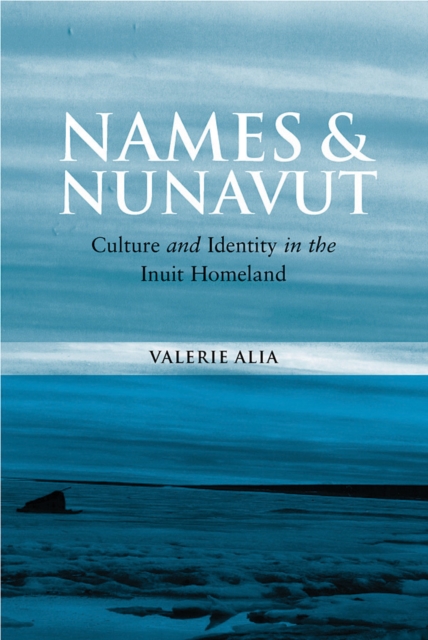
Names and Nunavut
On the surface, naming is simply a way to classify people and their environments. The premise of this study is that it is much more — a form of social control, a political activity, a key to identity maintenance and transformation. Governments legislate and regulate naming; people fight to take, keep, or change their names. A name change can indicate subjugation or liberation, depending on the circumstances. But it always signifies a change in power relations. Since the late 1970s, the author has looked at naming and renaming, cross-culturally and internationally, with particular attention to the effects of colonisation and liberation. The experience of Inuit in Canada is an example of both. Colonisation is only part of the Nunavut experience. Contrary to the dire predictions of cultural genocide theorists, Inuit culture — particularly traditional naming — has remained extremely strong, and is in the midst of a renaissance. Here is a ground-breaking study by the founder of the discipline of political onomastics.
eBook

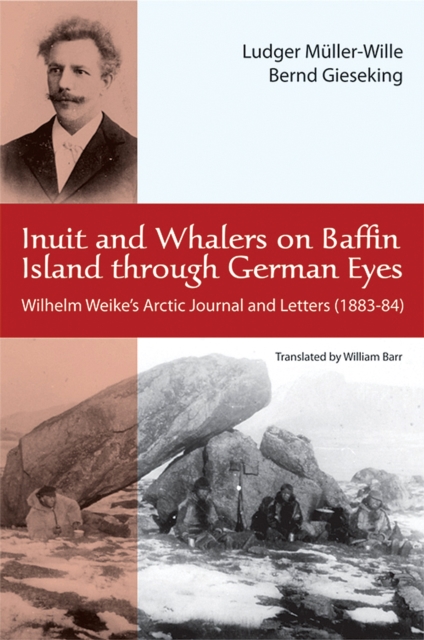
Inuit and Whalers on Baffin Island Through German Eyes
Told from an ordinary man's perspective, these are the journal and letters of Wilhelm Weike as he accompanied Franz Boas—the father of modern anthropology—on his journey to the arctic from 1883 to 1884. This extraordinary document of early arctic history provides a plain, direct view of the Inuit and the whalers in their arctic environment at the end of the 19th century. With invaluable contextual and complementary information, this book contributes key insights during the recent wave of scientific assessment of Franz Boas's legacy in all social sciences.
eBook

Made in Nunavut : an experiment in decentralized government
\"After years of dreams and negotiations, the territory of Nunavut was established in Canada's Eastern and Central Arctic on April 1, 1999. Made in Nunavut provides the first comprehensive account of the planning that led to this remarkable achievement. The authors, leading authorities on the politics of the Canadian Arctic, pay particular attention to the Government of Nunavut's innovative organizational design--especially the decentralization of offices and functions (normally located in a capital) to communities across the territory. They explain how this new government was designed and implemented, and critically assess whether decentralization has delivered \"better\" government for Nunavut.\"-- Provided by publisher.
Book
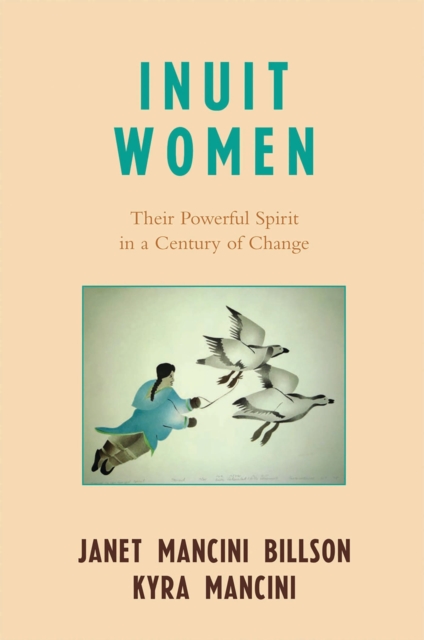
Inuit women : their powerful spirit in a century of change
Inuit Women is the definitive study of the Inuit during a time of rapid change.Based on fourteen years of research and fieldwork, this analysis focuses on the challenges facing Inuit women as they enter the twenty-first century.
eBook

Paddlenorth : adventure, resilience, and renewal in the Arctic wild
Tells the story of Jennifer Kingsley's 54-day paddling adventure on the Back River, in the northern wilderness, as she and her five companions battle raging winds, impenetratble sea ice, and treacherous rapids.
Book

Names and Nunavut
On the surface, naming is simply a way to classify people and their environments. The premise of this study is that it is much more - a form of social control, a political activity, a key to identity maintenance and transformation. Governments legislate and regulate naming; people fight to take, keep, or change their names. A name change can indicate subjugation or liberation, depending on the circumstances. But it always signifies a change in power relations. Since the late 1970s, the author has looked at naming and renaming, cross-culturally and internationally, with particular attention to the effects of colonisation and liberation. The experience of Inuit in Canada is an example of both. Colonisation is only part of the Nunavut experience. Contrary to the dire predictions of cultural genocide theorists, Inuit culture - particularly traditional naming - has remained extremely strong, and is in the midst of a renaissance. Here is a ground-breaking study by the founder of the discipline of political onomastics.
eBook