
Catalogue Search | MBRL


Are you sure you want to remove the book from the shelf?

{{itemTitle}}
30,491
result(s) for
"Nursing Research - methods"
Sort by:
Qualitative research in nursing and healthcare
Qualitative Research in Nursing and Healthcare is an invaluable resource for those who carry out qualitative research in the healthcare arena. It is intended to assist: Professionals and academics in the healthcare field who undertake or teach research in clinical or educational settings; Postgraduates who are undertaking qualitative research and want to revise qualitative research approaches and procedures before going on to more specialist texts; and Undergraduates in their last year who wish to learn about qualitative perspectives or carry out a project using these approaches. Fully updated from the earlier editions by Holloway and Wheeler, it reflects recent developments in nursing research. This new edition provides clear explanations of abstract ideas in qualitative research as well as practical procedures. Structured into four sections, the book looks at the initial stages, methods of data collection, qualitative approaches and analysis of collected data. It also contains a chapter on writing up and publishing qualitative research. With applied and practical examples throughout, Qualitative Research in Nursing and Healthcare is essential reading for those who are looking for a comprehensive introduction to qualitative research.
eBook

The outcome and cost-effectiveness of nurse-led care in people with rheumatoid arthritis: a multicentre randomised controlled trial
Objective To determine the clinical effectiveness and cost-effectiveness of nurse-led care (NLC) for people with rheumatoid arthritis (RA). Methods In a multicentre pragmatic randomised controlled trial, the assessment of clinical effects followed a non-inferiority design, while patient satisfaction and cost assessments followed a superiority design. Participants were 181 adults with RA randomly assigned to either NLC or rheumatologist-led care (RLC), both arms carrying out their normal practice. The primary outcome was the disease activity score (DAS28) assessed at baseline, weeks 13, 26, 39 and 52; the non-inferiority margin being DAS28 change of 0.6. Mean differences between the groups were estimated controlling for covariates following per-protocol (PP) and intention-to-treat (ITT) strategies. The economic evaluation (NHS and healthcare perspectives) estimated cost relative to change in DAS28 and quality-adjusted life-years (QALY) derived from EQ5D. Results Demographics and baseline characteristics of patients under NLC (n=91) were comparable to those under RLC (n=90). Overall baseline-adjusted difference in DAS28 mean change (95% CI) for RLC minus NLC was −0.31 (−0.63 to 0.02) for PP and -0.15 (−0.45 to 0.14) for ITT analyses. Mean difference in healthcare cost (RLC minus NLC) was £710 (−£352, £1773) and −£128 (−£1263, £1006) for PP and ITT analyses, respectively. NLC was more cost-effective with respect to cost and DAS28, but not in relation to QALY utility scores. In all secondary outcomes, significance was met for non-inferiority of NLC. NLC had higher ‘general satisfaction’ scores than RLC in week 26. Conclusions The results provide robust evidence to support non-inferiority of NLC in the management of RA. Trial registration ISRCTN29803766
Journal Article
Routledge International Handbook of Qualitative Nursing Research
Qualitative research, once on the fringes, now plays a central part in advancing nursing and midwifery knowledge, contributing to the development of the evidence base for healthcare practice. Divided into four parts, this authoritative handbook contains over forty chapters on the state of the art and science of qualitative research in nursing.
The first part begins by addressing the significance of qualitative inquiry to the development of nursing knowledge, and then goes on to explore in depth programs of qualitative nursing research. The second section focuses on a wide range of core qualitative methods, from descriptive phenomenology, through to formal grounded theory and to ethnography, and narrative research. The third section highlights key issues and controversies in contemporary qualitative nursing research, including discussion of ethical and political issues, evidence-based practice and Internet research. The final section takes a unique look at qualitative nursing research as it is practiced throughout the world with chapters on countries and regions from the UK and Europe, North America, Australasia, Latin America, to Japan, China, and Korea.
With an international selection of established scholars contributing, this is an essential overview and will help to propel qualitative research in nursing well into the twenty-first century. It is an invaluable reference for all nursing researchers.
eBook

Development and Psychometric Testing of a Tool to Measure Missed Nursing Care
Background: In a qualitative study, medical-surgical and intensive care staff nurses reported that they did not complete a significant amount of nursing care on regular basis. Thus, it was determined that a quantitative tool was needed to measure the amount and type of missed nursing care and the reasons for missing care. Objective: The authors report the results of a psychometric evaluation of this tool (The Missed Nursing Care Survey [MISSCARE Survey]) to measure missed nursing care (part A) and the reasons for missed nursing care (part B). Study Methods: Two studies were conducted—study 1 (n = 459) and study 2 (n = 639). A sample of staff nurses was drawn from 35 medical-surgical, rehabilitation, and intensive care patient units in 4 acute care hospitals. Results: Acceptability was high, with 85% of the respondents answering all items on the survey. Factor analysis with Varimax rotation resulted in a 3-factor solution for part 2 (communication, labor resources, and material resources). Cronbach α values ranged from 0.64 to 0.86. Confirmatory factor analysis demonstrated a good fit of the data. Using a contrasting group approach, a comparison of nurse's perceptions of missed care on intensive care units versus rehabilitation units resulted, as hypothesized, in a significantly lower amount of missed care on intensive care units. Pearson correlation coefficient on a test-retest of the same subjects yielded a value of 0.87 on part A and 0.86 on part B. Conclusion: Although further validation of the MISSCARE Survey is needed, current evidence demonstrates that the tool meets stringent psychometric standards.
Journal Article
Internet for nursing research
This book is a resource for using the internet as a tool in all aspects of nursing research--conducting it, teaching it, and using it. From searching online databases to creating surveys and recruiting research subjects online, the internet opens new possibilities in the research process, as well as new problems. Experienced researchers describe internet-based research methods, information on online methods for teaching research, and accessing the research of others. The appendixes include samples of existing research projects that use internet-based methodologies, as well as a listing of online resources for researchers.
eBook
Scholarly inquiry and the DNP capstone
\"This wonderful and informative resource provides a definitive base of information for those engaged in clinical inquiry.It not only presents the information in a systematic format, it also provides specific examples of projects that have been completed by advanced practice nurses.\" Score: 100, 5 Stars.
eBook
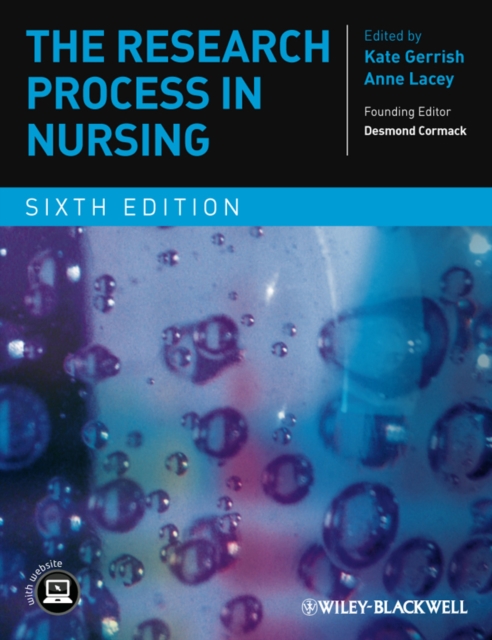
The research process in nursing
'The perfect text for any health care professional who wishes to gain a sound understanding of research...This text succeeds where others fail in terms of the thoroughness of the research process and the accessible style in which the material is presented.
eBook

The use of focused ethnography in nursing research
To provide an overview of the relevance and strengths of focused ethnography in nursing research. The paper provides descriptions of focused ethnography and discusses using exemplars to show how focused ethnographies can enhance and understand nursing practice.
Orthodox ethnographic approaches may not always be suitable or desirable for research in diverse nursing contexts. Focused ethnography has emerged as a promising method for applying ethnography to a distinct issue or shared experience in cultures or sub-cultures and in specific settings, rather than throughout entire communities. Unfortunately, there is limited guidance on using focused ethnography, particularly as applied to nursing research.
Research studies performed by nurses using focused ethnography are summarised to show how they fulfilled three main purposes of the genre in nursing research. Additional citations are provided to help demonstrate the versatility of focused ethnography in exploring distinct problems in a specific context in different populations and groups of people.
The unique role that nurses play in health care, coupled with their skills in enquiry, can contribute to the further development of the discipline. Focused ethnography offers an opportunity to gain a better understanding and appreciation of nursing as a profession, and the role it plays in society.
Focused ethnography has emerged as a relevant research methodology that can be used by nurse researchers to understand specific societal issues that affect different facets of nursing practice.
As nurse researchers endeavour to understand experiences in light of their health and life situations, focused ethnography enables them to understand the interrelationship between people and their environments in the society in which they live.
Journal Article
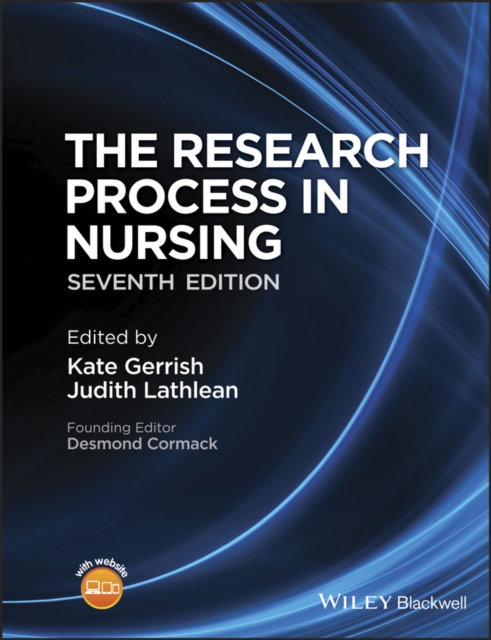
The research process in nursing
Comprehensive and thorough in scope, The Research Process in Nursing 7th edition provides everything you could want to know about research methods. This established textbook reflects the significant advances in nursing research and the importance of evidence-based practice, and provides an invaluable resource for both the novice and the more experienced researcher.
It includes practical information and advice on:
* How to find and critique the evidence
* How to choose the right approach
* How to collect data
* How to make sense of the data
* How to put research into practice
Special features:
* A clear, explicit and easy to understand text which links theory with practical steps in the research process.
* Examples provided allow the reader to apply a variety of research concepts to theoretical learning and professional practice.
* Incorporates chapters, research examples, and policy from a range of international countries, including Canada, Australia, USA and Hong Kong.
* Provides detailed discussions around each example, which clearly link theory with practice
* Easy to read for novice researchers and undergraduate nursing students, but at the same time provides sufficient depth and detail to be of value to experienced researchers and practitioners.
eBook
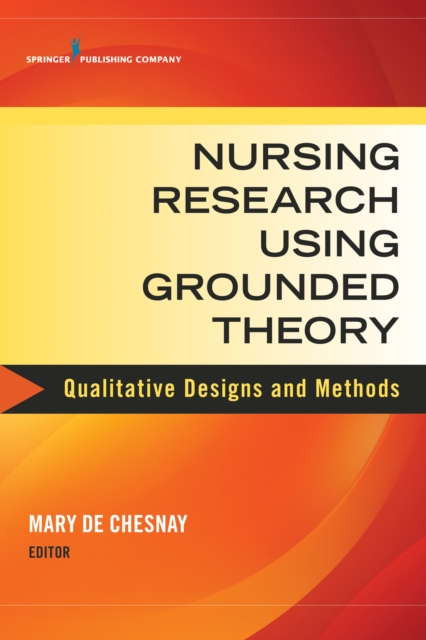
Nursing research using grounded theory
Grounded theory, often considered the parent of all qualitative research, is a complex approach used to develop theory about a phenomenon rooted in observation of empirical data.Widely used in nursing, grounded theory enables researchers to apply what they learn from interviewees to a wider client population.
eBook