
Catalogue Search | MBRL


Are you sure you want to remove the book from the shelf?

{{itemTitle}}
5,956
result(s) for
"Nutrition Processes."
Sort by:


Dietary Reference Intakes for Water, Potassium, Sodium, Chloride, and Sulfate
Dietary Reference Intakes
for Water, Potassium, Sodium, Chloride, and Sulfate
The Dietary Reference Intakes (DRIs) are quantitative estimates of nutrient
intakes to be used for planning and assessing diets for healthy people. This
new report, the sixth in a series of reports presenting dietary reference values
for the intakes of nutrients by Americans and Canadians, establishes
nutrient recommendations on water, potassium, and salt for health maintenance
and the reduction of chronic disease risk.
Dietary Reference Intakes for Water, Potassium, Sodium, Chloride, and Sulfate
discusses in detail the role of water, potassium, salt, chloride, and sulfate in
human physiology and health. The major findings in this book include the
establishment of Adequate Intakes for total water (drinking water, beverages,
and food), potassium, sodium, and chloride and the establishment of
Tolerable Upper Intake levels for sodium and chloride. The book makes
research recommendations for information needed to advance the understanding
of human requirements for water and electrolytes, as well as
adverse effects associated with the intake of excessive amounts of water,
sodium, chloride, potassium, and sulfate. This book will be an invaluable
reference for nutritionists, nutrition researchers, and food manufacturers.
eBook

The nature of nutrition
Nutrition has long been considered more the domain of medicine and agriculture than of the biological sciences, yet it touches and shapes all aspects of the natural world. The need for nutrients determines whether wild animals thrive, how populations evolve and decline, and how ecological communities are structured.The Nature of Nutritionis the first book to address nutrition's enormously complex role in biology, both at the level of individual organisms and in their broader ecological interactions.
Stephen Simpson and David Raubenheimer provide a comprehensive theoretical approach to the analysis of nutrition--the Geometric Framework. They show how it can help us to understand the links between nutrition and the biology of individual animals, including the physiological mechanisms that determine the nutritional interactions of the animal with its environment, and the consequences of these interactions in terms of health, immune responses, and lifespan. Simpson and Raubenheimer explain how these effects translate into the collective behavior of groups and societies, and in turn influence food webs and the structure of ecosystems. Then they demonstrate how the Geometric Framework can be used to tackle issues in applied nutrition, such as the problem of optimizing diets for livestock and endangered species, and how it can also help to address the epidemic of human obesity and metabolic disease
Drawing on a wealth of examples from slime molds to humans,The Nature of Nutritionhas important applications in ecology, evolution, and physiology, and offers promising solutions for human health, conservation, and agriculture.
eBook

Dietary reference intakes for energy, carbohydrate, fiber, fat, fatty acids, cholesterol, protein, and amino acids
Responding to the expansion of scientific knowledge about the roles of nutrients in human health, the Institute of Medicine has developed a new approach to establish Recommended Dietary Allowances (RDAs) and other nutrient reference values. The new title for these values Dietary Reference Intakes (DRIs), is the inclusive name being given to this new approach. These are quantitative estimates of nutrient intakes applicable to healthy individuals in the United States and Canada. This new book is part of a series of books presenting dietary reference values for the intakes of nutrients. It establishes recommendations for energy, carbohydrate, fiber, fat, fatty acids, cholesterol, protein, and amino acids. This book presents new approaches and findings which include the following:
The establishment of Estimated Energy Requirements at four levels of energy expenditure
Recommendations for levels of physical activity to decrease risk of chronic disease
The establishment of RDAs for dietary carbohydrate and protein
The development of the definitions of Dietary Fiber, Functional Fiber, and Total Fiber
The establishment of Adequate Intakes (AI) for Total Fiber
The establishment of AIs for linolenic and a-linolenic acids
Acceptable Macronutrient Distribution Ranges as a percent of energy intake for fat, carbohydrate, linolenic and a-linolenic acids, and protein
Research recommendations for information needed to advance understanding of macronutrient requirements and the adverse effects associated with intake of higher amounts
Also detailed are recommendations for both physical activity and energy expenditure to maintain health and decrease the risk of disease.
eBook
Beer in health and disease prevention
Beer in Health and Disease Prevention is the single comprehensive volume needed to understand beer and beer-related science.Presenting both the concerns and problems of beer consumption as well as the emerging evidence of benefit, this book offers a balanced view of today's findings and the potential of tomorrow's research.Just as wine in.
eBook

Examining Special Nutritional Requirements in Disease States
The amount of nutrients required by an individual is determined by a number of physiological processes, including absorption, metabolism, stability, and bio-activation. These processes determine nutrient needs and provide variations in requirements in the population. All have modifiers and sensitizers, such as sex, genetics, pregnancy, age, pharmaceuticals, toxins, food matrix, and epigenetics. Disease can also be a major modifier of these processes. In April 2018, the National Academies of Science, Engineering and Medicine convened a workshop in order to explore the evidence for special nutritional requirements in disease states and the medical conditions that cannot be met with a normal diet. Participants explored the impact a disease state can have on nutrient metabolism and nutritional status, and attempted to close informational gaps. This publication summarizes the presentations and discussions from the workshop.
eBook
Nutrition in clinical practice
Designed for busy clinicians struggling to fit the critical issue of nutrition into their routine patient encounters, Nutrition in Clinical Practice translates the robust evidence base underlying nutrition in health and disease into actionable, evidence-based clinical guidance on a comprehensive array of nutrition topics. Authoritative, thoroughly referenced, and fully updated, the revised 4th edition covers the full scope of nutrition applications in clinical practice, spanning health promotion, risk factor modification, prevention, chronic disease management, and weight control - with a special emphasis on providing concisely summarized action steps within the clinical workflow. Edited by Dr. David L. Katz (a world-renowned expert in nutrition, preventive medicine, and lifestyle medicine) along with Drs. Kofi D. Essel, Rachel S.C. Friedman, Shivam Joshi, Joshua Levitt, and Ming-Chin Yeh, Nutrition in Clinical Practice is a must-have resource for practicing clinicians who want to provide well-informed, compassionate, and effective nutritional counseling to patients.
eBook
Nutrition Across the Lifespan for Healthy Aging
In September 2016, the National Academies of Sciences, Engineering, and Medicine convened a workshop to examine trends and patterns in aging and factors related to healthy aging in the United States, with a focus on nutrition, and how nutrition can sustain and promote healthy aging, not just in late adulthood, but beginning in pregnancy and early childhood and extending throughout the lifespan. Participants discussed the role of nutrition in the aging process at various stages in life, changes in organ systems over the lifespan and changes that occur with age related to cognitive, brain, and mental health, and explored opportunities to move forward in promoting healthy aging in the United States. This publication summarizes the presentations and discussions from the workshop.
eBook
Food Literacy
In September 2015, the National Academies of Sciences, Engineering, and Medicine's Food and Nutrition Board convened a workshop in Washington, DC, to discuss how communications and marketing impact consumer knowledge, skills, and behavior around food, nutrition, and healthy eating. The workshop was divided into three sessions, each with specific goals that were developed by the planning committee:
Session 1 described the current state of the science concerning the role of consumer education, health communications and marketing, commercial brand marketing, health literacy, and other forms of communication in affecting consumer knowledge, skills, and behavior with respect to food safety, nutrition, and other health matters.
Session 2 explored how scientific information is communicated, including the credibility of the source and of the communicator, the clarity and usability of the information, misconceptions/misinformation, and the impact of scientific communication on policy makers and the role of policy as a macro-level channel of communication.
Session 3 explored the current state of the science concerning how food literacy can be strengthened through communication tools and strategies.
This report summarizes the presentations and discussions from the workshop.
eBook
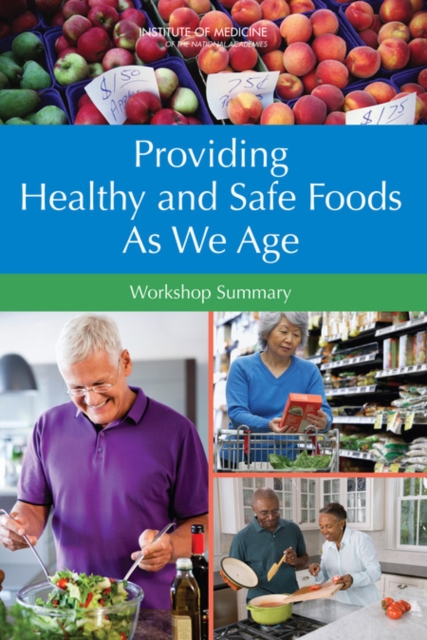
Providing Healthy and Safe Foods As We Age
Does a longer life mean a healthier life? The number of adults over 65 in the United States is growing, but many may not be aware that they are at greater risk from foodborne diseases and their nutritional needs change as they age. The IOM's Food Forum held a workshop October 29-30, 2009, to discuss food safety and nutrition concerns for older adults.
eBook