
Catalogue Search | MBRL


Are you sure you want to remove the book from the shelf?

{{itemTitle}}
1,883
result(s) for
"Nutrition United States History."
Sort by:


Mothers and Medicine
In the nineteenth century, infants were commonly breast-fed; by the middle of the twentieth century, women typically bottle-fed their babies on the advice of their doctors. In this book, Rima D. Apple discloses and analyzes the complex interactions of science, medicine, economics, and culture that underlie this dramatic shift in infant-care practices and women’s lives. As infant feeding became the keystone of the emerging specialty of pediatrics in the twentieth century, the manufacture of infant food became a lucrative industry. More and more mothers reported difficulty in nursing their babies. While physicians were establishing themselves and the scientific experts and the infant-food industry was hawking the scientific bases of their products, women embraced “scientific motherhood,” believing that science could shape child care practices. The commercialization and medicalization of infant care established an environment that made bottle feeding not only less feared by many mothers, but indeed “natural” and “necessary.” Focusing on the history of infant feeding, this book clarifies the major elements involved in the complex and sometimes contradictory interaction between women and the medical profession, revealing much about the changing roles of mothers and physicians in American society. “The strength of Apple’s book is her ability to indicate how the mutual interests of mothers, doctors, and manufacturers led to the transformation of infant feeding. . . . Historians of science will be impressed with the way she probes the connections between the medical profession and the manufacturers and with her ability to demonstrate how medical theories were translated into medical practice.”—Janet Golden,
Isis
eBook

Do you know what to eat?
\"Discusses the difficulties facing those with problems eating, including history, symptoms, treatments, nutrition, and ways to help\"-- Provided by publisher.
Book

The Changing Body
Humans have become much taller and heavier, and experience healthier and longer lives than ever before in human history. However it is only recently that historians, economists, human biologists and demographers have linked the changing size, shape and capability of the human body to economic and demographic change. This fascinating and groundbreaking book presents an accessible introduction to the field of anthropometric history, surveying the causes and consequences of changes in health and mortality, diet and the disease environment in Europe and the United States since 1700. It examines how we define and measure health and nutrition as well as key issues such as whether increased longevity contributes to greater productivity or, instead, imposes burdens on society through the higher costs of healthcare and pensions. The result is a major contribution to economic and social history with important implications for today's developing world and the health trends of the future.
eBook


Inventing baby food
Food consumption is a significant and complex social activity—and what a society chooses to feed its children reveals much about its tastes and ideas regarding health. In this groundbreaking historical work, Amy Bentley explores how the invention of commercial baby food shaped American notions of infancy and influenced the evolution of parental and pediatric care. Until the late nineteenth century, infants were almost exclusively fed breast milk. But over the course of a few short decades, Americans began feeding their babies formula and solid foods, frequently as early as a few weeks after birth. By the 1950s, commercial baby food had become emblematic of all things modern in postwar America. Little jars of baby food were thought to resolve a multitude of problems in the domestic sphere: they reduced parental anxieties about nutrition and health; they made caretakers feel empowered; and they offered women entering the workforce an irresistible convenience. But these baby food products laden with sugar, salt, and starch also became a gateway to the industrialized diet that blossomed during this period. Today, baby food continues to be shaped by medical, commercial, and parenting trends. Baby food producers now contend with health and nutrition problems as well as the rise of alternative food movements. All of this matters because, as the author suggests, it's during infancy that American palates become acclimated to tastes and textures, including those of highly processed, minimally nutritious, and calorie-dense industrial food products.
eBook

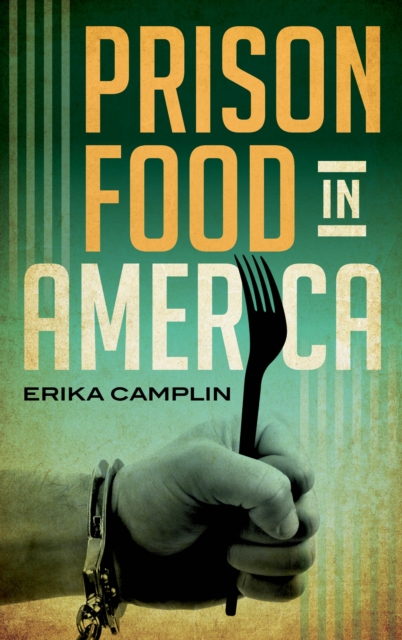
Prison food in America
Prison food has captured the popular imagination through its representation in movies, television series, and the news. Here, Erika Camplin discusses the realities of feeding the over 2 million Americans under lock and key. She discusses the business and delivery systems in place and various meals that are typically served.
eBook


Tainted Milk
Tainted Milk provides an in-depth analysis of the debate about infant nourishment issues, with a particular focus on environmentally contaminated breastmilk. Maia Boswell-Penc asks why feminists and environmentalists have, for the most part, remained relatively quiet about the fact that environmental toxins have been appearing in breastmilk. She argues that feminists avoid the topic because of their fear of focusing on biological mothering and essentialist thinking, while environmentalists are reluctant to be perceived as fearmongers advocating formula use and contributing to public hysteria. Boswell-Penc also points to the continuing racism, classism, ageism, and corporatization that leaves the less privileged among us more vulnerable.
eBook