
Catalogue Search | MBRL


Are you sure you want to remove the book from the shelf?

{{itemTitle}}
42,936
result(s) for
"Nutritional status"
Sort by:

Nutritional assessment of athletes
\"Evaluating dietary intake, determining energy metabolism, and conducting other nutritional assessments are essential in understanding the relationships between diet, exercise, health, and physical performance, especially in athletes. Several methods exist, each with their own advantages and limitations. Extensively referenced and filled with numerous tables and figures, this timely book focuses on the nutritional assessment of both recreational and professional athletes, including children, adolescents, and adults. In one volume, it presents methods for all types of nutritional evaluations, including dietary, anthropometric, physical activity needs, biochemical, and clinical assessments\"--Provided by publisher.
Book

Gastrointestinal dysfunction in the critically ill: a systematic scoping review and research agenda proposed by the Section of Metabolism, Endocrinology and Nutrition of the European Society of Intensive Care Medicine
Background
Gastrointestinal (GI) dysfunction is frequent in the critically ill but can be overlooked as a result of the lack of standardization of the diagnostic and therapeutic approaches. We aimed to develop a research agenda for GI dysfunction for future research. We systematically reviewed the current knowledge on a broad range of subtopics from a specific viewpoint of GI dysfunction, highlighting the remaining areas of uncertainty and suggesting future studies.
Methods
This systematic scoping review and research agenda was conducted following successive steps: (1) identify clinically important subtopics within the field of GI function which warrant further research; (2) systematically review the literature for each subtopic using PubMed, CENTRAL and Cochrane Database of Systematic Reviews; (3) summarize evidence for each subtopic; (4) identify areas of uncertainty; (5) formulate and refine study proposals that address these subtopics; and (6) prioritize study proposals via sequential voting rounds.
Results
Five major themes were identified: (1) monitoring, (2) associations between GI function and outcome, (3) GI function and nutrition, (4) management of GI dysfunction and (5) pathophysiological mechanisms. Searches on 17 subtopics were performed and evidence summarized. Several areas of uncertainty were identified, six of them needing consensus process. Study proposals ranked among the first ten included: prevention and management of diarrhoea; management of upper and lower feeding intolerance, including indications for post-pyloric feeding and opioid antagonists; acute gastrointestinal injury grading as a bedside tool; the role of intra-abdominal hypertension in the development and monitoring of GI dysfunction and in the development of non-occlusive mesenteric ischaemia; and the effect of proton pump inhibitors on the microbiome in critical illness.
Conclusions
Current evidence on GI dysfunction is scarce, partially due to the lack of precise definitions. The use of core sets of monitoring and outcomes are required to improve the consistency of future studies. We propose several areas for consensus process and outline future study projects.
Journal Article


The impact of a poverty reduction intervention on infant brain activity
Early childhood poverty is a risk factor for lower school achievement, reduced earnings, and poorer health, and has been associated with differences in brain structure and function. Whether poverty causes differences in neurodevelopment, or is merely associated with factors that cause such differences, remains unclear. Here, we report estimates of the causal impact of a poverty reduction intervention on brain activity in the first year of life. We draw data from a subsample of the Baby’s First Years study, which recruited 1,000 diverse low-income mother–infant dyads. Shortly after giving birth, mothers were randomized to receive either a large or nominal monthly unconditional cash gift. Infant brain activity was assessed at approximately 1 y of age in the child’s home, using resting electroencephalography (EEG; n = 435). We hypothesized that infants in the high-cash gift group would have greater EEG power in the mid- to high-frequency bands and reduced power in a low-frequency band compared with infants in the low-cash gift group. Indeed, infants in the high-cash gift group showed more power in high-frequency bands. Effect sizes were similar in magnitude to many scalable education interventions, although the significance of estimates varied with the analytic specification. In sum, using a rigorous randomized design, we provide evidence that giving monthly unconditional cash transfers to mothers experiencing poverty in the first year of their children’s lives may change infant brain activity. Such changes reflect neuroplasticity and environmental adaptation and display a pattern that has been associated with the development of subsequent cognitive skills.
Journal Article

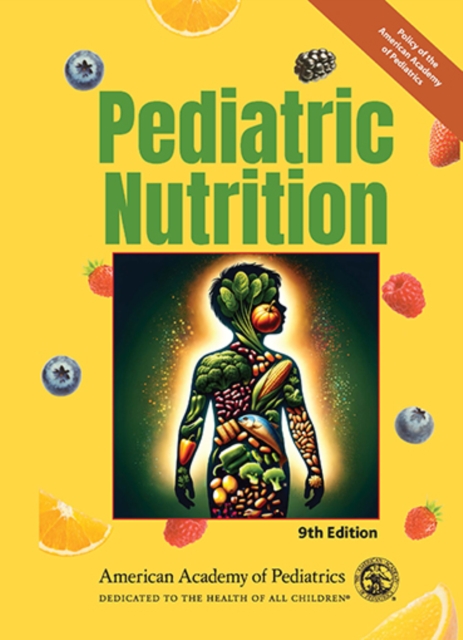
Pediatric Nutrition
Significantly revised and updated by more than 100 contributors, the ninth edition provides the latest evidence-based guidance on the full spectrum of nutrition issues for newborns, infants, children and adolescents. Constituting the authoritative AAP policy on pediatric nutrition, topics covered include nutritional guidance for all pediatric age groups; micronutrients and macronutrients; nutrient delivery systems; nutrition issues relating to a wide rang of acute and chronic illnesses; and public health issues such as food insecurity, federal regulation, and food safety.
eBook

Current State of Evidence: Influence of Nutritional and Nutrigenetic Factors on Immunity in the COVID-19 Pandemic Framework
The pandemic caused by the new coronavirus has caused shock waves in many countries, producing a global health crisis worldwide. Lack of knowledge of the biological mechanisms of viruses, plus the absence of effective treatments against the disease (COVID-19) and/or vaccines have pulled factors that can compromise the proper functioning of the immune system to fight against infectious diseases into the spotlight. The optimal status of specific nutrients is considered crucial to keeping immune components within their normal activity, helping to avoid and overcome infections. Specifically, the European Food Safety Authority (EFSA) evaluated and deems six vitamins (D, A, C, Folate, B6, B12) and four minerals (zinc, iron, copper and selenium) to be essential for the normal functioning of the immune system, due to the scientific evidence collected so far. In this report, an update on the evidence of the contribution of nutritional factors as immune-enhancing aspects, factors that could reduce their bioavailability, and the role of the optimal status of these nutrients within the COVID-19 pandemic context was carried out. First, a non-systematic review of the current state of knowledge regarding the impact of an optimal nutritional status of these nutrients on the proper functioning of the immune system as well as their potential role in COVID-19 prevention/treatment was carried out by searching for available scientific evidence in PubMed and LitCovid databases. Second, a compilation from published sources and an analysis of nutritional data from 10 European countries was performed, and the relationship between country nutritional status and epidemiological COVID-19 data (available in the Worldometers database) was evaluated following an ecological study design. Furthermore, the potential effect of genetics was considered through the selection of genetic variants previously identified in Genome-Wide Association studies (GWAs) as influencing the nutritional status of these 10 considered nutrients. Therefore, access to genetic information in accessible databases (1000genomes, by Ensembl) of individuals from European populations enabled an approximation that countries might present a greater risk of suboptimal status of the nutrients studied. Results from the review approach show the importance of maintaining a correct nutritional status of these 10 nutrients analyzed for the health of the immune system, highlighting the importance of Vitamin D and iron in the context of COVID-19. Besides, the ecological study demonstrates that intake levels of relevant micronutrients—especially Vitamins D, C, B12, and iron—are inversely associated with higher COVID-19 incidence and/or mortality, particularly in populations genetically predisposed to show lower micronutrient status. In conclusion, nutrigenetic data provided by joint assessment of 10 essential nutrients for the functioning of the immune system and of the genetic factors that can limit their bioavailability can be a fundamental tool to help strengthen the immune system of individuals and prepare populations to fight against infectious diseases such as COVID-19.
Journal Article

mTOR at the nexus of nutrition, growth, ageing and disease
The mTOR pathway integrates a diverse set of environmental cues, such as growth factor signals and nutritional status, to direct eukaryotic cell growth. Over the past two and a half decades, mapping of the mTOR signalling landscape has revealed that mTOR controls biomass accumulation and metabolism by modulating key cellular processes, including protein synthesis and autophagy. Given the pathway’s central role in maintaining cellular and physiological homeostasis, dysregulation of mTOR signalling has been implicated in metabolic disorders, neurodegeneration, cancer and ageing. In this Review, we highlight recent advances in our understanding of the complex regulation of the mTOR pathway and discuss its function in the context of physiology, human disease and pharmacological intervention.The mTOR pathway integrates diverse environmental cues to control biomass accumulation and metabolism by modulating key cellular processes, including protein synthesis and autophagy. Dysregulation of mTOR signalling has been implicated in metabolic disorders, neurodegeneration, cancer and ageing, and is thus a promising target for pharmacological intervention.
Journal Article

Impact of Water Quality, Sanitation, Handwashing, and Nutritional Interventions on Enteric Infections in Rural Zimbabwe
Abstract
Background
We assessed the impact of water, sanitation, and hygiene (WASH) and infant and young child feeding (IYCF) interventions on enteric infections in the Sanitation Hygiene Infant Nutrition Efficacy (SHINE) trial in rural Zimbabwe.
Methods
We tested stool samples collected at 1, 3, 6, and 12 months of age and during diarrhea using quantitative molecular diagnostics for 29 pathogens. We estimated the effects of the WASH, IYCF, and combined WASH + IYCF interventions on individual enteropathogen prevalence and quantity, total numbers of pathogens detected, and incidence of pathogen-attributable diarrhea.
Results
WASH interventions decreased the number of parasites detected (difference in number compared to non-WASH arms, –0.07 [95% confidence interval, –.14 to –.02]), but had no statistically significant effects on bacteria, viruses, or the prevalence and quantity of individual enteropathogens after accounting for multiple comparisons. IYCF interventions had no significant effects on individual or total enteropathogens. Neither intervention had significant effects on pathogen-attributable diarrhea.
Conclusions
The WASH interventions implemented in SHINE (improved pit latrine, hand-washing stations, liquid soap, point-of-use water chlorination, and clean play space) did not prevent enteric infections. Transformative WASH interventions are needed that are more efficacious in interrupting fecal–oral microbial transmission in children living in highly contaminated environments.
The water, sanitation, and hygiene and infant and young child feeding interventions tested in the Sanitation Hygiene Infant Nutrition Efficacy (SHINE) trial in rural Zimbabwe had no effects on enteric infections or pathogen-specific causes of diarrhea.
Journal Article

Effectiveness of facility-based personalized maternal nutrition counseling in improving child growth and morbidity up to 18 months: A cluster-randomized controlled trial in rural Burkina Faso
The period from conception to 24 months of age is a crucial window for nutrition interventions. Personalized maternal counseling may improve childbirth outcomes, growth, and health. We assessed the effectiveness of facility-based personalized maternal nutrition counseling (from pregnancy to 18 months after birth) in improving child growth and health in rural Burkina Faso. We conducted a paired cluster randomized controlled trial in a rural district of Burkina Faso with 12 primary health centers (clusters). Healthcare providers in the intervention centers received patient-centered communication and nutrition counseling training. Pregnant women in the third trimester living in the center catchment areas and intending to stay for the next 2 years were prospectively included. We followed 2253 mother-child pairs quarterly until the child was aged 18 months. Women were interviewed about counseling experiences, dietary practices during pregnancy, and their child's feeding practices and morbidity history. Anthropometric measurements were taken at each visit using standardized methods. The primary outcomes were the cumulative incidence of wasting, and changes in child weight-for-height z-score (WHZ). Secondary outcomes were the women's prenatal dietary practices, early breastfeeding practices, exclusive breastfeeding, timely introduction of complementary food, child's feeding frequency and dietary diversity, children's mean birth weight, endpoint prevalence of stunting, and cumulative incidence of diarrhea, fever, and acute respiratory infection. All analyses were by intention-to-treat using mixed effects models. The intervention and control arms each included six health centers. Mothers in the intervention arm had a significantly higher exposure to counseling with 11.2% for breastfeeding techniques to 75.7% for counseling on exclusive breastfeeding. Mothers of infants below 6 months of age in the intervention arm were more likely to exclusively breastfeed (54.3% vs 42.3%; Difference of Proportion (DP) 12.8%; 95% CI: 2.1, 23.6; p = 0.020) as compared to the control arm. Between 6 and 18 months of age, more children in the intervention arm benefited from the required feeding frequency (68.8% vs 53.4%; DP 14.1%; 95% CI: 9.0, 19.2; p<0.001) and a larger proportion had a minimum dietary diversity (28.6% vs 22.0%; DP 5.9%; 95% CI: 2.7, 9.2; p<0.001). Birth weight of newborns in the intervention arm was on average 84.8 g (p = 0.037) larger compared to the control arm. However, we found no significant differences in child anthropometry or morbidity between study arms. Facility-based personalized maternal nutrition counseling was associated with an improved prenatal dietary practices, Infant and Young Child Feeding practices, and child birth weight. Complementary strategies are warranted to obtain meaningful impact on child growth and morbidity. This includes strategies to ensure good coverage of facility-based services and effective nutrition/care practices in early childhood.
Journal Article