
Catalogue Search | MBRL


Are you sure you want to remove the book from the shelf?

{{itemTitle}}
5,344
result(s) for
"O.T"
Sort by:

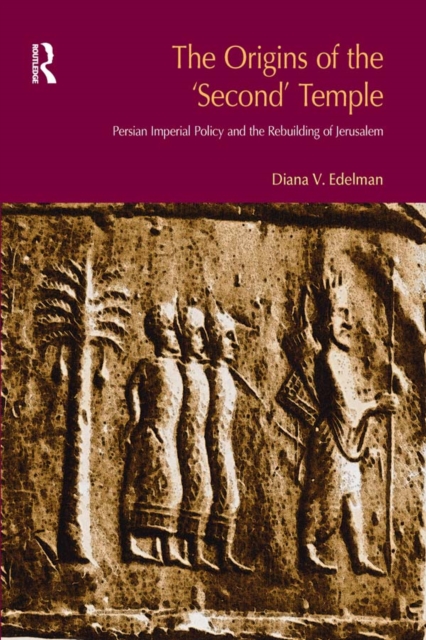
The origins of the 'Second' Temple : Persian imperial policy and the rebuilding of Jerusalem
Darius I, King of Persia, claims to have accomplished many deeds in the early years of his reign, but was one of them the rebuilding of the temple in Jerusalem? The editor who added the date to the books of Haggai and Zechariah thought so, and the author of Ezra 1-6 then relied on his dates when writing his account of the rebuilding process. The genealogical information contained in the book of Nehemiah, however, suggests otherwise; it indicates that Zerubbabel and Nehemiah were either contemporaries, or a generation apart in age, not some 65 years apart. Thus, either Zerubabbel and the temple rebuilding needs to be moved to the reign of Artaxerxes I, or Nehemiah and the rebuilding of the city walls needs to be moved to the reign of Darius I.;In this ground-breaking volume, the argument is made that the temple was built during the reign of Artaxerxes I. The editor of Haggai and Zechariah mistakenly set the event under Darius I because he was influenced by both a desire to show the fulfillment of inherited prophecy and by Darius' widely circulated autobiography of his rise to power. In light of the settlement patterns in Yehud during the Persian period, it is proposed that Artaxerxes I instituted a master plan to incorporate Yehud into the Persian road, postal, and military systems. The rebuilding of the temple was a minor part of the larger plan that provided soldiers stationed in the fortress in Jerusalem and civilians living in the new provincial seat with a place to worship their native god while also providing a place to store taxes and monies collected on behalf of the Persian administration.
eBook

The Composition of the Pentateuch
For well over two centuries the question of the composition of the Pentateuch has been among the most central and hotly debated issues in the field of biblical studies. In this book, Joel Baden presents a fresh and comprehensive argument for the Documentary Hypothesis. Critically engaging both older and more recent scholarship, he fundamentally revises and reorients the classical model of the formation of the Pentateuch. Interweaving historical and methodological chapters with detailed textual case studies, Baden provides a critical introduction to the history of Pentateuchal scholarship, discussions on the most pressing issues in the current debate, and a practical model for the study of the biblical text.
eBook

Paradise lost and other poems
Presents three major works by the seventeenth-century English poet, including his epic poem \"Paradise Lost,\" which depicts the creation, fall, and redemption of humankind and the moral and spiritual dilemmas of God's judgment.
BOOK
Finding Meaning in the Text
This book offers a thorough analysis of the translation technique and theology of LXX-Amos, which will be valuable for those studying LXX-Amos and for those doing textual criticism in the Hebrew text of Amos. It analyzes the literalness of the translation, the rendering of difficult and unknown words, and the rendering of visually ambiguous phenomena, like homonyms, homographs, and word divisions. The evidence suggests the translator worked from a text very similar to the MT. He reveals his biases as he struggles with the difficult and obscure sections of his source text. He exhibits an anti-Syrian and anti-Samaritan bias as well as interest in Gentiles, eschatology, and messianism.
eBook
Echoes of Scripture in the Letter of Paul to the Colossians
The introduction of literary intertextuality into biblical studies has led to both discovery and dilemma. This study proposes new definitions of 'allusion' and 'echo' and a methodology on how to detect them, using the neglected letter of Colossians as a test case.
eBook
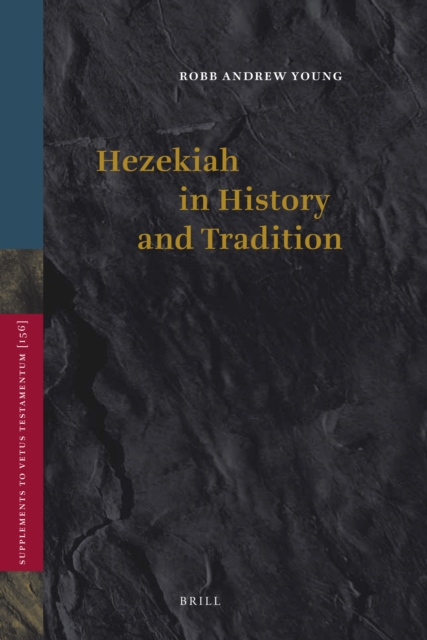
Hezekiah in History and Tradition
This study draws upon the biblical books of Kings, First Isaiah and Chronicles, in conjunction with Assyrian records and ancient Near Eastern archaeology, in order to provide an updated historical reconstruction of the influential Judean monarch Hezekiah.
eBook

The Targums
The value and significance of the targums--translations of the Hebrew Bible into Aramaic, the language of Palestinian Jews for centuries following the Babylonian Exile--lie in their approach to translation: within a typically literal rendering of a text, they incorporate extensive exegetical material, additions, and paraphrases. These alterations reveal important information about Second Temple Judaism, its interpretation of its bible, and its beliefs. This remarkable survey introduces critical knowledge and insights that have emerged over the past forty years, including targum manuscripts discovered this century and targums known in Aramaic but only recently translated into English. Prolific scholars Flesher and Chilton guide readers in understanding the development of the targums, their relationship to the Hebrew Bible, their dates, their language, their place in the history of Christianity and Judaism, and their theologies and methods of interpretation.
eBook

The Curse of Ham
How old is prejudice against black people? Were the racist attitudes that fueled the Atlantic slave trade firmly in place 700 years before the European discovery of sub-Saharan Africa? In this groundbreaking book, David Goldenberg seeks to discover how dark-skinned peoples, especially black Africans, were portrayed in the Bible and by those who interpreted the Bible--Jews, Christians, and Muslims. Unprecedented in rigor and breadth, his investigation covers a 1,500-year period, from ancient Israel (around 800 B.C.E.) to the eighth century C.E., after the birth of Islam. By tracing the development of anti-Black sentiment during this time, Goldenberg uncovers views about race, color, and slavery that took shape over the centuries--most centrally, the belief that the biblical Ham and his descendants, the black Africans, had been cursed by God with eternal slavery. Goldenberg begins by examining a host of references to black Africans in biblical and postbiblical Jewish literature. From there he moves the inquiry from Black as an ethnic group to black as color, and early Jewish attitudes toward dark skin color. He goes on to ask when the black African first became identified as slave in the Near East, and, in a powerful culmination, discusses the resounding influence of this identification on Jewish, Christian, and Islamic thinking, noting each tradition's exegetical treatment of pertinent biblical passages. Authoritative, fluidly written, and situated at a richly illuminating nexus of images, attitudes, and history, The Curse of Ham is sure to have a profound and lasting impact on the perennial debate over the roots of racism and slavery, and on the study of early Judaism, Christianity, and Islam.
eBook