
Catalogue Search | MBRL


Are you sure you want to remove the book from the shelf?

{{itemTitle}}
48
result(s) for
"OLD STONE AGE"
Sort by:

Revelations in Japanese archaeology : paleolithic come-back, island interactions, classical writings
This volume compiles significant articles from the BSEAA, updated for this volume. It covers the Japanese Paleolithic, protohistoric Yayoi and Kofun periods, and the beginnings of Japanese archaeology, offering new perspectives on cultural transmission, subsistence practices, and centralized societies.
eBook

Stone Tools in the Paleolithic and Neolithic Near East
Stone Tools in the Paleolithic and Neolithic Near East: A Guide surveys the lithic record for the East Mediterranean Levant (Lebanon, Syria, Israel, Jordan, and adjacent territories) from the earliest times to 6,500 years ago. It is intended both as an introduction to this lithic evidence for students and as a resource for researchers working with Paleolithic and Neolithic stone tool evidence. Written by a lithic analyst and professional flintknapper, this book systematically examines variation in technology, typology, and industries for the Lower, Middle, and Upper Paleolithic; the Epipaleolithic; and Neolithic periods in the Near East. It is extensively illustrated with drawings of stone tools. In addition to surveying the lithic evidence, the book also considers ways in which archaeological treatment of this evidence could be changed to make it more relevant to major issues in human origins research. A final chapter shows how change in stone tool designs points to increasing human dependence on stone tools across the long sweep of Stone Age prehistory.
eBook

The Palaeolithic of Northeast Asia
This volume combines details of discoveries of Palaeolithic sites in a vast region of Northeast Asia (covering mostly the northeastern part of modern Russia), and meticulous analysis of hypotheses, ideas, and concepts related to the Northeast Asian Palaeolithic.
eBook

Stone Age Sailors
Over the past decade, evidence has been mounting that our ancestors developed skills to sail across large bodies of water early in prehistory. In this fascinating volume, Alan Simmons summarizes and synthesizes the evidence for prehistoric seafaring and island habitation worldwide, then focuses on the Mediterranean. Recent work in Melos, Crete, and elsewhere-- as well as Simmons' own work in Cyprus-- demonstrate that long-distance sailing is a common Paleolithic phenomenon. His comprehensive presentation of the key evidence and findings will be of interest to both those interested in prehistory and those interested in ancient seafaring.
eBook
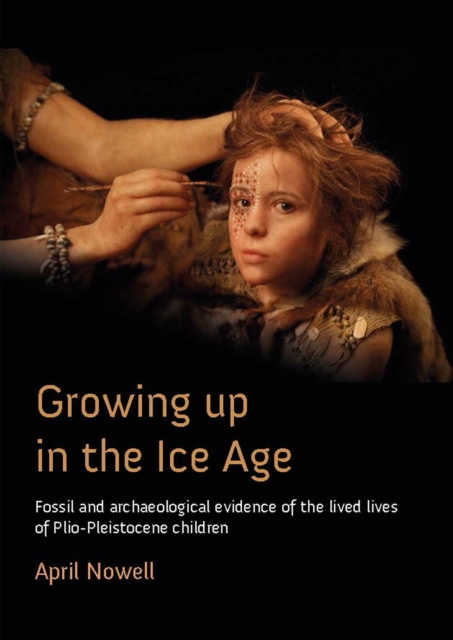
Growing up in the Ice Age
It is estimated that in prehistoric societies children comprised at least forty to sixty-five percent of the population, yet by default, our ancestral landscapes are peopled by adults who hunt, gather, fish, knap tools and make art. But these adults were also parents, grandparents, aunts and uncles (however they would have codified these kin relationships) who had to make space physically, emotionally, intellectually, and cognitively for the infants, children and adolescents around them. The economic, social, and political roles of Paleolithic children are often understudied because they are assumed to be unknowable or negligible. Drawing on the most recent data from the cognitive sciences and from the ethnographic, fossil, archaeological, and primate records, Growing Up in the Ice Age challenges these assumptions. This volume is a timely and evidence-based look at the lived lives of Paleolithic children and the communities of which they were a part. By rendering the \"invisible\" children visible, readers will gain a new understanding not only of the contributions that children have made to the biological and cultural entities we are today but also of the Paleolithic period as whole.
eBook

Man and Bird in the Palaeolithic of Western Europe
Man and Bird in the Palaeolithic of Western Europe
considers the nature of the interaction between birds and
hunter-gatherers. It examines aspects of avian behaviour and the
qualities that could be (and were) targeted at different periods by
hunter-gatherers, who recognised the utility of the diversity of
avian groups in various applications of daily life and thought. It
is clear from the records of excavated sites in western Europe that
during the evolution of both the Neanderthal period and the
subsequent occupations of Homo sapiens, avian demographics
fluctuated with the climate along with other aspects of both flora
and fauna. Each was required to adapt to these changes. The present
study considers these changes through the interactions of man and
bird as evidenced in the remains attached to Middle and Upper
Palaeolithic occupation sites in western Europe and touches on a
variety of prey/predator relationships across other groups of plant
and animal species. The book describes a range of procurement
strategies that are known from the literature and artistic record
of later cultures to have been used in the trapping, enticement and
hunting of birds for consumption and the manufacture of weapons,
domestic items, clothing, ceremony and cultural activities. It also
explores how bird images and depictions engraved or painted on the
walls of caves or on the objects of daily use during the Upper
Palaeolithic may be perceived as communications of a more profound
significance for the temporal, seasonal or social life of the
members of the group than the simple concept of animal. Certain
bird species have at different times held a special significance in
the everyday consciousness of particular peoples and a group of
Late Glacial, Magdalenian settlements in Aquitaine, France, appear
to be an example of such specialised culling. A case study of the
treatment of snowy owl at Arancou in the Atlantic Pyrenees seems to
illustrate such a specialisation. Discussion of the problems of
reconciling dating and research methods, of the last two hundred
years of Palaeolithic research, and of possible directions for
future research offer an open conclusion to the work.
eBook

Paleolithic Politics
Using his background in political theory and philosophical
anthropology, Barry Cooper is the first political scientist to
propose new interpretations of some of the most famous extant
Paleolithic art and artifacts in Paleolithic Politics .
This book is inspired by Eric Voegelin, one of the major political
scientists of the last century, who developed an interest in the
very early symbolism associated with the caves and rock shelters of
the Upper Paleolithic, but never finished his analysis. Cooper, who
has written extensively on Voegelin's theories, takes up the
enterprise of applying Voegelin's approach to an analysis of
portable and cave art. He specifically applies Voegelin's
philosophy of consciousness, his concept of the compactness and
differentiation of consciousness, his argument regarding the
experience and symbolizations of reality, and his notion of the
primary experience of the cosmos to images previously regarded as
pedestrian. Cooper demonstrates the political significance of the
earliest expressions of human existence and is among the first to
argue that political life began not with the Greeks, but 25,000
years before them. Archaeologists, prehistorians, and political
scientists will all benefit from this original and provocative
work.
eBook

The Indigenous Paleolithic of the Western Hemisphere
The Indigenous Paleolithic of the Western Hemisphere is a
reclaimed history of the deep past of Indigenous people in North
and South America during the Paleolithic. Paulette F. C. Steeves
mines evidence from archaeology sites and Paleolithic environments,
landscapes, and mammalian and human migrations to make the case
that people have been in the Western Hemisphere not only just prior
to Clovis sites (10,200 years ago) but for more than 60,000 years,
and likely more than 100,000 years. Steeves discusses the political
history of American anthropology to focus on why pre-Clovis sites
have been dismissed by the field for nearly a century. She explores
supporting evidence from genetics and linguistic anthropology
regarding First Peoples and time frames of early migrations.
Additionally, she highlights the work and struggles faced by a
small yet vibrant group of American and European archaeologists who
have excavated and reported on numerous pre-Clovis archaeology
sites. In this first book on Paleolithic archaeology of the
Americas written from an Indigenous perspective, The Indigenous
Paleolithic of the Western Hemisphere includes Indigenous oral
traditions, archaeological evidence, and a critical and
decolonizing discussion of the development of archaeology in the
Americas.
eBook

Reassessing Paleolithic Subsistence
The contribution of Neandertals to the biological and cultural emergence of early modern humans remains highly debated in anthropology. Particularly controversial is the long-held view that Neandertals in Western Europe were replaced 30,000 to 40,000 years ago by early modern humans expanding out of Africa. This book contributes to this debate by exploring the diets and foraging patterns of both Neandertals and early modern humans. Eugène Morin examines the faunal remains from Saint-Césaire in France, which contains an exceptionally long and detailed chronological sequence, as well as genetic, anatomical and other archaeological evidence to shed new light on the problem of modern human origins.
eBook