
Catalogue Search | MBRL


Are you sure you want to remove the book from the shelf?

{{itemTitle}}
10
result(s) for
"OLPC"
Sort by:

A case of erosive oral lichen planus in a child affected by β-Thalassemia after 5 years from bone marrow transplantation
Oral lichen planus is a chronic immune-mediated inflammatory disease of the oral mucosa, primarily mediated by T lymphocytes, and is one of the most common oral mucosal diseases. However, it is relatively rare in children, with potential etiologies related to a history of immune-related conditions. Severe β-thalassemia is a serious hereditary blood disorder for which bone marrow transplantation remains the most effective treatment. One of the most dangerous complications of this procedure is graft-versus-host disease (GVHD). Autoimmune thyroid disease an organ-specific autoimmune disorder mediated by T cells, can be considered a specific form of GVHD.This paper presents a case of a male child who underwent bone marrow transplantation at the age of four due to severe β-thalassemia and developed oral lichen planus five years later. This case aims to explore the clinical manifestations, diagnosis, and treatment options of this disease, as well as the relationship between autoimmune thyroid disease and oral lichen planus in children, in order to provide a reference for the clinical diagnosis and treatment of similar conditions.
Journal Article
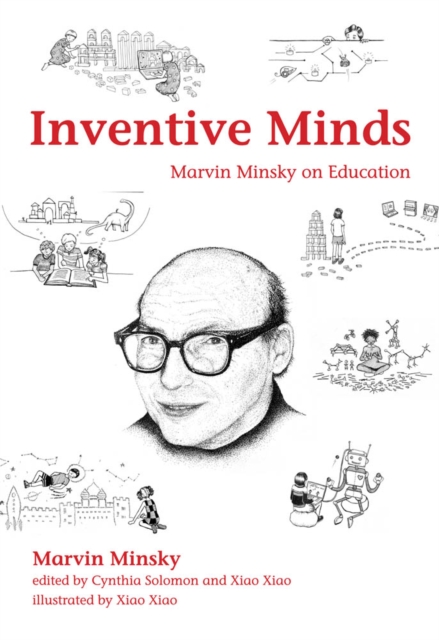
Inventive minds : Marvin Minsky on education
Six essays by artificial intelligence pioneer Marvin Minsky on how education can foster inventiveness, paired with commentary by Minsky's former colleagues and students. Marvin Minsky was a pioneering researcher in artificial intelligence whose work led to both theoretical and practical advances. His work was motivated not only by technological advancement but also by the desire to understand the workings of our own minds. Minsky's insights about the mind provide fresh perspectives on education and how children learn. This book collects for the first time six essays by Minsky on children, learning, and the potential of computers in school to enrich children's development. In these essays Minsky discusses the shortcomings of conventional education (particularly in mathematics) and considers alternative approaches; reflects on the role of mentors; describes higher-level strategies for thinking across domains; and suggests projects for children to pursue. Each essay is paired with commentary by one of Minsky's former colleagues or students, which identifies Minsky's key ideas and connects his writings to current research. Minsky once observed that in traditional teaching, “instead of promoting inventiveness, we focus on preventing mistakes.” These essays offer Minsky's unique insights into how education can foster inventiveness. Commentary by Hal Abelson, Walter Bender, Alan Kay, Margaret Minsky, Brian Silverman, Gary Stager, Mike Travers, Patrick Henry Winston
eBook

One-to-one laptop programs : Is transformation occurring in mathematics teaching?
There is a body of research around the uptake of digital technologies in secondary schools, and a growing body of research specifically designed to investigate the use of one-to-one laptop programs. However this research focused on the initial uptake of the digital technology or initial implementation of a one-to-one (1:1) laptop policy. Given the expenditure of time and money associated with 1:1 laptop initiatives, investigation needs to be carried out to determine if the commitment has been worthwhile. This new study contributes to this body of research as it focused upon middle schools in which the 1:1 laptop program has existed for over seven years; it sought to examine the evolution of teacher practice in mathematics education. Anonymous online surveys as well as semi-structured interviews with teachers were used to collect descriptive data. The data revealed that issues associated with the initial implementation of 1:1 laptop programs continued to be problematic, and little authentic integration of the technology had taken place in the pedagogical practices of the mathematics teachers. [Author abstract]
Journal Article

El vaivén de los portátiles entre las aulas y el hogar: la perspectiva de las familias sobre la reforma educativa de la Escuela 2.0
Este estudio describe la opinión de las familias sobre la entrada del portátil en la vida académica del estudiante de secundaria, a través del programa autonómico en Cataluña eduCAT1x1, vinculado a la Escuela 2.0, una reforma nacional de digitalización de las aulas. La visión de las familias complementa la investigación con una nueva mirada al impacto de las reformas educativas más allá de las aulas. El análisis de 16 entrevistas pone de manifiesto que si bien los padres consideran la tecnología beneficiosa para el futuro académico y laboral de sus hijos también sienten malestar por tener que gestionar los usos extraescolares que estos hacen del portátil, donde el ocio y la comunicación social compiten con la actividad académica. Algunas familias no se ven empoderadas por la reforma educativa del 1x1 y apelan a diversas razones: 1) la digitalización de las aulas se ha hecho de forma improvisada y rápida; 2) la introducción del portátil en la vida de sus hijos ha provocado cambios en las prácticas de estudio (y no todos los consideran positivos) y 3) la digitalización ha comportado una pérdida de control sobre la vida de sus hijos. El estudio sugiere la necesidad de coordinar las reformas educativas con las dinámicas familiares, ya que la mediación familiar es imprescindible para garantizar no solo el éxito de las innovaciones educativas sino también las transformaciones sociales que se persiguen.
Journal Article

Low-Cost Computers for Education in Developing Countries
This paper studies the distribution of computer use in a comparison between two of the most dominant suppliers of low-cost computers for education in developing countries (partly because they involve diametrically opposite ways of tackling the problem). The comparison is made in the context of an analytical framework which traces the changing characteristics of products as income rises over time. The crucial distinction turns out to be the way sharing is handled in the two cases. In the one no sharing is allowed while in the other sharing is the basis of the entire product design. Put somewhat differently, the one computer is intensive in a high-income characteristic whereas the other relies entirely on a low-income characteristic.
Journal Article

La digitalización del aula de ciencias: creencias y prácticas
Describimos y analizamos las creencias educativas que provoca la digitalización de las clases de ciencias en 9 centros catalanes de secundaria que utilizan el modelo institucional del 1x1 o un portátil por alumno (OLPC, one laptop per child). En este programa, las aulas están equipadas con wifi, pizarra digital, ordenador y proyector; alumnado y profesorado trabajan con portátiles y los libros de texto disponen de una versión digital. Los datos proceden de entrevistas en profundidad y semiestructuradas a 22 docentes de varias asignaturas científicas y tecnológicas, que relatan y valoran críticamente su experiencia con este entorno tecnológico después de varios años. Las creencias del profesorado sobre la disciplina y su didáctica, sobre todo las relacionadas con la lectura, la escritura y el aprendizaje (a través de la lectoescritura), se presentan en cinco apartados: Equipos, Plataformas, Libros digitales, Recursos y Lectura y escritura. La superación de la reticencia sobre el uso del móvil en el aula, la primacía de la plataforma Moodle, las críticas a los libros digitales, y las dificultades específicas de escritura de la notación científica con teclado, son algunos de los puntos que se describen e interpretan.
We describe and analyze educational beliefs encouraged by the implementation of the One Laptop Per Child program (OLPC) in Science classes across 9 secondary schools in Catalonia. Under the OLPC, classrooms are equipped with Wi-Fi, interactive whiteboards, a computer and an overhead projector; teachers and students work with a laptop computer, and textbooks are digital. Our data stem from in-depth semi-structured interviews with 22 teachers of Science and Technology subjects, who inform and critically assess their experience over the years in this technological context. Teachers’ beliefs about their subject of expertise and its teaching in relation to reading, writing and learning (through literacy practices), can be grouped into five categories: 1) Equipment, 2) Virtual Learning Environments (VLE), 3) Digital Textbooks, 4) Resources, and 5) Reading and Writing. Among others, we describe and interpret the following items: 1) why teachers are reluctant towards using mobile phones in the classroom, 2) why they prefer Moodle over other VLE, 3) how they criticize digital textbooks, and 4) how they find it difficult to teach scientific writing using keyboards –markedly scientific notation.
Journal Article

Una lectura de las tecnologías desde los estudios feministas: el caso OLPC y Sugarlabs en Colombia
El artículo presenta los aportes de las epistemologías feministas contemporáneas para una lectura situada de la sociedad de la información, a la luz de una investigación sobre el proyecto “Una laptop por niño” y su plataforma de software en Colombia, Sugar. Argumenta que estos abordajes contribuyen a pensar las condiciones de posibilidad y las posiciones invisibles que definen las TIC. Se cierra con algunas consideraciones sobre cómo esta reflexión puede fornecer herramientas para comprender dinámicas de diseño, implementación y gestión de tecnologías sociales.
Journal Article
Una lectura de las tecnologías desde los estudios feministas: el caso OLPC y Sugar Labs en Colombia
O artigo apresenta as contribuições das epistemologias feministas contemporâneas na realização de uma leitura
situada da sociedade da informação, à luz da pesquisa sobre o projeto \"Um laptop para cada criança\" e da sua
plataforma de software na Colômbia denominada Sugar Labs. Argumenta-se que essas abordagens ajudam a pensar
as condições de possibilidade e as posições invisíveis que definem a tecnologia da informação e da comunicação.
Conclui-se com algumas reflexões sobre como essa reflexão pode fornecer ferramentas dinâmicas para compreender
dinâmicas do desenho, implementação e gestão de tecnologias sociais.
El artículo presenta los aportes de las epistemologías feministas contemporáneas para una lectura situada de la
sociedad de la información, a la luz de una investigación sobre el proyecto \"Una laptop por niño\" y su plataforma
de software en Colombia, Sugar. Argumenta que estos abordajes contribuyen a pensar las condiciones de posibilidad
y las posiciones invisibles que definen las TIC. Se cierra con algunas consideraciones sobre cómo esta reflexión puede
fornecer herramientas para comprender dinámicas de diseño, implementación y gestión de tecnologías sociales.
The article presents some contributions of contemporary feminist epistemologies to a located interpretation of information
society, in the light of a research about the project One laptop per child and its software platform in
Colombia, Sugar Labs (en el resumen en español falta la palabra labs). The article points out that this approach
helps to think conditions of possibility and invisible positions, which define information technology and communication.
It closes with some thoughts on how these considerations can provide dynamic tools to understand the material
design, execution and management of social technologies.
Journal Article

Balancing Design: OLPC Engineers and ICT Translations at the Periphery
Chan studies the design, use, and meaning of the XO laptops created by the United States-based One Laptop per Child program for deployment in developing and rural zones. Attending to the lessons that emerged from local deployments of the XO laptops in the Peruvian Andes, Chan traces the shifting perspectives in design of a programmer affiliated with the program in the US and an engineer working on classroom deployments of the laptops in Puno, Peru. Chan delineates two models for designing digital education initiatives—an engineering-centric vision that minimizes engagement with local users and contexts and prioritizes technological design, and a participative model that anticipates input from multiple members of local communities, from rural teachers to indigenous language activists and local free software activists—and argues that the adoption of new technologies necessarily depends on processes of local translation and interdisciplinary collaboration that can open new technological possibilities.
Book Chapter
Mesh Networking Using IEEE 802.11 Wireless Technologies
This chapter contains sections titled:
- IEEE 802.11 IEEE 802.11s: Standard for WLAN Mesh Networking Summary
Book Chapter