
Catalogue Search | MBRL


Are you sure you want to remove the book from the shelf?

{{itemTitle}}
2,307
result(s) for
"Obama Administration"
Sort by:

Obama's time : a history
\"Barack Obama came into office in the midst of one of the worst financial crises in American history and had to extract the US from two grinding foreign wars. He succeeded in enacting the most progressive legislative agenda since the Great Society years, and has pivoted American foreign policy toward East Asia. In The Obama Presidency, political historian Morton Keller provides the first major historical assessment of the still-unfolding Obama presidency, examining his presidential persona and governing style, his domestic and foreign policies, and his place in the larger context of modern American politics. Obama came into the presidency with a unique set of assets: the first African-American president, with a transformative, messianic view of what he hoped to accomplish as President; and the capacity to excite the hopes of large segments of the electorate. That expectation has been tempered not only by his Republican opposition, but by larger realities: the play of interests and contingency, and the institutional weight of the presidency. The major tension in Obama's presidency has been between his strong commitment to an active federal government and the powerful counter-forces in contemporary American public life. Obama is in a sense haunted by his presidential predecessors in the twentieth century Democratic reform tradition, and constantly either looks to them or invokes them. But he has had to contend with the unique set of difficulties surrounding the active, centralized, bureaucratic state in our time. The eventual outcome of Obama's presidency, and its place in the American political tradition, has still to be determined. But this pioneering attempt at a historical assessment of the Obama presidency highlights the tensions, achievements, and failures that are sure to influence future interpretations\"-- Provided by publisher.
BOOK

How Schools Meet Students' Needs
Meeting students' basic needs - including ensuring they have access to nutritious meals and a sense of belonging and connection to school - can positively influence students' academic performance. Recognizing this connection, schools provide resources in the form of school meals programs, school nurses, and school guidance counselors. However, these resources are not always available to students and are not always prioritized in school reform policies, which tend to focus more narrowly on academic learning. This book is about the balancing act that schools and their teachers undertake to respond to the social, emotional, and material needs of their students in the context of standardized testing and accountability policies. Drawing on conversations with teachers and classroom observations in two elementary schools, How Schools Meet Students' Needs explores the factors that both enable and constrain teachers in their efforts to meet students' needs and the consequences of how schools organize this work on teachers' labor and students' learning.
eBook
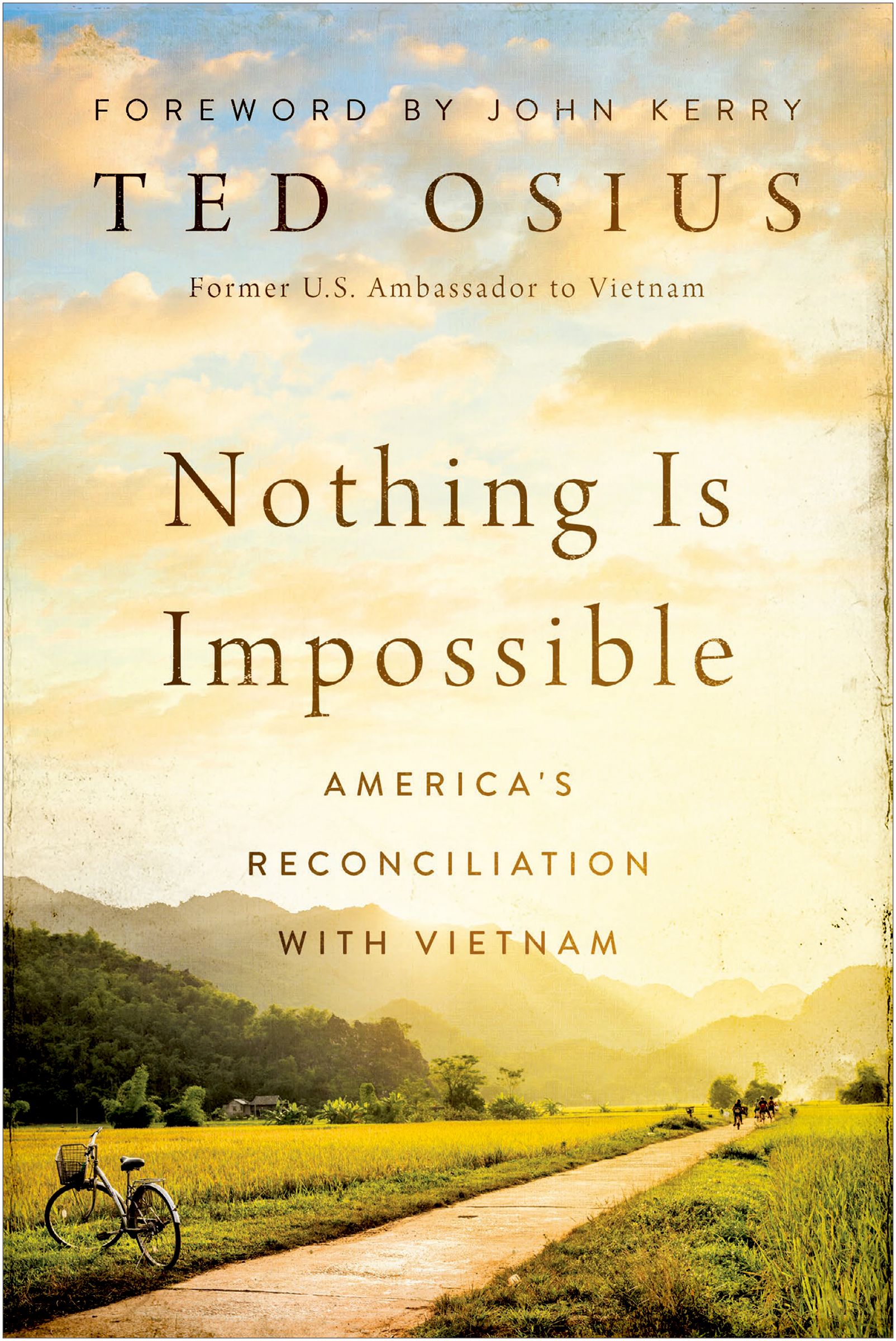
Nothing is Impossible
Today Vietnam is one of America’s strongest international partners, with a thriving economy and a population that welcomes American visitors. How that relationship was formed is a twenty-year story of daring diplomacy and a careful thawing of tensions between the two countries after a lengthy war that cost nearly 60,000 American and more than two million Vietnamese lives. Ted Osius, former ambassador during the Obama administration, offers a vivid account, starting in the 1990s, of the various forms of diplomacy that made this reconciliation possible. He considers the leaders who put aside past traumas to work on creating a brighter future, including senators John McCain and John Kerry, two Vietnam veterans and ideological opponents who set aside their differences for a greater cause, and Pete Peterson—the former POW who became the first U.S. ambassador to a new Vietnam. Osius also draws upon his own experiences working first-hand with various Vietnamese leaders and traveling the country on bicycle to spotlight the ordinary Vietnamese people who have helped bring about their nation’s extraordinary renaissance. With a foreword by former Secretary of State John Kerry, Nothing Is Impossible tells an inspiring story of how international diplomacy can create a better world.
eBook

American Pendulum
As new presidential administrations come into power, they each
bring their own approach to foreign policy. No grand strategy,
however, is going to be completely novel. New administrations never
start with a blank slate, so it is always possible to see
similarities between an administration and its predecessors.
Conversely, since each administration faces novel problems and
operates in a unique context, no foreign policy strategy is going
to be an exact replica of its predecessors. In American
Pendulum , Christopher Hemmer examines America's grand
strategic choices between 1914 and 2014 using four recurring
debates in American foreign policy as lenses. First, how should the
United States balance the trade-offs between working alone versus
working with other states and international organizations? Second,
what is the proper place of American values in foreign policy?
Third, where does the strategic perimeter of the United States lie?
And fourth, is time on the side of the United States or of its
enemies?
Offering new readings of debates within the Wilson, Truman,
Nixon, Bush, and Obama administrations, Hemmer asserts that heated
debates, disagreements, and even confusions over U.S. grand
strategy are not only normal but also beneficial. He challenges the
claim that uncertainties or inconsistences about the nation's role
in the world or approach to security issues betray strategic
confusion or the absence of a grand strategy. American foreign
policy, he states, is most in danger not when debates are at their
most pointed but when the weight of opinion crushes dissent. As the
United States looks ahead to an increasingly multipolar world with
increasing complicated security issues, Hemmer concludes,
developing an effective grand strategy requires ongoing
contestation and compromises between competing visions and
policies.
As new presidential administrations come into power, they each
bring their own approach to foreign policy. No grand strategy,
however, is going to be completely novel. New administrations never
start with a blank slate, so it is always possible to see
similarities between an administration and its predecessors.
Conversely, since each administration faces novel problems and
operates in a unique context, no foreign policy strategy is going
to be an exact replica of its predecessors. In American
Pendulum , Christopher Hemmer examines America's grand
strategic choices between 1914 and 2014 using four recurring
debates in American foreign policy as lenses. First, how should the
United States balance the trade-offs between working alone versus
working with other states and international organizations? Second,
what is the proper place of American values in foreign policy?
Third, where does the strategic perimeter of the United States lie?
And fourth, is time on the side of the United States or of its
enemies?Offering new readings of debates within the Wilson, Truman,
Nixon, Bush, and Obama administrations, Hemmer asserts that heated
debates, disagreements, and even confusions over U.S. grand
strategy are not only normal but also beneficial. He challenges the
claim that uncertainties or inconsistences about the nation's role
in the world or approach to security issues betray strategic
confusion or the absence of a grand strategy. American foreign
policy, he states, is most in danger not when debates are at their
most pointed but when the weight of opinion crushes dissent. As the
United States looks ahead to an increasingly multipolar world with
increasing complicated security issues, Hemmer concludes,
developing an effective grand strategy requires ongoing
contestation and compromises between competing visions and
policies.
eBook

The Affordable Care Act Transformation of Substance Use Disorder Treatment
While federal guidance on the Essential Health Benefits requires coverage of SUD treatment, it does not specify which services must be included. [...]states have wide latitude in determining the optimal range of treatment services to cover for patients with OUD.
Journal Article

Never Thaw that coming! Latin American regional integration and the US-Cuba Thaw
Existing accounts of the US-Cuba Thaw correctly identify the decisiveness of Latin American states in pushing the 2014 change in US policy towards Cuba. Problematically, however, these accounts overlook a range of regional integration projects pursued by Latin American states that prove pivotal in ascertaining the central dynamics of the region in shaping the Thaw. This article argues that these regional integration projects are imperative to understanding how Latin American states were able to alter US policy towards Cuba, for three reasons. First, these initiatives, and Cuba's role in these projects, are central to understanding why Cuba came to be a unanimously 'regional' issue for Latin American states of all political persuasions; second, the challenges to US dominance in the region provided by these integration projects were ultimately what gave Latin American states their teeth in pushing the Obama administration to reconsider its policy towards Cuba; and third, a consideration of this broader regional context more thoroughly illustrates the strategic nature of the change in policy towards Cuba as an attempt by the US to salvage its ability to influence regional affairs in response to these integration initiatives that excluded it from the region's architecture.
Journal Article

The Obama administration and civil war in Syria, 2011–2016: US presidential foreign policy making as political risk management
From 2011 to 2016, the Obama administration’s Syria policy appeared to be in constant flux. Prominent accounts portray this as the result of foreign policy making in an arena with no good options, or the use of programs as smokescreens to conceal underlying goals. Both portrayals fit the foreign policy making literature, which views policy as crafted by a president who acts either as guardian of the national interest or as a consummate politician. But the record on Syria does not square with these accounts. The Obama administration neither tried to find solutions to the strategic problems that Syria posed in and of itself, in order to advance the national interest, nor exploited Syria as a political opportunity, to enhance domestic political power. I show, instead, that the trajectory of US Syria policy was consistent with efforts to minimize the risk that the crisis posed to President Obama’s central foreign policy objectives and his domestic political capital and legacy. The Obama administration’s Syria policy resulted from a distinct logic of political risk management.
Journal Article

The Rebalance, Entrapment Fear, and Collapsism
Following the collapse of diplomatic negotiations with North Korea in 2012, the Obama administration settled on a policy approach dubbed “strategic patience.” That policy involved the gradually escalating application of nonviolent means of coercion as the North Korean nuclear problem that it purported to arrest grew more acute over time. But what led the Obama administration to adopt this confrontational yet timid approach to North Korea? Using a configurational analysis, this article proposes that the Obama-era policy of “strategic patience” had little to do with North Korea per se, and instead derived primarily from the intersection of three different factors: the prioritizations necessary as part of the US “rebalance to Asia” strategy; fear that South Korean aggression would pull the United States into an unwanted war in Korea; and a prevailing belief among many policymakers that the North Korean regime would eventually collapse under the pressures of its own contradictions. This combination of priorities and beliefs led the Obama administration to treat the North Korean nuclear issue seriously but not urgently, resorting to actions incommensurate with the nature of the problem.
Journal Article

The Polythink Syndrome and Elite Group Decision-Making
How do presidents and their advisors make war and peace decisions on military intervention, escalation, deescalation, and termination of conflicts? How do groups make decisions? Why do they often make suboptimal decisions or appear to be frozen in inaction? The leading concept of group dynamics, Groupthink, offers one explanation: cohesive policymaking groups, such as advisors to the president, often make suboptimal decisions due to their desire for uniformity over dissent, while ignoring important limitations of chosen policies, overestimating the odds for success and failing to consider other relevant policy options or possibilities. But groups, including presidential advisory teams, are often fragmented and divisive. We thus introduce Polythink, a group decision-making dynamic whereby different members in a decision-making unit espouse a plurality of opinions and offer divergent policy prescriptions, which can result in intragroup conflict, a disjointed decision-making process, and decision paralysis as each group member pushes for his or her preferred policy action. This phenomenon is no less problematic or common than Groupthink and explains how otherwise smart, experienced decision-makers can engage in flawed decision-making processes that deeply affect the security and welfare of a country. By shining a light on Polythink's symptoms and consequences, and on the factors that lead to Polythink, we seek to offer actionable policy prescriptions for elite decision-makers to offset the negative attributes of this phenomenon and engage in more optimal policymaking processes. Furthermore, we explain how leaders and other decision-makers (e.g., in business) can transform Destructive Polythink into Productive Polythink, illuminating the potential ways in which this group dynamic may be effectively directed towards sound decisions.
Journal Article
A Major Shortcoming in the Public Health Legacy of the Obama Administration
Contrary to the Obama Administration's commitment to cure cancer, the FDA approved many cancer drugs based on shorter-term studies of smaller numbers of patients, usually allowing companies to study outcomes measured by biomarkers rather than meaningful clinical outcomes such as survival or fewer days in the hospital.3 The FDA required postmarket studies to shore up that weaker scientific evidence, but only a small minority reported a significant clinical benefit.3 The problem of unproven treatments is not unique to cancer drugs; once a drug or medical device is on the market, it stays there for many years even when its safety and benefits are not confirmed.4,5 This contributes to skyrocketing health care and insurance costs, as patients pay for expensive new treatments that are ineffective or inferior to older, less expensive treatments. Unfortunately, his only words about FDA focused on the need for \"new and innovative\" treatments, rather than safe, effective, or affordable ones. Since he apparently isn't beholden to pharmaceutical and medtech company contributions, can he be persuaded to follow through on his populist promises by helping patients get what they really want-treatments that work and don't destroy their quality of life?
Journal Article