
Catalogue Search | MBRL


Are you sure you want to remove the book from the shelf?

{{itemTitle}}
36
result(s) for
"Occultism Fiction."
Sort by:

The Raven King
Not believing in true love, Blue never thought the warning that she will cause her true love's death would be a problem, but as her life is entangled in the world of the Raven Boys, she's not so sure anymore.
Book
Scare Tactics
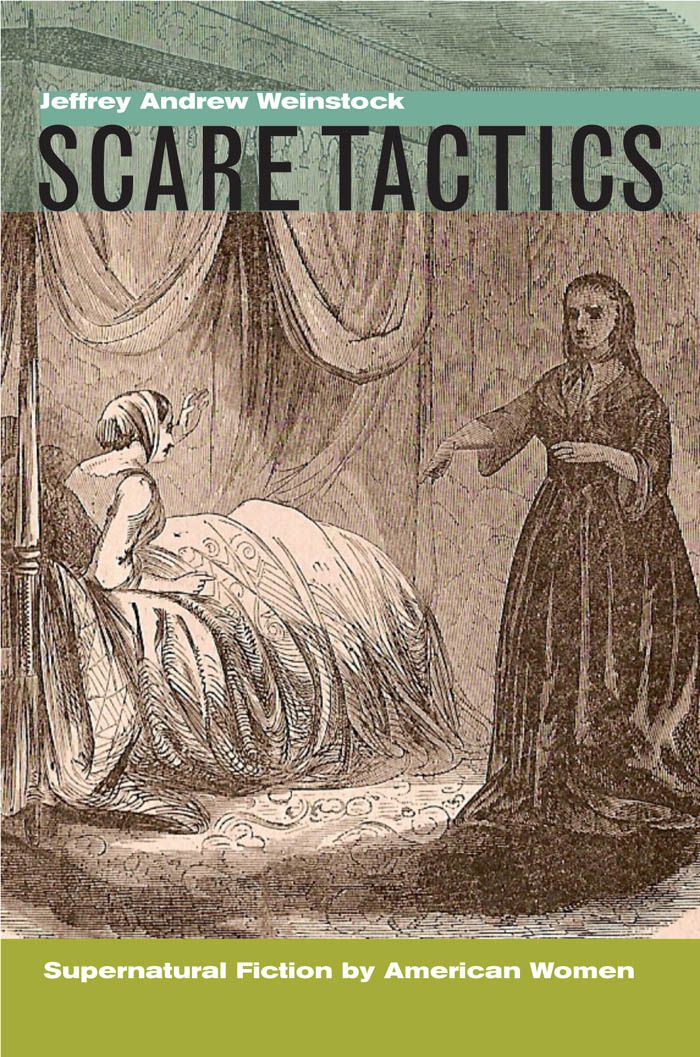
Scare Tactics identifies an important but overlooked tradition of supernatural writing by American women. Jeffrey Weinstock analyzes this tradition as an essentially feminist attempt to imagine alternatives to a world of limited possibilities. In the process, he recovers the lives and works of authors who were important during their lifetimes and in the development of the American literary tradition, but who are not recognized today for their contributions.Between the end of the Civil War and roughly 1930, hundreds of uncanny tales were published by women in the periodical press and in books. These include stories by familiar figures such as Edith Wharton, Harriet Beecher Stowe, and Charlotte Perkins Gilman, as well as by authors almost wholly unknown to twenty-first-century readers, such as Josephine Dodge Bacon, Alice Brown, Emma Frances Dawson, and Harriet Prescott Spofford. Focusing on this tradition of female writing offers a corrective to the prevailing belief within American literary scholarship that the uncanny tale, exemplified by the literary productions of Irving, Poe, and Hawthorne, was displaced after the Civil War by literary realism. Beyond the simple existence of an unacknowledged tradition of uncanny literature by women, Scare Tactics makes a strong case that this body of literature should be read as a specifically feminist literary tradition. Especially intriguing, Weinstock demonstrates, is that women authors repeatedly used Gothic conventions to express discontentment with circumscribed roles for women creating types of political intervention connected to the broader sphere of women's rights activism. Paying attention to these overlooked authors helps us better understand not only the literary marketplace of their time, but also more familiar American Gothicists from Edgar Allan Poe to Shirley Jackson to Stephen King.
eBook

Bliss
Having grown up in a California commune, Bliss sees her aloof grandmother's Atlanta world as a foreign country, but she is determined to be nice as a freshman at an elite high school, which makes her the perfect target for Sandy, a girl obsessed with the occult.
Book

A Kind of Magic
Although Alan Moore has criticized the occult appropriation of H. P. Lovecraft in interviews, this article contends that this is precisely what Moore has done in his graphic novel Providence (illustrated by Jacen Burrows). This article analyzes the role of dreams in the occult appropriations of Kenneth Grant and other ceremonial magicians and compares them to the occult treatment of dreams in Providence. Where Grant maintained that Lovecraft made contact with real occult entities in his dreams and wrote about them in his fiction, in Providence, Moore represents Lovecraft’s dreamworld as a real occult realm that has been repressed by human reality. And while Providence is a fiction, it illustrates Moore’s thesis that writing is magic and that there is no difference between fiction and reality, in that it presents Lovecraft’s fiction as being inexorably accepted as real and this catalyzes an occult apocalypse.
Journal Article

Demonglass
After learning that she is capable of dangerous magic, Sophie Mercer goes to England with her father, friend Jenna, and Cal hoping to have her powers removed, but soon she learns that she is being hunted by the Eye-- and haunted by Elodie.
Book
Scare tactics: supernatural fiction by American women
Scare Tactics identifies an important but overlooked tradition of supernatural writing by American women. Jeffrey Weinstock analyzes this tradition as an essentially feminist attempt to imagine alternatives to a world of limited possibilities. In the process, he recovers the lives and works of authors who were important during their lifetimes and in the development of the American literary tradition, but who are not recognized today for their contributions. Between the end of the Civil War and roughly 1930, hundreds of uncanny tales were published by women in the periodical press and in books. These include stories by familiar figures such as Edith Wharton, Harriet Beecher Stowe, and Charlotte Perkins Gilman, as well as by authors almost wholly unknown to twenty-first-century readers, such as Josephine Dodge Bacon, Alice Brown, Emma Frances Dawson, and Harriet Prescott Spofford. Focusing on this tradition of female writing offers a corrective to the prevailing belief within American literary scholarship that the uncanny tale, exemplified by the literary productions of Irving, Poe, and Hawthorne, was displaced after the Civil War by literary realism. Beyond the simple existence of an unacknowledged tradition of uncanny literature by women, Scare Tactics makes a strong case that this body of literature should be read as a specifically feminist literary tradition. Especially intriguing, Weinstock demonstrates, is that women authors repeatedly used Gothic conventions to express discontentment with circumscribed roles for women creating types of political intervention connected to the broader sphere of women's rights activism. Paying attention to these overlooked authors helps us better understand not only the literary marketplace of their time, but also more familiar American Gothicists from Edgar Allan Poe to Shirley Jackson to Stephen King.
eBook

Wildefire
After a killing for which she feels responsible, sixteen-year-old Ashline Wilde moves cross-country to a remote California boarding school, where she learns that she and others have special gifts that can help them save the world, but evil forces are at work to stop them.
Book

La sutileza de lo fantástico en la realidad de Jaime Hernández a través del personaje de Izzy (Isabel Ortíz Ruebens)
Este artículo reflexiona sobre la aparición de elementos fantásticos en las tramas asociadas al personaje de Izzy (Isabel Ortiz Ruebens) del creador de cómic latino Jaime Hernández. Busca destacar la sutileza de lo fantástico y su diálogo con lo verosímil en el complejo espacio del cómic donde palabras y dibujos establecen un pacto narrativo.
This article reflects on the appearance of fantastic elements in the plots associated with the character of Izzy (Isabel Ortiz Ruebens) in the Works of the Latino comic creator Jaime Hernandez. It seeks to emphasize the subtlety of the fantastic and its dialogue with the plausible in the complex space of the comic, where words and drawings establish a narrative pact.
Este artículo reflexiona sobre la aparición de elementos fantásticos en las tramas asociadas al personaje de Izzy (Isabel Ortiz Ruebens) del creador de cómic latino Jaime Hernández. Busca destacar la sutileza de lo fantástico y su diálogo con lo verosímil en el complejo espacio del cómic donde palabras y dibujos establecen un pacto narrativo.
Journal Article

Haven
Violet McKenna's life started falling apart when a premonition of her father's murder came true, but at a new school, Winterhaven, she finds friends with psychic gifts and an alluring boy whose destiny is entwined with hers in a critical--and deadly--way.
Book

Scare Tactics
Scare Tactics identifies an important but overlooked tradition of supernatural writing by American women. Jeffrey Weinstock analyzes this tradition as an essentially feminist attempt to imagine alternatives to a world of limited possibilities. In the process, he recovers the lives and works of authors who were important during their lifetimes and in the development of the American literary tradition, but who are not recognized today for their contributions. Between the end of the Civil War and roughly 1930, hundreds of uncanny tales were published by women in the periodical press and in books. These include stories by familiar figures such as Edith Wharton, Harriet Beecher Stowe, and Charlotte Perkins Gilman, as well as by authors almost wholly unknown to twenty-first-century readers, such as Josephine Dodge Bacon, Alice Brown, Emma Frances Dawson, and Harriet Prescott Spofford. Focusing on this tradition of female writing offers a corrective to the prevailing belief within American literary scholarship that the uncanny tale, exemplified by the literary productions of Irving, Poe, and Hawthorne, was displaced after the Civil War by literary realism. Beyond the simple existence of an unacknowledged tradition of uncanny literature by women, Scare Tactics makes a strong case that this body of literature should be read as a specifically feminist literary tradition. Especially intriguing, Weinstock demonstrates, is that women authors repeatedly used Gothic conventions to express discontentment with circumscribed roles for women creating types of political intervention connected to the broader sphere of women's rights activism. Paying attention to these overlooked authors helps us better understand not only the literary marketplace of their time, but also more familiar American Gothicists from Edgar Allan Poe to Shirley Jackson to Stephen King.
eBook