
Catalogue Search | MBRL


Are you sure you want to remove the book from the shelf?

{{itemTitle}}
3,954
result(s) for
"Ocean wave power."
Sort by:

Wave and tidal power
Several articles discuss the issues and concerns surrounding wave and tidal power generation.
Book

Numerical modelling of wave energy converters : state-of-the-art techniques for single devices and arrays
Numerical Modelling of Wave Energy Converters: State-of-the Art Techniques for Single WEC and Converter Arrays presents all the information and techniques required for the numerical modelling of a wave energy converter together with a comparative review of the different available techniques.
eBook
Handbook of ocean wave energy
Offering a concise, practice-oriented reference-guide to the field of ocean wave energy, the ten chapters in this book highlight the key rules of thumb, address all the main technical engineering aspects and describe in detail all the key aspects to be considered in the techno-economic assessment of wave energy converters. Written in an easy-to-understand style, the book answers questions relevant to readers of different backgrounds, from developers, private and public investors, to students and researchers.
Book
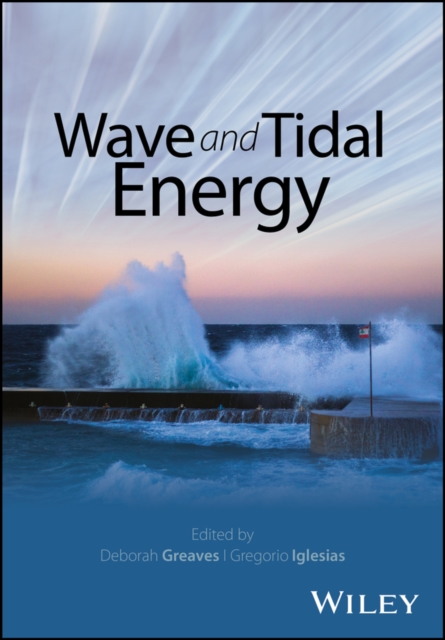
Wave and tidal energy
A comprehensive text covering all aspects of wave and tidal energy
Wave and Tidal Energy provides a comprehensive and self-contained review of the developing marine renewable energy sector, drawing from the latest research and from the experience of device testing. The book has a twofold objective: to provide an overview of wave and tidal energy suitable for newcomers to the field and to serve as a reference text for advanced study and practice.
Including detail on key issues such as resource characterisation, wave and tidal technology, power systems, numerical and physical modelling, environmental impact and policy. The book also includes an up-to-date review of developments worldwide and case studies of selected projects.
Key features:
* A comprehensive and self-contained text covering all aspects of the multidisciplinary fields of wave and tidal energy.
* Draws upon the latest research in wave and tidal energy and the experience of leading practitioners in numerical and laboratory modelling.
* Regional developments worldwide are reviewed and representative projects are presented as case studies.
Wave and Tidal Energy is an invaluable resource to a wide range of readers, from engineering students to technical managers and policymakers to postgraduate students and researchers.
eBook


Electricity from Wave and Tide
\"A concise yet technically authoritative overview of modern marine energy devices with the goal of sustainable electricity generation With 165 full-colour illustrations and photographs of devices at an advanced stage, the book provides inspiring case studies of today's most promising marine energy devices and developments, including full-scale grid-connected prototypes tested in sea conditions. It also covers the European Marine Energy Centre (EMEC) in Orkney, Scotland, where many of the devices are assessed.Topics discussed: global resources - drawing energy from the World's waves and tides history of wave and tidal stream systems theoretical background to modern developments conversion of marine energy into grid electricity modern wave energy converters and tidal stream energy converters This book is aimed at a wide readership including professionals, policy makers and employees in the energy sector needing an introduction to marine energy. Its descriptive style and technical level will also appeal to students of renewable energy, and the growing number of people who wish to understand how marine devices can contribute to carbon-free electricity generation in the 21st century\"--
eBook

Wave and tidal energy
Provides a comprehensive and self-contained review of the developing marine renewable energy sector, drawing from the latest research and from the experience of device testing. The book has a twofold objective: to provide an overview of wave and tidal energy suitable for newcomers to the field and to serve as a reference text for advanced study and practice. Including detail on key issues such as resource characterisation, wave and tidal technology, power systems, numerical and physical modelling, environmental impact and policy.
Book

The green economy. Wave energy
Another budding energy field is harnessing the power of the ocean. Wave energy buoys are doing it now but the plan is to expand this technology all over the world. The world's largest buoy is being built in Vancouver, Washington and it will launch on the Oregon Coast.
Streaming Video

The pros and cons of wave power
Discusses the pros and cons of using wave power to provide energy we need.
Book
Ocean Waves and Oscillating Systems
This 2002 book examines the interaction between ocean waves and oscillating systems. With a focus on linear analysis of low-amplitude waves, the text is designed to convey a thorough understanding of wave interactions. Topics covered include the background mathematics of oscillations, gravity waves on water, the dynamics of wave-body interactions, and the absorption of wave energy by oscillating bodies. Linear algebra, complex numbers, differential equations, and Fourier transformation are utilized as bases for the analysis, and each chapter ends with problems. While the book's focus is on linear theory, the practical application of energy storage and transport is interwoven throughout. This book will be appropriate for those with backgrounds in elementary fluid dynamics or hydrodynamics and mathematical analysis. Graduate students and researchers will find it an excellent source of wave energy theory and application.
eBook