
Catalogue Search | MBRL


Are you sure you want to remove the book from the shelf?

{{itemTitle}}
60,548
result(s) for
"Odors"
Sort by:

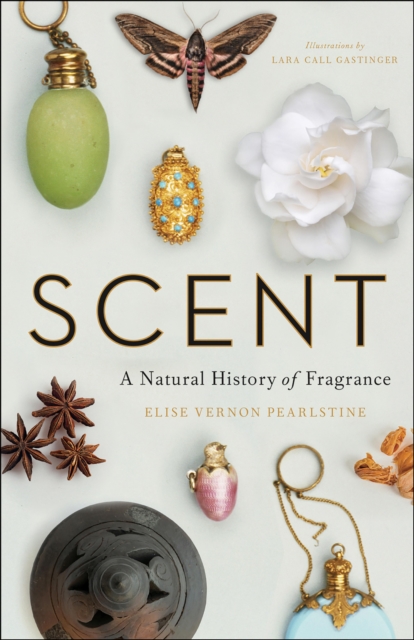
Scent
A fascinating exploration of the natural history of scent
and human perceptions of fragrance from the viewpoint of plant and
pollinator Plants have long harnessed the chemical
characteristics of aromatic compounds to shape the world around
them. Frankincense resin from the genus Boswellia seals
injured tissues and protects trees from invading pathogens. Jasmine
produces a molecule called linalool that attracts pollinating moths
with its flowery scent. Tobacco uses a similarly sweet-smelling
compound called benzyl acetone to attract pollinators. Only
recently in the evolutionary history of plants, however, have
humans learned to co-opt their fragrances to seduce, heal, protect,
and alter moods themselves. In this wide-ranging and accessible new
book, biologist-turned-perfumer Elise Vernon Pearlstine turns our
human-centered perception of fragrance on its head and investigates
plants' evolutionary reasons for creating aromatic molecules.
Delving into themes of spirituality, wealth, power, addiction,
royalty, fantasy, and more, Pearlstine uncovers the natural history
of aromatic substances and their intersection with human culture
and civilization.
eBook

Exposure-complaint relationships of various environmental odor sources in Styria, Austria
In the planning and authorization process of industrial plants or agricultural buildings, it needs to be ensured that odor emissions do not annoy nearby residents in an unacceptable way. Previous studies have shown that odor-hour frequency is an important predictor for odor annoyance. However, odor-hour frequencies can be assessed for day and night separately. The present study relates complaint rates with different odor types and different metrics of frequency calculated via a dispersion model. Binary logistic regression analyses show that odor type and frequency of odor-hours are important predictors for complaints, while type of residential area does not increase the predictive value of the model. The combination of calculated frequency of day time odor-hours and type of odor explains complaint rates best. It is recommended to keep odor emissions as low as possible, especially for highly annoying odor types.
Journal Article

Phew! : the skunk and other stinky animals
Learn about animals that use stinky smells for defense.
Book
Modeling Olfactory Processing and Insights on Optimal Learning in Constrained Neural Networks : Learning from the Anatomy of the Drosophila Mushroom Body
Animals adapt their systems to optimise for different competing goals at the same time. Ideally, they will reach an optimal state of equilibrium where the outcome from any goal cannot get better without at the same time making another worse off, similar to the state of Pareto optimaility (Mock 2011). Animals can seek different goals like, to maintain their systems' stability and robustness, or improving their performances in a given computational task, which is reflected in their memory capacity and ability to make more rewarding decisions. Many species are capable of forming associative memories, they can learn to contextualise sensory stimuli as good, bad or neutral, when they are associated by a shortly upcoming salient outcome and bias their behaviours to approach or avoid these cues in the future. In this work I will focus on modelling the associative learning in the mushroom body circuit of the fruit fly, its center of olfactory associative learning. Flies can learn to associate an odor (sensory experience) with an appetitive or aversive outcome. They do so by modifying the connections between the mushroom body intrinsic neurons, called Kenyon cells (KCs), and their downstream mushroom body output neurons (MBONs). The fly motor behaviour was found to be biased by the activity of the MBONs to either approach or avoid an odor (Aso et al. 2014). Although many studies uncovered the molecular mechanisms and the neurons underpinning associative learning in different species, there has been no work done to answer some specific questions: (a) Why do the neurons in the same circuit within the same animal exhibit variability among each others in their intrinsic properties? It is unknown how variability among the same types of neurons in the same circuit and animal would eventually affect the animal's optimal behaviour in a computational task. Even previous studies that tackled inter-neuronal variability were trying to study its effect on circuits stability and were dealing with inter-neuronal variability across animals and not within an individual circuit (Marder and Goaillard 2006; Golowasch et al. 2002; Schulz, Goaillard, and Marder 2006; Schulz, Goaillard, and Marder 2007). Can the observed inter-neuronal variability be a result of some optimisation protocol that enhances the circuit computational performance, for example, memory or data performance? Or has it just happened at random? (b) Learning in the cerebellum (and its alike structures in other animals like the fruit fly mushroom body) happen by long term depression (weakening) between its intrinsic neurons -encoding the sensory input- and the downstream neurons that guide the animal's motor behaviour (Ito 1989). Like in (a), I ask if this learning rule has been conserved across species for optimising some computational aspects of learning In this 3 Chapters thesis, I will present a computational model of associative learning in the fruit fly mushroom body using realistic input odors statistics, as well as putting some constraints on the model network that were observed experimentally in the real mushroom body (e.g. the level of KCs sparse coding, the level of KCs sparse coding when their inhibitory inputs are silenced). In Chapter 2, I will answer the first question, the first aim, of this thesis and show that random variability between the KCs in their intrinsic parameters will impair the fly's memory performance. I find that the random inter-KCs variability will result in a high variability among the neurons in their sparsity values, which results in very few neurons being specifically active for some odors whilst the vast majority are activated by all incoming odors, that reduces the fly's ability to distinguish between odors and their identity as 'good' rewarded or 'bad' punished odors. However, I show that compensatory variability mechanisms will rescue the memory performance. I present 4 different models (activity-independent and activity-dependent rules) for how this compensatory variability can take place in real neurons. Last but not least, I show that the data from the newly released fly connectome actually reveal compensatory variability in the KCs which agree with my models' predictions. In Chapter 3, I will answer the second question in this thesis and show that, under some conditions, learning by depression can be more optimal than by potentiation. I will show that if the fly's decision making policy integrates the information from the MBONs in a divisive normalisation like manner (I explain more about divisive normalisation in Chapter 3), then learning by depression will lead to a higher memory performance. I also suggest a biologically plausible implementation for this normalisation decision policy using a winner-take-all (WTA) circuit model. I predict that in a WTA circuit that integrates the MBONs outputs, the fly's memory performance will be higher under learning by depression than under potentiation if the noise in the MBONs responses is of multiplicative nature (that is, if the noise in the MBONs responses across different trials is higher at higher MBONs firing rates).
Dissertation
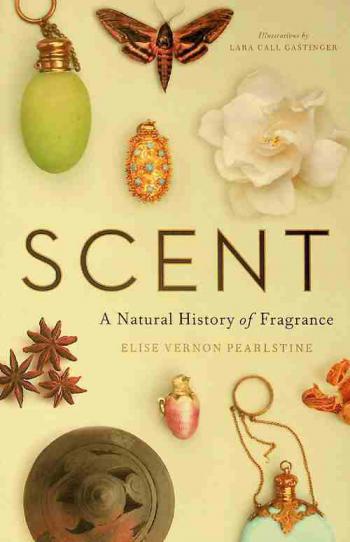
Scent : a natural history of fragrance
In this wide-ranging and accessible new book, biologist-turned-perfumer Elise Vernon Pearlstine turns our human-centered perception of fragrance on its head and investigates plants' evolutionary reasons for creating aromatic molecules. Delving into themes of spirituality, wealth, power, addiction, royalty, fantasy, and more, Pearlstine uncovers the natural history of aromatic substances and their intersection with human culture and civilization.
Integrated model for estimating odor emissions from civil wastewater treatment plants
The objective of this research project was the design and development of an integrated model for odor emission estimation in wastewater treatment plants. The SMAT’s plant, the largest wastewater treatment facility in Italy, was used as a case study. This article reports the results of the characterization phase that led to the definition and design of the proposed conceptual model for odor emission estimation. In this phase, concentrations of odor chemical tracers (VOC, H
2
S, NH
3
) and odor concentrations were monitored repeatedly. VOC screening with GC-MS analysis was also performed. VOC concentrations showed significant variability in space and magnitude. NH
3
and H
2
S were also detected at considerable concentrations. Results were elaborated to define a spatially variable linear relationship between the sum of odor activity values (SOAV) and odor concentrations. Based on the results, a conceptual operational model was presented and discussed. The proposed system is composed by a network of continuous measurement stations, a set of algorithms for data elaboration and synchronization, and emission dispersion modeling with the application of Lagrangian atmospheric models.
Journal Article

Calvin Coconut : zoo breath
When Calvin gets a school assignment to do some original research, he decides to investigate his dog's stinky breath and ends up learning about more than just smells.
Book

Odor-driven face-like categorization in the human infant brain
Understanding how the young infant brain starts to categorize the flurry of ambiguous sensory inputs coming in from its complex environment is of primary scientific interest. Here, we test the hypothesis that senses other than vision play a key role in initiating complex visual categorizations in 20 4-mo-old infants exposed either to a baseline odor or to their mother’s odor while their electroencephalogram (EEG) is recorded. Various natural images of objects are presented at a 6-Hz rate (six images/second), with face-like object configurations of the same object categories (i.e., eliciting face pareidolia in adults) interleaved every sixth stimulus (i.e., 1 Hz). In the baseline odor context, a weak neural categorization response to face-like stimuli appears at 1 Hz in the EEG frequency spectrum over bilateral occipitotemporal regions. Critically, this face-like–selective response is magnified and becomes right lateralized in the presence of maternal body odor. This reveals that nonvisual cues systematically associated with human faces in the infant’s experience shape the interpretation of face-like configurations as faces in the right hemisphere, dominant for face categorization. At the individual level, this intersensory influence is particularly effective when there is no trace of face-like categorization in the baseline odor context. These observations provide evidence for the early tuning of face-(like)–selective activity from multisensory inputs in the developing brain, suggesting that perceptual development integrates information across the senses for efficient category acquisition, with early maturing systems such as olfaction driving the acquisition of categories in later-developing systems such as vision.
Journal Article