
Catalogue Search | MBRL


Are you sure you want to remove the book from the shelf?

{{itemTitle}}
126
result(s) for
"Oil fields Alaska."
Sort by:


Breaking Ice for Arctic Oil
In 1969, an icebreaking tanker, the SS Manhattan , was
commissioned by Humble Oil to transit the Northwest Passage in
order to test the logistical and economic feasibility of an
all-marine transportation system for Alaska North Slope crude oil.
Proposed as an alternative to the Trans-Alaska Pipeline, the
Manhattan made two voyages to the North American Arctic
and collected volumes of scientific data on ice conditions and the
behavior of ships in ice. Although the Manhattan
successfully navigated the Northwest Passage-closing a
five-hundred-year chapter of Arctic exploration by becoming the
first commercial vessel to do so-the expedition ultimately
demonstrated the impracticality of moving crude oil using
icebreaking ships. Breaking Ice for Arctic Oil details
this historic voyage, establishing its significant impact on the
future of marine traffic and resource development in the Arctic and
setting the stage for the current oil crisis.
eBook
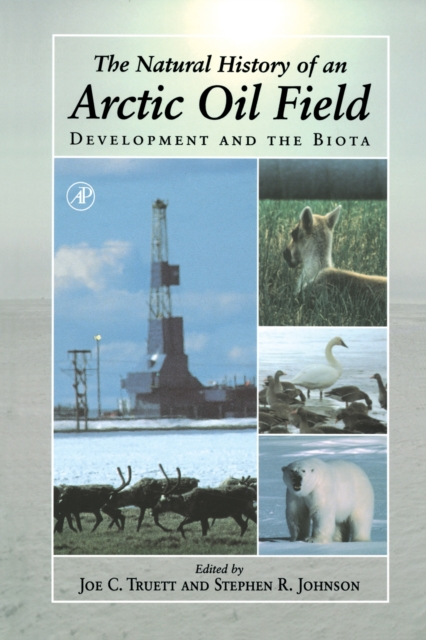
The natural history of an arctic oil field : development and the biota
In spite of the harsh conditions that characterize the Arctic, it is a surprisingly fragile ecosystem.The exploration for oil in the Arctic over the past 30 years has had profound effects on the plants and animals that inhabit this frozen clime.The Natural History of an Arctic Oil Field synthesizes decades of research on these myriad impacts.
eBook

Northern Alaska Oil Fields and Caribou
Caribou (Rangifer tarandus) are a prominent factor in regulating and managing oil and gas exploration and development in Alaska. Concerns that the oil fields in the Prudhoe Bay region of northern Alaska have negatively affected the distribution and productivity of the Central Arctic caribou herd (CAH) have been expressed in scientific literature and management documents such as environmental impact statements. The number of CAH caribou in the western summer range that includes the oil fields declined by more than 50% between 1992 and 1995 but then almost doubled between 1995 and 1997. Numbers of caribou in the eastern portion of the range, without oil fields, showed opposite trends during these time intervals. The changes in numbers of caribou in areas with and without oil fields are probably due to movements between summer ranges rather than oil-field impacts. Although there may be some disturbance of animals in the oil fields, population-level impacts apparently have not occurred. The number of caribou in the CAH has increased from approximately 5,000 to approximately 20,000 since oil-field development began, and the management objectives for the CAH have been met despite development of the largest oil and gas fields in the United States. Managers and regulators should acknowledge that coexistence of caribou with oil and gas development demonstrates the success of mitigation, regulation, and management efforts. These successes should be cited and incorporated in planning efforts for future oil development and in public management documents such as environmental impact statements (EIS). Management documents can be considered as scientific and objective only if all available information is included, regardless of whether the information has negative or positive connotations for developments.
Journal Article

Biodegradation of Dispersed Oil in Arctic Seawater at -1°C
As offshore oil and gas exploration expands in the Arctic, it is important to expand the scientific understanding of arctic ecology and environmental impact to mitigate operational risks. Understanding the fate of oil in arctic seawater is a key factor for consideration. Here we report the chemical loss due to the biodegradation of Alaska North Slope (ANS) crude oil that would occur in the water column following the successful dispersion of a surface oil slick. Primary biodegradation and mineralization were measured in mesocosms containing Arctic seawater collected from the Chukchi Sea, Alaska, incubated at -1°C. Indigenous microorganisms degraded both fresh and weathered oil, in both the presence and absence of Corexit 9500, with oil losses ranging from 46-61% and up to 11% mineralization over 60 days. When tested alone, 14% of 50 ppm Corexit 9500 was mineralized within 60 days. Our study reveals that microorganisms indigenous to Arctic seawater are capable of performing extensive biodegradation of chemically and physically dispersed oil at an environmentally relevant temperature (-1°C) without any additional nutrients.
Journal Article

Anaerobic hydrocarbon degradation in candidate phylum ‘Atribacteria’ (JS1) inferred from genomics
The hydrocarbon-enriched environments, such as oil reservoirs and oil sands tailings ponds, contain a broad diversity of uncultured microorganisms. Despite being one of the few prokaryotic lineages that is consistently detected in both production water from oil reservoirs and stable hydrocarbon-degrading enrichment cultures originated from oil reservoirs, the physiological and ecological roles of candidate phylum “Atribacteria” (OP9/JS1) are not known in deep subsurface environments. Here, we report the expanded metabolic capabilities of Atribacteria as inferred from genomic reconstructions. Seventeen newly assembled medium-to-high-quality metagenomic assembly genomes (MAGs) were obtained either from co-assembly of two metagenomes from an Alaska North Slope oil reservoir or from previous studies of metagenomes coming from different environments. These MAGs comprise three currently known genus-level lineages and four novel genus-level groups of OP9 and JS1, which expands the genomic coverage of the major lineages within the candidate phylum Atribacteria. Genes involved in anaerobic hydrocarbon degradation were found in seven MAGs associated with hydrocarbon-enriched environments, and suggest that some Atribacteria could ferment short-chain
n
-alkanes into fatty acid while conserving energy. This study expands predicted metabolic capabilities of Atribacteria (JS1) and suggests that they are mediating a key role in subsurface carbon cycling.
Journal Article
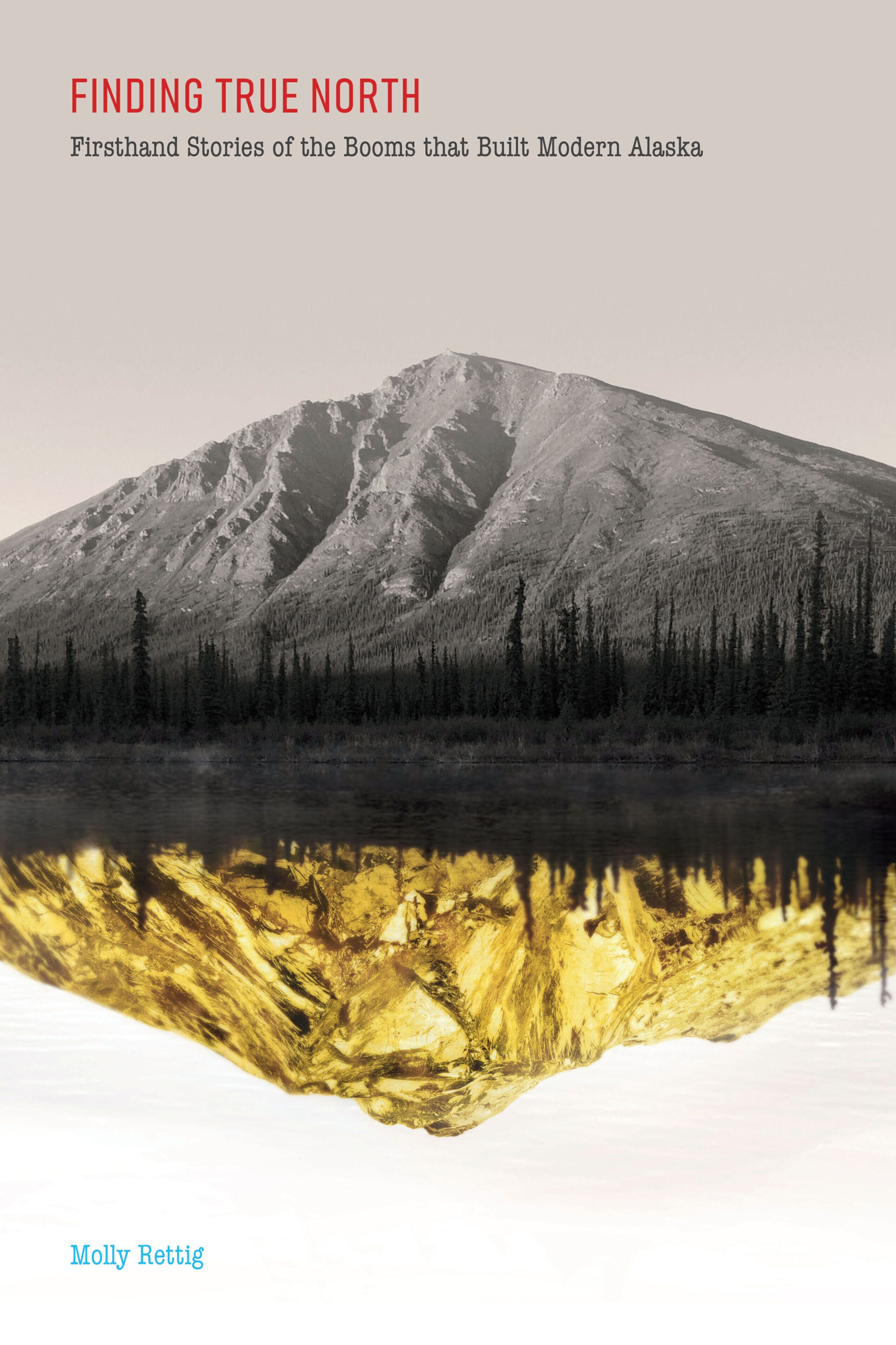
Finding True North
Melting sea ice and rumbling volcanoes. Sled dogs racing through
unnamed valleys.
These were the images that came to mind when Molly Rettig moved
to Fairbanks, Alaska to work as a reporter at the local newspaper.
An avid environmentalist, she couldn't wait to explore the vast,
untamed spaces that had largely been paved over on the east coast.
But when her 72-year-old neighbor, Clutch, invites her on a tour of
his gold mine-an 800-foot tunnel blasted into the side of his
house-she begins to question many of her ideas about Alaska, and
about herself.
In Finding True North, Rettig takes us on a gripping journey
through Alaska's past that brings alive the state's magnificent
country and its quirky, larger-than-life characters. She meets a
trapper who harvests all she needs from the land, a bush pilot who
taught himself how to fly, and an archaeologist who helped build an
oil pipeline through pristine wilderness. While she learns how
airplanes, mines, and oil fields have paved the way for newcomers
like herself, she also stumbles upon a bigger question: what has
this quest for Alaska's natural resources actually cost, and how
much more is at stake?
This is a book about all the ways wild places teach us about
ourselves. Rettig writes both playfully and honestly about how one
place can be many things to many people-and how all of it can be
true.
eBook

Climate change, energy production, and Arctic tourism: A case study analysis of northern Alaska
Historically, there have been two kinds of economic activities in northern Alaska. The first and oldest is the subsistence lifestyle of the Indigenous peoples. The second and more recent is the development of the oil and gas industry, which began in earnest in 1977 with the competition of the Trans-Alaskan Pipeline and construction of a new road, the Dalton Highway. Although first used only by commercial traffic for the oilfield, in 1994, the highway opened to the public and is now frequented by tourists travelling above the Arctic Circle. In this paper, we analyse the future of northern Alaska tourism by considering evolutionary economic geography and the area’s likely reduction in oil and gas activity. We consider how climate change may serve as a trigger, impacting tourism through the rise of last chance tourism, and conduct a scenario-based analysis. We argue that the oil and gas industry is likely to continue along its current path, exhausting accessible resources and innovating technology to push into new territories in the far north. However, should the culmination of extraneous factors render climate change a trigger, industry decline could be offset by investments that repurpose the area’s industrial heritage into tourism sites.
Journal Article

Genome-Resolved Metagenomic Analysis Reveals Roles for Candidate Phyla and Other Microbial Community Members in Biogeochemical Transformations in Oil Reservoirs
Oil reservoirs are major sites of methane production and carbon turnover, processes with significant impacts on energy resources and global biogeochemical cycles. We applied a cultivation-independent genomic approach to define microbial community membership and predict roles for specific organisms in biogeochemical transformations in Alaska North Slope oil fields. Produced water samples were collected from six locations between 1,128 m (24 to 27°C) and 2,743 m (80 to 83°C) below the surface. Microbial community complexity decreased with increasing temperature, and the potential to degrade hydrocarbon compounds was most prevalent in the lower-temperature reservoirs. Sulfate availability, rather than sulfate reduction potential, seems to be the limiting factor for sulfide production in some of the reservoirs under investigation. Most microorganisms in the intermediate- and higher-temperature samples were related to previously studied methanogenic and nonmethanogenic archaea and thermophilic bacteria, but one candidate phylum bacterium, a member of the Acetothermia (OP1), was present in Kuparuk sample K3. The greatest numbers of candidate phyla were recovered from the mesothermic reservoir samples SB1 and SB2. We reconstructed a nearly complete genome for an organism from the candidate phylum Parcubacteria (OD1) that was abundant in sample SB1. Consistent with prior findings for members of this lineage, the OD1 genome is small, and metabolic predictions support an obligately anaerobic, fermentation-based lifestyle. At moderate abundance in samples SB1 and SB2 were members of bacteria from other candidate phyla, including Microgenomates (OP11), Atribacteria (OP9), candidate phyla TA06 and WS6, and Marinimicrobia (SAR406). The results presented here elucidate potential roles of organisms in oil reservoir biological processes. IMPORTANCE The activities of microorganisms in oil reservoirs impact petroleum resource quality and the global carbon cycle. We show that bacteria belonging to candidate phyla are present in some oil reservoirs and provide the first insights into their potential roles in biogeochemical processes based on several nearly complete genomes. The activities of microorganisms in oil reservoirs impact petroleum resource quality and the global carbon cycle. We show that bacteria belonging to candidate phyla are present in some oil reservoirs and provide the first insights into their potential roles in biogeochemical processes based on several nearly complete genomes.
Journal Article

Machine Learning-Based Probabilistic Lithofacies Prediction from Conventional Well Logs: A Case from the Umiat Oil Field of Alaska
A good understanding of different rock types and their distribution is critical to locate oil and gas accumulations in the subsurface. Traditionally, rock core samples are used to directly determine the exact rock facies and what geological environments might be present. Core samples are often expensive to recover and, therefore, not always available for each well. Wireline logs provide a cheaper alternative to core samples, but they do not distinguish between various rock facies alone. This problem can be overcome by integrating limited core data with largely available wireline log data with machine learning. Here, we presented an application of machine learning in rock facies predictions based on limited core data from the Umiat Oil Field of Alaska. First, we identified five sandstone reservoir facies within the Lower Grandstand Member using core samples and mineralogical data available for the Umiat 18 well. Next, we applied machine learning algorithms (ascendant hierarchical clustering, self-organizing maps, artificial neural network, and multi-resolution graph-based clustering) to available wireline log data to build our models trained with core-driven information. We found that self-organizing maps provided the best result among other techniques for facies predictions. We used the best self-organizing maps scheme for predicting similar reservoir facies in nearby uncored wells—Umiat 23H and SeaBee-1. We validated our facies prediction results for these wells with observed seismic data.
Journal Article