
Catalogue Search | MBRL


Are you sure you want to remove the book from the shelf?

{{itemTitle}}
507
result(s) for
"Oil sands Alberta."
Sort by:

Beautiful destruction
\"Beautiful Destruction is a large-format, high-quality photography book that uses over 100 stunning, full-colour aerial photographs to transcend the polarities that dominate public discourse of the largest industrial project in North America: the Alberta oil/tar sands. With short essays by renowned personalities Bill McKibben, Charles Wilkinson, Duff Connacher, Elizabeth May, Eric Reguly, Ezra Levant, Jennifer Grant, Rick George, Gil McGowan, Allan Adam, Megan Leslie and Francis Scarpaleggia from both sides of the oil/tar sands debate discussing the artistic, industrial and environmental perceptions of northern Alberta's petroleum-based mega-project, Beautiful Destruction is one of the most ambitious, provocative and unique photography projects to be published in years.\"-- Provided by publisher.
Book

Tar Wars
Tar Wars offers a critical inside look at how leading image-makers negotiate escalating tensions between continuous economic growth mandated by a globalized economic system and its unsustainable environmental costs. As place branding assumes paramount importance in an increasingly global, visual, and ecologically conscious society, an international battle unfolds over Alberta’s bituminous sands. This battle pits independent documentary filmmakers against professional communicators employed by government and the oil industry. Tar Wars engages scholars and students in communications, film, environmental studies, social psychology, PR, media and cultural studies, and petrocultures. This book also speaks to decision makers, activists, and citizens exploring intersections of energy, environment, culture, politics, economy, media and power.
eBook

Unsustainable oil : facts, counterfacts and fictions
\"Bitumen extraction is the lifeblood of Alberta, and there are many stories about the boom-and-bust economy. But what does literature have to say about the \"progress\" of petroculture? Jon Gordon maps out a new field of study by examining the relationship between culture and energy extraction, moving towards nuance and away from the entrenched rhetorical positions that currently dominate discussion. His examination of theoretical, political, and environmental issues in this groundbreaking book contribute to our understanding of the culture and the ethics of energy production within the Canadian context. Unsustainable Oil offers readers a chance to consider literature's potential in confronting the hegemony of the oil and gas industry, and will be particularly well-received by scholars and students of Cultural Studies, Literature, Ecocriticism, Energy Humanities, and Indigenous Studies.\"-- Provided by publisher.
Book

Black Bonanza
What if Canada 's so-called environmental nightmare was really an engineering triumph and the key to a stable and sustainable future?For years, Canadians have been hearing nothing but bad news out of the Athabasca Oil Sands.
eBook
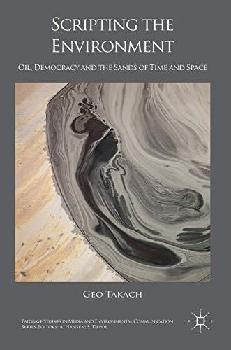
Scripting the environment : oil, democracy and the sands of time and space
\"This volume explores how to engage audiences both beyond and within the academy more deeply in environmental research through arts-based forms. It builds on a multi-pronged case study of scripts for documentary film, audio-visual and stage formats, focusing on how the identity of a place is constructed and contested in the face of environmental concerns around fossil-fuel extraction in a globalized, visual society--and specifically on the rising, international public-relations war over Alberta's stewardship of the tar sands. Each script is followed by discussion of the author's choices of initiating idea, research sources, format, voices, world of the story, structure and visual style, and other notes on the convergence of synthesis, analysis and (re)presentation in the script. Included are lively analysis and commentary on screenwriting and playwriting theory, the creation and dissemination of the scripts, and reflections to ground a proposed framework for writing eco-themed scripts for screen, audio-visual and stage formats.\"--Back cover.
Book

Unsustainable Oil
Groundbreaking study of theoretical, political, and environmental issues around the culture and ethics of petroculture.
eBook


Energy Infrastructure Clears the Way for Coyotes in Alberta's Oil Sands
Energy extraction and development are fragmenting the landscape in Canada's oil sands region, creating patches of boreal forest connected by millions of kilometers of cleared linear features. The impacts of oil and gas disturbance on some wildlife species, like caribou and wolves, have been a topic of much research; yet, the influence of energy development on other species, like coyotes—which have recently expanded into the boreal forest and established strong populations—is not well understood. Here, we assessed the effects of linear features on coyote distribution and interspecific interactions by deploying camera traps across multiple landscapes of varying energy disturbance intensities. Using an information theoretic approach, we tested hypotheses about the effects of linear feature type and density, natural feature coverage, and prey and competitor relative abundances on coyote monthly occurrence. High densities of wide linear features and high relative abundances of small mammal prey and large competitors best predicted coyote occurrence, whereas natural features had a negative effect. Selection for higher densities of these features suggests that wide linear clearings, like roads and geo‐survey seismic lines, provide movement paths for coyotes as they do for wolves, although they may also provide prey subsidies. Snowshoe hare and red squirrel prey, but not ungulates, had a strong positive effect on coyote occurrence, although coyote–prey relationships could shift with the hare cycle. Coyotes appeared to co‐occur with wolf and lynx competitors, perhaps through shared use of abundant resources and temporal segregation or mediated by large coyote populations—and potentially indicating a departure from top‐down coyote suppression by dominant heterospecifics. Energy development has fundamentally reshaped the boreal forest of Canada's oil sands region, giving way to landscapes that support generalist, range‐expanding species like coyotes and altering community dynamics. Energy development has fundamentally reshaped the boreal forest of Canada's oil sands region. Dense networks of linear features, including roads and seismic lines, have created new landscapes that support generalist, range‐expanding species like coyotes, potentially altering community dynamics.
Journal Article

Use of pre-industrial baselines to monitor anthropogenic enrichment of metals concentrations in recently deposited sediment of floodplain lakes in the Peace-Athabasca Delta (Alberta, Canada)
Well-designed monitoring approaches are needed to assess effects of industrial development on downstream aquatic environments and guide environmental stewardship. Here, we develop and apply a monitoring approach to detect potential enrichment of metals concentrations in surficial lake sediments of the Peace-Athabasca Delta (PAD), northern Alberta, Canada. Since the ecological integrity of the PAD is strongly tied to river floodwaters that replenish lakes in the delta, and the PAD is located downstream of the Alberta oil sands, concerns have been raised over the potential transport of industry-supplied metals to the PAD via the Athabasca River. Surface sediment samples were collected in September 2017 from 61 lakes across the delta, and again in July 2018 from 20 of the same lakes that had received river floodwaters 2 months earlier, to provide snapshots of metals concentrations (Be, Cd, Cr, Cu, Ni, Pb, V, and Zn) that have recently accumulated in these lakes. To assess for anthropogenic enrichment, surficial sediment metals concentrations were normalized to aluminum and compared to pre-industrial baseline (i.e., reference) metal-aluminum linear relations for the Athabasca and Peace sectors of the PAD developed from pre-1920 measurements in lake sediment cores. Numerical analysis demonstrates no marked enrichment of these metals concentrations above pre-1920 baselines despite strong ability (> 99% power) to detect enrichment of 10%. Measurements of river sediment collected by the Regional Aquatics- and Oil Sands-Monitoring Programs (RAMP/OSM) also did not exceed pre-1920 concentrations. Thus, results presented here show no evidence of substantial oil sands-derived metals enrichment of sediment supplied by the Athabasca River to lakes in the PAD and demonstrate the usefulness of these methods as a monitoring framework.
Journal Article

Minecraft's territory: Alberta's oil sands, settler knowledge infrastructure and digital geographies
In 2017, the Alberta Geological Survey published an extension to the game Minecraft that allows players to virtually mine bitumen in Peace River, one of the three bitumen deposits in Alberta that together form the fourth largest oil reserve on Earth. This article uses the Minecraft extension to advance a novel synthesis of environmental and digital geographies, and to understand how they combine in settler knowledge infrastructures—the networks, institutions and practices through which geoscientific knowledge is constitutive for claims to territory by settler states. To advance these ideas, I show how the data used to create the virtual world within Minecraft are connected to real‐world extraction, especially environmental harms that Alberta's provincial regulator sought to address in Peace River. That data, however, does not stand alone. It was interpreted through, and itself extended, knowledge practices that stretch back to early‐twentieth century mapping and the on‐going collection of extractive data by the state. The Minecraft model also extends Alberta's settler knowledge infrastructure as part of international collaborations with other geological agencies. Set in this broader context, the article pushes digital geographies to attend to how environments—geologic pasts, extractive presents, virtually played—prove constitutive for state claims to territory. Short In 2017, the Alberta Geological Survey published an extension to Minecraft that allows players to virtually mine bitumen in Peace River. This article traces how the data used for the Minecraft extension are tied to broader networks and institutions of geoscientific knowledge production, or what I term settler knowledge infrastructure. It shows how digital geographies produced by state agencies are constitutive of claims to space and territory that, in Alberta and other settler colonial contexts, involve both the extraction of value from land and Indigenous dispossession.
Journal Article