
Catalogue Search | MBRL


Are you sure you want to remove the book from the shelf?

{{itemTitle}}
26
result(s) for
"Ojibwa Indians -- Social life and customs"
Sort by:

The Ojibwe : the past and present of the Anishinaabe
\"Explains Ojibwe history and highlights Ojibwe life in modern society\"-- Provided by publisher.
Book

Lies to Live By
Lies To Live Bybrings together two selections of stories by Ojibwe storyteller Lois Beardslee. \"Lies to Live By,\" a series of interdependent tales, reflects the storyteller's role in interpreting traditional stories for contemporary audiences, while preserving traditions based not in mysticism but in pragmatism. In \"Calm Days,\" three generations-the narrator, her grandfather, and her son-spend a week together on a remote island during the course of which they demonstrate the continuity of Ojibwe life. Together these stories weave the contemporary and the traditional to show how cultural diversity can be preserved even as cultural boundaries are transcended.
eBook
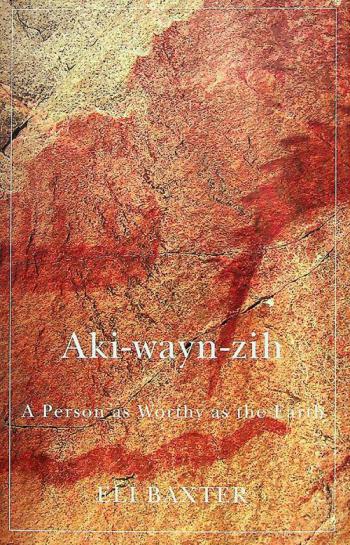
Aki-wayn-zih : a person as worthy as the Earth
\"Members of Eli Baxter's generation are the last of the hunting and gathering societies living on Turtle Island. They are also among the last fluent speakers of the Anishinaabay language known as Anishinaabaymowin. Aki-wayn-zih is a story about the land and its spiritual relationship with the Anishinaabayg, from the beginning of their life on Miss-koh-tay-sih Minis (Turtle Island) to the present day. Baxter writes about Anishinaabay life before European contact, his childhood memories of trapping, hunting, and fishing with his family on traditional lands in Treaty 9 territory, and his personal experience surviving the residential school system. Examining how Anishinaabay Kih-kayn-daa-soh-win (knowledge) is an elemental concept embedded in the Anishinaabay language, Aki-wayn-zih explores history, science, math, education, philosophy, law, and spiritual teachings, outlining the cultural significance of language to Anishinaabay identity. Recounting traditional Ojibway legends in their original language, fables in which moral virtues double as survival techniques, and detailed guidelines for expertly trapping or ensnaring animals, Baxter reveals how the residential school system shaped him as an individual, transformed his family, and forever disrupted his reserve community and those like it. Through spiritual teachings, historical accounts, and autobiographical anecdotes, Aki-wayn-zih offers a new form of storytelling from the Anishinaabay point of view.\"-- Provided by publisher.

Ojibwe Discourse Markers
Brendan Fairbanks examines the challenging subject of discourse markers in Ojibwe, one of the many indigenous languages in the Algonquian family. Mille Lacs elder Jim Clark once described the discourse markers as \"little bugs that are holding on for dear life.\" For example, discourse markers such asmiiandgoshaexist only on the periphery of sentences to provide either cohesion or nuance to utterances. Fairbanks focuses on the discourse markers that are the most ubiquitous and that exist most commonly within Ojibwe texts.Much of the research on Algonquian languages has concentrated primarily on the core morphological and syntactical characteristics of their sentence structure. Fairbanks restricts his study to markers that are far more elusive and difficult in terms of semantic ambiguity and their contribution to sentences and Ojibwe discourse.Ojibwe Discourse Markersis a remarkable study that interprets and describes the Ojibwe language in its broader theoretical concerns in the field of linguistics. With a scholarly and pedagogical introductory chapter and a glossary of technical terms, this book will be useful to instructors and students of Ojibwe as a second language in language revival and maintenance programs.
eBook

Centering Anishinaabeg Studies
For the Anishinaabeg people, who span a vast geographic region from the Great Lakes to the Plains and beyond, stories are vessels of knowledge. They arebagijiganan, offerings of the possibilities within Anishinaabeg life. Existing along a broad narrative spectrum, fromaadizookaanag(traditional or sacred narratives) todibaajimowinan(histories and news)-as well as everything in between-storytelling is one of the central practices and methods of individual and community existence. Stories create and understand, survive and endure, revitalize and persist. They honor the past, recognize the present, and provide visions of the future. In remembering, (re)making, and (re)writing stories, Anishinaabeg storytellers have forged a well-traveled path of agency, resistance, and resurgence. Respecting this tradition, this groundbreaking anthology features twenty-four contributors who utilize creative and critical approaches to propose that this people's stories carry dynamic answers to questions posed within Anishinaabeg communities, nations, and the world at large. Examining a range of stories and storytellers across time and space, each contributor explores how narratives form a cultural, political, and historical foundation for Anishinaabeg Studies. Written by Anishinaabeg and non-Anishinaabeg scholars, storytellers, and activists, these essays draw upon the power of cultural expression to illustrate active and ongoing senses of Anishinaabeg life. They are new and dynamic bagijiganan, revealing a viable and sustainable center for Anishinaabeg Studies, what it has been, what it is, what it can be.
eBook
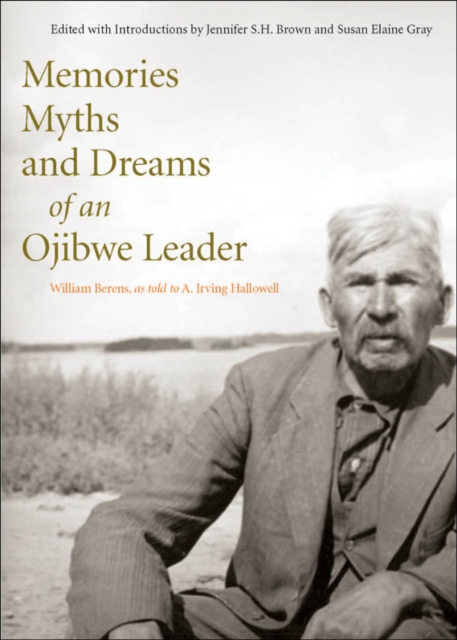
Memories, Myths, and Dreams of an Ojibwe Leader
Because the elderly chief wanted his visitor to understand the Ojibwe world, and because Hallowell was deeply interested in his subject matter and was such a good listener, Berens freely related his dreams and other stories about encounters with powerful beings. The fact that he also shared traditional myths in summer, when Ojibwe people thought it dangerous to discuss such things, shows the depth of his relationship with Hallowell. Berens' reminiscences and story and myth texts are unparalleled as sources for the life, experiences, and outlook of this important Ojibwe leader, and for the insights they provide into the history and culture of his people.
eBook

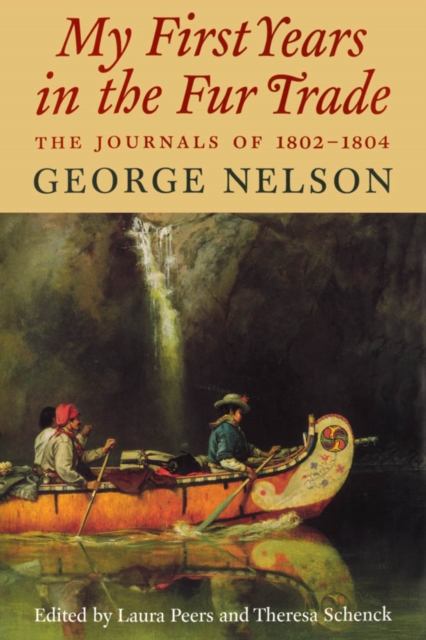
My First Years in the Fur Trade
Captivated by tales of adventure, fifteen-year-old George Nelson left his family in Quebec in 1802 and headed to the Northwest Territory to work for Sir Alexander Mackenzie's XY Company, one of the major fur trade companies of the time. Required to keep a daily log as a fur trade clerk, his growth from homesick lad to experienced fur trader forms the heart of this unique and fascinating journal. He recorded his feelings and thoughts, and was a vital witness to all that went on around him.
eBook

Chi-mewinzha
In the first ninety-five years of her life, Dorothy Dora Whipple has seen a lot of history, and in this book that history, along with the endangered Ojibwe language, sees new life. A bilingual record of Dorothy's stories, ranging from personal history to cultural teachings,Chi-mewinzha(long ago) presents this venerable elder's words in the original Ojibwe, painstakingly transcribed, and in English translation to create an invaluable resource for learning this cherished language.
The events of Dorothy Dora Whipple's life resonate with Ojibwe life and culture through the twentieth century, from tales of growing up among the Anishinaabeg of the Leech Lake Reservation in the 1920s and 1930s to an account of watching an American Indian Movement protest in Minneapolis during the 1970s. In between, we encounter modern dilemmas (like trying to find a place to make a tobacco offering in an airport) and traditional stories (such as the gigantic beings who were seen in the waterchi-mewinzha). Dorothy's own recollections-sometimes amusing, sometimes poignant-offer insight into the daily realities, both intimate and emblematic, of Native American life.
Dorothy remembers an older sister coming home from boarding school, no longer speaking Ojibwe-and no longer able to communicate with her siblings. This collection resists such a fate, sharing the language so critical to a people's identity and offering a key text to those who would learn, preserve, and speak Ojibwe.
eBook

To Be the Main Leaders of Our People
In the spring of 1868, people from several Ojibwe villages located along the upper Mississippi River were relocated to a new reservation at White Earth, more than 100 miles to the west. In many public declarations that accompanied their forced migration, these people appeared to embrace the move, as well as their conversion to Christianity and the new agrarian lifestyle imposed on them. Beneath this surface piety and apparent acceptance of change, however, lay deep and bitter political divisions that were to define fundamental struggles that shaped Ojibwe society for several generations.
In order to reveal the nature and extent of this struggle for legitimacy and authority, To Be The Main Leaders of Our People reconstructs the political and social history of these Minnesota Ojibwe communities between the years 1825 and 1898. Ojibwe political concerns, the thoughts and actions of Ojibwe political leaders, and the operation of the Ojibwe political system define the work's focus. Kugel examines this particular period of time because of its significance to contemporary Ojibwe history. The year 1825, for instance, marked the beginning of a formal alliance with the United States; 1898 represented not an end, but a striking point of continuity, defying the easy categorizations of Native peoples made by non-Indians, especially in the closing years of the nineteenth century.
In this volume, the Ojibwe \"speak for themselves,\" as their words were recorded by government officials, Christian missionaries, fur traders, soldiers, lumbermen, homesteaders, and journalists. While they were nearly always recorded in English translation, Ojibwe thoughts, perceptions, concerns, and even humor, clearly emerge. To Be The Main Leaders of Our People expands the parameters of how oral traditions can be used in historical writing and sheds new light on a complex, but critical, series of events in ongoing relations between Native and non-Native people.
eBook