
Catalogue Search | MBRL


Are you sure you want to remove the book from the shelf?

{{itemTitle}}
30
result(s) for
"Okri, Ben -- Criticism and interpretation"
Sort by:


Narrative Shape-Shifting
Responding to many of the same neo-colonial concerns as earlier African writers, Ben Okri, B. Kojo Laing and Yvonne Vera bring contemporary, hybrid voices to their novels that explore spiritual, cultural and feminist solutions to Africa's complex post-independence dilemmas. Their work is informed by both African and western traditions, especially the influences of traditional oral storytelling and post-modern fictional experimentation. Yet each is unique: Ben Okri is a religious writer steeped in the metaphysical complexities of a traditional symbiosis of physical and spiritual co-existence; B. Kojo Laing's humor grounds itself in linguistic play and outrageous characterization; Yvonne Vera translates her eco-feminist hope in political and social transformation with a focus on the developing political actions of Zimbabwean women. All three reflect on the colonial and post-independence turmoil in their respective countries of birth - Nigeria, Ghana and Zimbabwe. Together, they represent the evolution of a brilliant contemporary generation of post-independence voices. ARLENE A. ELDER is Professor of Women's Studies at the University of Cincinnati. She is the author of The Hindered Hand: Cultural Implications of Nineteenth-Century African-American Fiction and has published essays and articles on African, African-American, Native-American and Australian Aboriginal literatures and orature.
eBook
Magical Realism in West African Fiction
This study contextualizes magical realism within current debates and theories of postcoloniality and examines the fiction of three of its West African pioneers: Syl Cheney-Coker of Sierra Leone, Ben Okri of Nigeria and Kojo Laing of Ghana. Brenda Cooper explores the distinct elements of the genre in a West African context, and in relation to: * a range of global expressions of magical realism, from the work of Gabriel Garcia Marquez to that of Salman Rushdie * wider contemporary trends in African writing, with particular attention to how the realism of authors such as Chinua Achebe and Wole Soyinka has been connected with nationalist agendas. This is a fascinating and important work for all those working on African literature, magical realism, or postcoloniality.
eBook
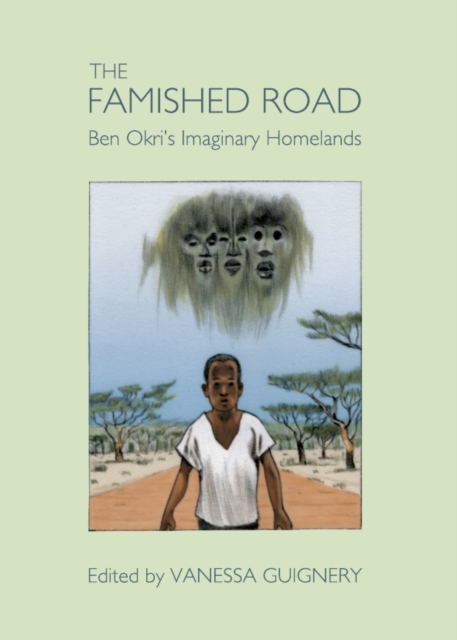
The Famished Road
Some twenty years after the publication of Ben Okris 1991 Booker Prize winning novel, The Famished Road, this volume proposes a spiralling journey into the imaginary homelands of its main protagonist, the adventurous spirit-child Azaro. Over the years, The Famished Road has been attributed a variety of mixed and sometimes contradictory labels (postcolonial, magic realist, mythopoeic, new ageist, picaresque, epic, to name just a few). Contributors to this volume have chosen to look beyond pre.
eBook

“Strange new air of myth”: Homophony, Narration, and the Modernist Autobiography in Ben Okri’s The Famished Road
Ben Okri’s 1991 novel The Famished Road is something of an oddity in the canon of novels styled as autobiographies because of several of its formal eccentricities, chief amongst which are its striking lack of idiolects and the relative narrative insignificance of its narrator and protagonist, Azaro. Through the flat, homophonic linguistic register of the novel, Okri accomplishes an impressive feat of heteroglossia, presenting myriad voices and stories through the voice of his protagonist in a genre associated with an almost myopic dedication to the individual and his life story. By using a subtle frame narrative that distances Azaro from his narration, Okri peels away the apparently disorienting simultaneity of the novel’s prose and reveals the overarching commitment to the representation of voices and perspectives that the autobiographical novel typically subsumes.
Journal Article

A Reading of The Last Gift of the Master Artists (2022): Sir Ben Okri's Fire That Burns and Heals
This article proposes a reading of Ben Okri's novel The Last Gift of the Master Artists (2022) through the prism of an animist unconscious lens drawing, in particular, from Harry Garuba's theory of Animist Materialism with its correlative Animist Unconscious. It seeks to show that the animist unconscious may lead to a reenchantment in an age of disenchantment and to a conjoining of African traditional and Western myth. The discussion begins with a brief reference to the historical-mythological figure of Sango, god of lightning in Nigeria, birthplace of Okri and Garuba, by way of explaining the paradox inherent in the cosmological axiom \"fire that burns and heals\" and to suggest that Sango's \"non-death suicide\" and deification signifies a new principle that can unite permanence and change in a reflection of the melding of history (the catastrophe of slavery) and the narrative of resilience and love in the novel. This is followed, first, by pointing to the link between the Sango symbolism and Africa's historical and cultural heritage and, secondly, by outlining Garuba's Animist Poetics. The core of the essay focuses on the juxtaposition of the ordinary and the magical in the reading of the novel, where the magical signifies an expansion of consciousness. The presentation argues that Okri writes against the rift of magical realism, a phrase all too often used in critiques of the symbolic mode and alchemical writings of this Nigerian-born Londoner, concluding that the deployment of an animist unconscious lens serves to re-imbue the natural world with its lifeforce, spiritualizing the phenomenal world of Nature and its objects, a strategy that reedifies the reading, accentuating the artistic creativity that immortalizes the mythical tribe of itinerant Master Artists. And, as Alberto Manguel presciently observes in A History of Reading : \"We read to understand, or to begin to understand. We cannot do but read. Reading, almost as much as breathing, is our essential function\" (7).
Journal Article

\Un amor peligroso\: el empeno tenaz de Ben Okri hacia la experimentacion literaria
En los últimos años parece que los círculos literarios han dado de lado al que fuera considerado escritor post-colonial de renombre, Ben Okri, novelista nigeriano afincado en Londres. Mientras que sus primeras obras aún son objeto de estudio y son consideradas muy influyentes, apenas se han hecho análisis críticos de sus trabajos más recientes. Partiendo de esta idea, nuestro objetivo es definir las numerosas transformaciones por las que ha pasado la obra del autor para explicar las razones que hay detrás de ciertas recepciones negativas de la misma. Para comprender la nueva dirección que la obra actual de Okri ha tomado, se debe analizar la totalidad de su producción novelística como si se tratase de un todo que pugna por lograr una renovación continua de la forma literaria. Partimos de la premisa de que la experimentación podría, al contrario de lo que perseguía, estar impidiendo el éxito del autor, y el presente trabajo, por tanto, examinará en profundidad la naturaleza experimental de sus últimas obras para ofrecer una serie de percepciones sobre sus posibles limitaciones.
Journal Article
Apocalyptic Affect in Nnedi Okorafor's Speculative Futures
African anticolonial texts have often grappled with the historiographical disruptions of colonialism by either imagining an “authentic” precolonial past or by advocating a better future through a complete break with the oppressive past. These modes are not mutually exclusive, but few combine them as thoroughly as does author Nnedi Okorafor in her emerging oeuvre. I analyze Who Fears Death (2010), set in far-futuristic Sudan, and Lagoon (2014), set in near-futuristic Nigeria. These novels deploy the afterlives of both the precolonial and the anticolonial within the futurism of speculative fiction. Read together, they display a tension between desire for a revolution that totally rewrites the past and desire for a more symbiotic collectivity that incorporates past and future. The novels jumble up the developmental plot of teleological narratives, of which colonialism's civilizing narratives are a subset, in favor of a mélange that brings otherwise suppressed plots and possibilities to the forefront.
Journal Article

Magical Realism in West African Fiction
This book focuses on the cultural politics of magical realism, as exemplified in the fiction of Syl Cheney-Coker, Ben Okri and Kojo Laing and contextualizes their fiction within current debate.
eBook
The Function of Dreams in Syl Cheney-Coker's Fiction
This essay aims to isolate the treatment of dreams in Syl Cheney-Coker's fiction and to measure the success of his technique both in conveying an African sense of reality and in illuminating and amplifying the characters that inhabit his world. Four themes are taken up in this analysis: dreams as prophesies, dreams as a tool to reveal character and motivation, dreams as a representation of the continuity of time, and dreams as an expression of hope for the future.
Journal Article