
Catalogue Search | MBRL


Are you sure you want to remove the book from the shelf?

{{itemTitle}}
177
result(s) for
"Old age -- Philosophy"
Sort by:
The long life
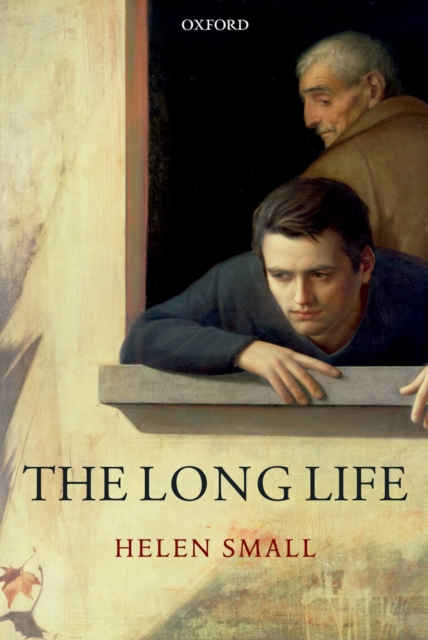
The first major consideration of old age in Western philosophy and literature since Simone de Beauvoir's The Coming of Age, Helen Small ranges widely from Plato through to recent work by Derek Parfit, Bernard Williams and others, and from King Lear through Balzac, Dickens, Beckett, Stevie Smith, Bellow, Roth, and Coetzee.
eBook

The life, old age, and death of a working-class woman
A few years ago, Didier Eribon's mother began to lose her physical and cognitive autonomy. After several months of resistance, Eribon and his brothers were compelled to place her in a nursing home. A few short weeks later, his mother passed away. In 'The Life, Old Age, and Death of a Working-Class Woman', Eribon continues the historical, political and personal reflection he began with 'Returning to Reims', this time turning his attention to the end of life. Tracing his mother's rapid decline, and drawing on works by Simone de Beauvoir, Norbert Elias, Annie Ernaux and Michel Foucault, among others, Eribon transmutes his rage, sadness and the shame over her death into a strikingly nuanced portrait of the woman who raised him.
BOOK


Aging and the art of living
Baars explores philosophers from Plato to Foucault as they consider the meaning of aging—and wisdom—in our society.
In this deeply considered meditation on aging in Western culture, Jan Baars argues that, in today's world, living longer does not necessarily mean living better. He contends that there has been an overall loss of respect for aging, to the point that understanding and \"dealing with\" aging people has become a process focused on the decline of potential and the advance of disease rather than on the accumulation of wisdom and the creation of new skills.
To make his case, Baars compares and contrasts the works of such modern-era thinkers as Foucault, Heidegger, and Husserl with the thought of Plato, Aristotle, Sophocles, Cicero, and other Ancient and Stoic philosophers. He shows how people in the classical period—less able to control health hazards—had a far better sense of the provisional nature of living, which led to a philosophical and religious emphasis on cultivating the art of living and the idea of wisdom. This is not to say that modern society's assessments of aging are insignificant, but they do need to balance an emphasis on the measuring of age with the concept of \"living in time.\"
Gerontologists, philosophers, and students will find Baars' discussion to be a powerful, perceptive conversation starter.
eBook

Loss, Loneliness, and the Question of Subjectivity in Old Age
When a loved one dies, it is common for the bereaved to feel profoundly lonely, disconnected from the world with the sense that they no longer belong. In philosophy, this experience of ‘loss and loneliness’ has been interpreted according to both a loss of possibilities and a loss of the past. But it is unclear how these interpretations apply to the distinctive way in which loss and loneliness manifest in old age. Drawing on the phenomenological analyses of old age given by de Beauvoir and Améry, I consider how the diminishment of the capacity for projection and recollection complicate recent interpretations of loss and loneliness, whilst nevertheless reinforcing the conclusion that in old age subjectivity is necessarily impoverished. Developing a critical stance on de Beauvoir and Améry’s underlying conception of subjectivity, I turn to Levinas in considering whether or not there is a way to reimagine subjectivity such that the estrangement and alienation of older adults might be ameliorated rather than exacerbated. Grounded in the passive body-in-itself rather than the self-transcending capacity of the body-for-itself, I suggest it becomes possible to reconceptualise the experience of loss and loneliness in old age; both in terms of what is lost and what needs to be restored if older adults are to be helped to find themselves at home in the world in the midst of, and indeed because of, manifold loss.
Journal Article

The Impact of the COVID-19 Pandemic on Trajectories of Well-Being of Middle-Aged and older Adults: A Multidimensional and Multidirectional Perspective
The COVID-19 pandemic has resulted in profound changes of individuals’ everyday lives. Restrictions in social contacts and in leisure activities and the threatening situation of a spreading virus might have resulted in compromised well-being. At the same time, the pandemic could have promoted specific aspects of psychosocial well-being, e.g., due to intensified relationships with close persons during lockdown periods. We investigated this potentially multidimensional and multi-directional pattern of pandemic-specific change in well-being by analyzing changes over up to 8 years (2012-2020) in two broad well-being domains, hedonic well-being (life satisfaction) and eudaimonic well-being (one overarching eudaimonic well-being indicator as well as environmental mastery, personal growth, positive relations with others, and self-acceptance), among 423 adults who were aged 40-98 years in 2012. By modelling longitudinal multilevel regression models and allowing for a measurement-specific intra-individual deviation component from the general slope in 2020, i.e. after the pandemic outbreak, we analyzed potential normative history-graded changes due to the pandemic. All mean-level history-graded changes were nonsignificant, but most revealed substantial interindividual variability, indicating that individuals’ pandemic-related well-being changes were remarkably heterogeneous. Only for personal growth and self-acceptance, adding a pandemic-related change component (and interindividual variability thereof) did not result in a better model fit. Individuals with poorer self-rated health at baseline in 2012 revealed a pandemic-related change toward lower life satisfaction. Our findings suggest that not all well-being domains - and not all individuals - are equally prone to “COVID-19 effects”, and even pandemic-associated gains were observed for some individuals in certain well-being domains.
Journal Article

Understanding the Whole of Aging
Beauvoir's message is clear and urgent: aging is not a problem to be solved or a phase to be endured, but an essential dimension of the human experience—one that has been distorted by cultural fears and stereotypes. If we genuinely viewed aging as a period rich with potential—and recognized that the most minoritized individuals need support to realize this potential—our policies, health care practices, and personal relationships would require a complete reimagining. When older individuals are included as partners in their care, actively participating in decisions about their health and well-being, their quality of life often improves significantly (Pel-Littel et al., 2021).
Journal Article
Insights into Senior Foreign Language Education
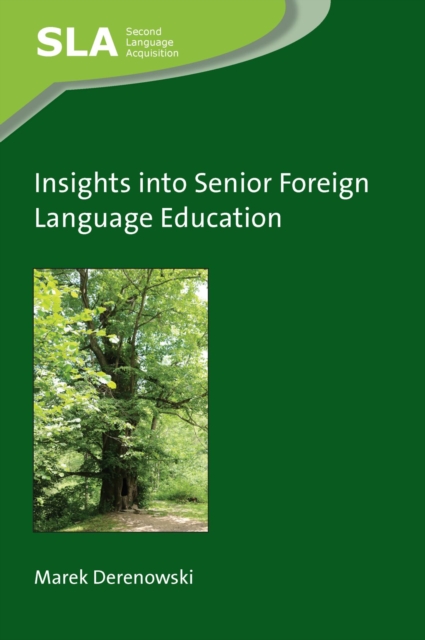
This book examines the unique characteristics of teaching
foreign languages to senior learners. It discusses the potential
age-related barriers and learning difficulties which may be
encountered in senior foreign language education as well as
solutions to overcome these challenges. The author describes the
processes of human aging from different perspectives and introduces
the concept of lifelong learning. The book proposes classroom
practices, activities and materials that may be adopted when
working with senior learners which will prove useful to teachers
and teacher trainers, as well as to educational policymakers and
planners. Furthermore, it describes potential modifications to
educational programmes that may be introduced in order to eliminate
affective barriers, making the learning material relevant and
motivating, and encouraging the use of adult learning
strategies.
eBook

Equity and healthy ageing
In many areas of the world, old age is perceived as an end-of-life stage characterized by declining physical and mental faculties, increased risk of morbidity and withdrawal from productive social activities. Interestingly, the chronological age at which a person is first considered to be old varies across societies and appears to be positively correlated to life expectancy in a particular global region or society. The dramatically different life expectancies across societies mean remarkably varied starting points for old age. Alongside research on the great global diversity in conceptions of old age, an important body of scientific research has been examining whether chronological age is, in fact, linked to physical and mental decline, as generally assumed. Surprisingly, only a weak correlation has been observed. Other aspects of an individual's life - e.g. behaviours, genetic inheritance, and, most substantially, social factors throughout the life course - appear to be more strongly correlated with physical functioning and quality of life in old age.5 In terms of what older persons can do, some individuals aged 60 years or older are similar to 20- to 30-year olds until quite near their deaths. The commonly-held view that old age is a period of declining faculties that is natural and inevitable is therefore not wholly accurate and has hidden preventable inequalities in the quality of life of older people. Importantly, the causal role of social conditions in the great variations in the quality of life of older individuals within a country - as well as across countries - raises profound questions of social justice and social action. Perhaps the most important questions to be answered are: (i) are the differences or inequalities observed in abilities and quality of life among older persons unfair and unjust; (ii) if the observed differences or inequalities are unfair and unjust, how are they unfair and unjust; and (iii) if there is unfairness and injustice, what are the right and required national and global responses.
Journal Article