Catalogue Search | MBRL


Are you sure you want to remove the book from the shelf?

{{itemTitle}}
43
result(s) for
"Oman Civilization."
Sort by:

Cultivating the Past, Living the Modern
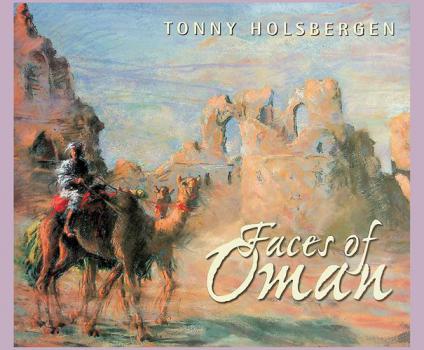
Cultivating the Past, Living the Modern explores how and why heritage has emerged as a prevalent force in building the modern nation state of Oman. Amal Sachedina analyses the relations with the past that undergird the shift in Oman from an Ibadi shari'a Imamate (1913–1958) to a modern nation state from 1970 onwards. Since its inception as a nation state, material forms in the Sultanate of Oman—such as old mosques and shari'a manuscripts, restored forts, national symbols such as the coffee pot or the dagger (khanjar), and archaeological sites—have saturated the landscape, becoming increasingly ubiquitous as part of a standardized public and visual memorialization of the past. Oman's expanding heritage industry, exemplified by the boom in museums, exhibitions, street montages, and cultural festivals, shapes a distinctly national geography and territorialized narrative. But Cultivating the Past, Living the Modern demonstrates there are consequences to this celebration of heritage. As the national narrative conditions the way people ethically work on themselves through evoking forms of heritage, it also generates anxieties and emotional sensibilities that seek to address the erasures and occlusions of the past.
eBook


The Early Iron Age Metal Hoard from the Al Khawd Area (Sultan Qaboos University), Sultanate of Oman
Numerous metallic artefacts, which anciently were deposited in a hoard, came to light per chance on the campus of the Sultan Qaboos University in Al Khawd, Sultanate of Oman. Mostly fashioned from copper, these arrowheads, axes/adzes, bangles, daggers, knives, socketed lance/ spearheads, metal vessels, razors, rings, swords, and tweezers compare well with numerous documented artefact classes from south-eastern Arabia assigned to the Early Iron Age (1200–300 BCE). Discussion of the international trade between ancient Makan, Dilmun, and Mesopotamia during the 3rd millennium BCE dominates the archaeological literature about Arabia archaeology. The Al Khawd hoard and its contemporaries lend weight to the suggestion that 1st millennium BCE Qadē (the name of south-eastern Arabia at that time) was even more important than Bronze Age Makan in terms of the copper trade volume. A reassessment shows the Early Iron Age by no means to be a dark age, but rather an innovative, successful adaptive period characterised by evident population growth.
eBook

Identifying pastoral and plant products in local and imported pottery in Early Bronze Age southeastern Arabia
The origins of ceramic technology in the Oman Peninsula have a unique history in the context of ancient West Asia. Local pottery production in northern Oman and the United Arab Emirates is not documented until the early to mid-third millennium BC during the Early Bronze Age. This period was characterised by increasing sedentism and the expansion of long-distance exchange networks that operated across the Persian Gulf between Arabia, Mesopotamia, Iran and South Asia, including the exchange of ceramic vessels. In order to explore the links between ceramic technology and type, subsistence practices and sedentism as ceramic production was adopted in the region, we analysed the lipid content of Early Bronze Age pottery (n = 179) in southeastern Arabia from inland and coastal sites. The ceramic assemblage examined includes pottery produced locally at the site level as well as vessels that are distributed regionally. The contents of imported pottery from Mesopotamia and the Indus Civilisation from inland and coastal sites were also studied to determine the organic products that may have been transported as part of long-distance exchange. The results reveal the presence of pastoral products, such as meat and dairy products, in some of the earliest vessels produced in southeastern Arabia, as well as imported Mesopotamian vessels. Plant products are detected in a small minority of vessels in locally-produced and imported vessels, such as Fine Red Omani vessels and Black-Slipped Jars from the Indus Civilisation. Such an investigation demonstrates the importance of using biomolecular methods to study dietary practices and vessel use in southeastern Arabia on a larger scale.
Journal Article

The Idea of Greater Britain
During the tumultuous closing decades of the nineteenth century, as the prospect of democracy loomed and as intensified global economic and strategic competition reshaped the political imagination, British thinkers grappled with the question of how best to organize the empire. Many found an answer to the anxieties of the age in the idea of Greater Britain, a union of the United Kingdom and its settler colonies in Australia, Canada, New Zealand, and southern Africa. In The Idea of Greater Britain, Duncan Bell analyzes this fertile yet neglected debate, examining how a wide range of thinkers conceived of this vast \"Anglo-Saxon\" political community. Their proposals ranged from the fantastically ambitious--creating a globe-spanning nation-state--to the practical and mundane--reinforcing existing ties between the colonies and Britain. But all of these ideas were motivated by the disquiet generated by democracy, by challenges to British global supremacy, and by new possibilities for global cooperation and communication that anticipated today's globalization debates. Exploring attitudes toward the state, race, space, nationality, and empire, as well as highlighting the vital theoretical functions played by visions of Greece, Rome, and the United States, Bell illuminates important aspects of late-Victorian political thought and intellectual life.
eBook