
Catalogue Search | MBRL


Are you sure you want to remove the book from the shelf?

{{itemTitle}}
13
result(s) for
"Oman Social life and customs History"
Sort by:

In the time of oil : piety, memory, and social life in an Omani town
Before the discovery of oil in the late 1960s, Oman was one of the poorest countries in the world, with only six kilometers of paved roads and one hospital. By the late 1970s, all that had changed as Oman used its new oil wealth to build a modern infrastructure. In the Time of Oil describes how people in Bahla, an oasis town in the interior of Oman, experienced this dramatic transformation following the discovery of oil, and how they now grapple with the prospect of this resource's future depletion.
Focusing on shifting structures of governance and new forms of sociality as well as on the changes brought by mass schooling, piped water, and the fracturing of close ties with East Africa, Mandana Limbert shows how personal memories and local histories produce divergent notions about proper social conduct, piety, and gendered religiosity. With close attention to the subtleties of everyday life and the details of archival documents, poetry, and local histories, Limbert provides a rich historical ethnography of oil development, piety, and social life on the Arabian Peninsula.
eBook

Impact of postmenopausal osteoporosis on the lives of Omani women and the use of cultural and religious practises to relieve pain: A hermeneutic phenomenological study
Osteoporosis is a significant clinical and public health concern worldwide. Despite the impact of this condition on women's lives, most studies have focused on its clinical manifestations, drug efficacy, and medical treatment. Furthermore, most studies have been conducted in the West. This study aimed to uncover the personal experiences of postmenopausal Omani women living with osteoporosis.
In this interpretive phenomenological study, a purposive sample of 15 postmenopausal Omani women with osteoporosis was recruited from primary and secondary care facilities in Muscat, Oman. Semi-structured one-to-one interviews were conducted via Zoom and telephone because of coronavirus disease 2019 restrictions. The interviews were audio-recorded, and the Ajjawi and Higgs framework was used to analyse the data thematically.
The following key themes were constructed from the interviews: the impact of osteoporosis on religious practices, cultural and social life, and financial status, and the benefits derived from religious and cultural practices and rituals, including Muslim prayer, recitation of Quranic verses, and herbal remedies to cope with osteoporosis-related pain and suffering.
Osteoporosis and fragility fractures have a significant impact on the religious, cultural, and financial lives of postmenopausal Omani women with osteoporosis. Muslim prayers, recitation of Quranic verses, and herbal remedies are coping strategies for pain in this population.
Postmenopausal Omani women with osteoporosis participated in this study through interviews and contributed their lived experiences. Orthopaedic doctors helped recruit patients with postmenopausal osteoporosis.
Journal Article
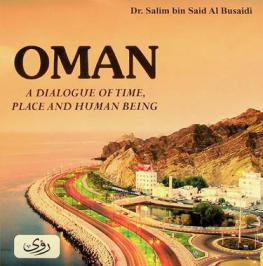

Seafaring in the Arabian Gulf and Oman
This book is a study of the seafaring communities of the Arabian Gulf and Oman in the past 150 years. It analyses the significance of the dhow and how coastal communities interacted throughout their long tradition of seafaring.
In addition to archival material, the work is based on extensive field research in which the voices of seamen were recorded in over 200 interviews. The book provides an integrated study of dhow activity in the area concerned and examines the consciousness of belonging to the wider culture of the Indian ocean as it is expressed in boat-building traditions, navigational techniques, crew organisation and port towns.
People of the Dhow brings together the different measures of time past, the sea, its people and their material culture. The Arabian Gulf and Oman have traditionally shared a common destiny within the Western Indian Ocean. The seasonal monsoonal winds were fundamental to the physical and human unities of the seafaring communities, producing a way of life in harmony with the natural world, a world which was abruptly changed with the discovery of oil. What remains is memories of a seafaring past, a history of traditions and customs recorded here in the recollections of a dying generation and in the rich artistic heritage of the region.
eBook

Honour Is in Contentment
Based on interviews and field research, the authors explore the sets of ideas Arab tribespeople from Ras Al-Khaimah had about tribe and community; social and economic networks, and jural contracts for livelihoods and profits; their uses of their environments; the moral relations of credit, debt and labour; ruling; economic and political transformations; and ideas of regional history where conflicts were regarded as disputes over sets of ideas, and informal accounts of tribal and local histories.
Their lively descriptions and explanations of life before oil portrayed tribal societies whose relationships were moral rather than political and were between jurally equal persons. All lived from their own resources; 'wealth' was material self-sufficiency; 'riches' the richness of social relationships. Political arenas were decentralised and underpinned by common cultural and moral values.
Published sources give a wider context to these ideas and events which show the great complexity and differing perspectives of 'life before oil' in the Gulf.
eBook


Change and Conflict in Contemporary Omani Society: The Case of Kafa'a in Marriage
This article explores the conflict between Omani traditional culture
1
and modern change by examining the practice of kafa'a
2
in present-day Oman. kafa'a-which refers to the notion that the husband's family should be equal or superior in terms of social, religious or economic background to the wife's family if the marriage is to be accepted-exemplifies a type of social and legal inequality that is at odds with State rhetoric on equality but congruent with the type of hierarchical social structure traditionally valued by Omanis, which tolerates a high degree of inequality between individuals and groups. I argue that the recognition of kafa'a as a condition of marriage in Article 20 of the Omani Personal Status Law serves to, in effect, reinforce traditional tribal and religious cultural practices in Oman.
1
Bearing in mind the complexity of defining culture, it is defined in this article as what people in Oman think, value, believe and hold as ideas. Thus, culture in contemporary Omani society includes values that are derived from the long-established tribal and Ibadi religious institutions, social structural systems of life and behaviour.
2
In Arabic, kafa'a literally means 'equality'. In Islamic legal terminology, kafa'a in marriage refers to the equivalence of the man and the woman, as defined by certain criteria. Specifically, an aspiring husband should be equal or superior to the proposed wife in terms of socio-economic status in order to be accepted as a suitable husband in marriage. In practice, therefore, kafa'a actually perpetuates and indeed promotes inequality between people because it legitimates discrimination against people judged to have lower socio-economic status. Further information on kafa'a in marriage and its legal and historical development in Islamic tradition can be viewed in Amalia Zomeno, 'Kafa'a in the Maliki School: A Fatwa from Fifteenth Century Fez', in R. Gleave and E. Kermeli (eds), Islamic Law: Theory and Practice (New York: IB Tauris, 1997), pp. 87-105; and Farhat J. Ziadeh, 'Equality (Kafa'a) in Muslim Law of Marriage', The American Journal of Comparative Law, 6(4) (1957), pp. 503-511.
Journal Article