
Catalogue Search | MBRL


Are you sure you want to remove the book from the shelf?

{{itemTitle}}
9
result(s) for
"One Laptop per Child"
Sort by:

Primary Teachers’ Perceptions on ICT Integration for Enhancing Teaching and Learning through the Implementation of One Laptop Per Child Program in Primary Schools of Rwanda
Identifying teachers’ perceptions for integrating ICT into teaching and learning processes through the implementation of One Laptop Per Child (OLPC) program in primary schools of Rwanda was the main target of this study. The study employed qualitative approach where thirty primary schools’ teachers participated into this study through interviews and group discussions designed for the research questions. Questions and discussions were related to benefits of ICT in education; requirements to integrate ICT into teaching and learning practices; challenges hindering the implementation of OLPC program and the contributions of different stakeholders for implementing OLPC program in primary schools of Rwanda. Through thematic analysis of data, the program was found to be influential to teachers, learners and stakeholders of primary schools in Rwanda. In order to be fruitful, the integration of ICT through implementation of OLPC program requires to help teachers to acquire skills related to Technological Pedagogical Content Knowledge (TPACK). The study also suggested different solutions and strategies related to all identified challenges.
Journal Article
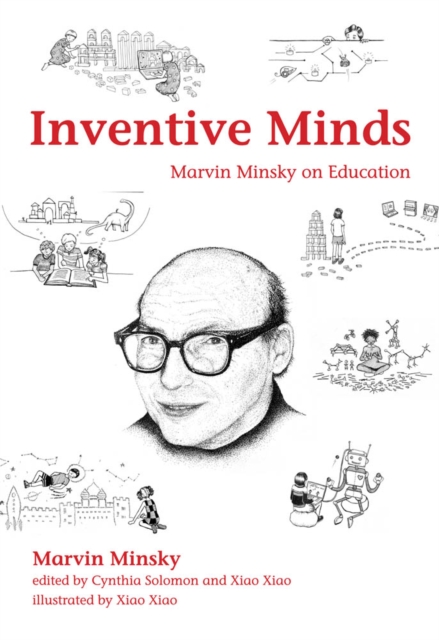
Inventive minds : Marvin Minsky on education
Six essays by artificial intelligence pioneer Marvin Minsky on how education can foster inventiveness, paired with commentary by Minsky's former colleagues and students. Marvin Minsky was a pioneering researcher in artificial intelligence whose work led to both theoretical and practical advances. His work was motivated not only by technological advancement but also by the desire to understand the workings of our own minds. Minsky's insights about the mind provide fresh perspectives on education and how children learn. This book collects for the first time six essays by Minsky on children, learning, and the potential of computers in school to enrich children's development. In these essays Minsky discusses the shortcomings of conventional education (particularly in mathematics) and considers alternative approaches; reflects on the role of mentors; describes higher-level strategies for thinking across domains; and suggests projects for children to pursue. Each essay is paired with commentary by one of Minsky's former colleagues or students, which identifies Minsky's key ideas and connects his writings to current research. Minsky once observed that in traditional teaching, “instead of promoting inventiveness, we focus on preventing mistakes.” These essays offer Minsky's unique insights into how education can foster inventiveness. Commentary by Hal Abelson, Walter Bender, Alan Kay, Margaret Minsky, Brian Silverman, Gary Stager, Mike Travers, Patrick Henry Winston
eBook

One laptop per child policy in Ghana: any impact on teaching and learning?
This paper assesses the impact of \"One Laptop Per Child Policy\" on teaching and learning in basic schools in Ghana. Specifically, 500 students were randomly selected together with 10 information and communication technology (ICT) instructors in the Eastern Region of Ghana. Both questionnaire and in-depth interviews were used for gathering data. The data collected were analyzed using Statistical Package for Social Science (SPSS). Findings of the study showed that stringent criteria are used to assess the needs of students and in the distribution of the laptops. The use of user-friendly laptops and qualified instructors has significantly improved the students' knowledge in ICT. However, lack of infrastructure, power supply and qualified tutors were notable challenges that hindered the attainment of the goals of the policy. To ensure equity and quality ICT education, recommendation were given in the study.
Journal Article

Language Learners’ Reading and Writing in the Digitized Classroom
This paper examines informants’ perceptions on how massive introduction of computers and the Internet has impacted language learning. This descriptive study contains the voices of a cohort of twelve students from two highly technological schools in Catalonia following the one-laptop-per-child program. The subjects were paired into six same-age, gender-discordant couples and were interviewed weekly during the second term of the 2014 academic year. The in-depth, semi-structured interviews focused attention on digital language learning in the three languages of instruction—Catalan, Spanish, and English—with an emphasis on reading and writing. Results show that while initial attitudes towards digitization are generally positive among students, they identify a number of hindering factors that gradually decrease the initial motivation. Literacy is digitized, but not so digital. Reading practices preserve the characteristics of paper-based reading mainly because of the format of textbooks and the type of assessment. Some writing practices are more elaborate and there are events of innovation in projects led by individual teachers. Daily writing practices are said to be interactive, but this is generally computer-human interaction, rather than social interaction on the web. Online language resources such as dictionaries and spell and grammar checkers are presented to the students as possible resources to use, but are not fully taught. Machine translation software is proscribed by teachers, yet used and developed by students as the key resource in their multilingual reading and writing.
Journal Article

One-to-one laptop programs : Is transformation occurring in mathematics teaching?
There is a body of research around the uptake of digital technologies in secondary schools, and a growing body of research specifically designed to investigate the use of one-to-one laptop programs. However this research focused on the initial uptake of the digital technology or initial implementation of a one-to-one (1:1) laptop policy. Given the expenditure of time and money associated with 1:1 laptop initiatives, investigation needs to be carried out to determine if the commitment has been worthwhile. This new study contributes to this body of research as it focused upon middle schools in which the 1:1 laptop program has existed for over seven years; it sought to examine the evolution of teacher practice in mathematics education. Anonymous online surveys as well as semi-structured interviews with teachers were used to collect descriptive data. The data revealed that issues associated with the initial implementation of 1:1 laptop programs continued to be problematic, and little authentic integration of the technology had taken place in the pedagogical practices of the mathematics teachers. [Author abstract]
Journal Article

One laptop per primary care worker in developing countries
The development of a robust, cheap (in Western terms) laptop which performs well in challenging circumstances is welcome, and it is incredible that this technology could be available to every child. 1 I would like to see this initiative extended to every primary care worker as a matter of priority.
Journal Article

El vaivén de los portátiles entre las aulas y el hogar: la perspectiva de las familias sobre la reforma educativa de la Escuela 2.0
Este estudio describe la opinión de las familias sobre la entrada del portátil en la vida académica del estudiante de secundaria, a través del programa autonómico en Cataluña eduCAT1x1, vinculado a la Escuela 2.0, una reforma nacional de digitalización de las aulas. La visión de las familias complementa la investigación con una nueva mirada al impacto de las reformas educativas más allá de las aulas. El análisis de 16 entrevistas pone de manifiesto que si bien los padres consideran la tecnología beneficiosa para el futuro académico y laboral de sus hijos también sienten malestar por tener que gestionar los usos extraescolares que estos hacen del portátil, donde el ocio y la comunicación social compiten con la actividad académica. Algunas familias no se ven empoderadas por la reforma educativa del 1x1 y apelan a diversas razones: 1) la digitalización de las aulas se ha hecho de forma improvisada y rápida; 2) la introducción del portátil en la vida de sus hijos ha provocado cambios en las prácticas de estudio (y no todos los consideran positivos) y 3) la digitalización ha comportado una pérdida de control sobre la vida de sus hijos. El estudio sugiere la necesidad de coordinar las reformas educativas con las dinámicas familiares, ya que la mediación familiar es imprescindible para garantizar no solo el éxito de las innovaciones educativas sino también las transformaciones sociales que se persiguen.
Journal Article

One Laptop, two systems
[...] while One Laptop's early commitment to open-source software will remain intact because Linux will still be available on its laptops, one of the nonprofit's executives left because he says he can be more effective developing open-source educational software outside the organization.
Newspaper Article