
Catalogue Search | MBRL


Are you sure you want to remove the book from the shelf?

{{itemTitle}}
8
result(s) for
"Online sexual predators -- Psychology"
Sort by:
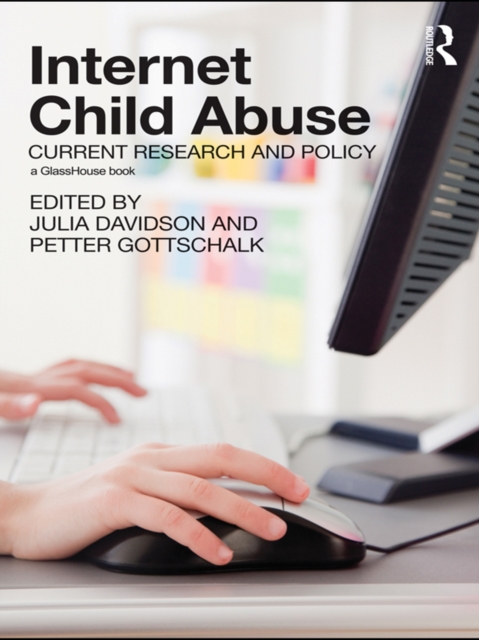
Internet Child Abuse: Current Research and Policy
Internet Child Abuse: Current Research and Policy provides a timely overview of international policy, legislation and offender management and treatment practice in the area of Internet child abuse. Internet use has grown considerably over the last five years, and information technology now forms a core part of the formal education system in many countries. There is however, increasing evidence that the Internet is used by some adults to access children and young people in order to ‘groom’ them for the purposes of sexual abuse; as well as to produce and distribute indecent illegal images of children. This book presents and assesses the most recent and current research on internet child abuse, addressing: its nature, the behaviour and treatment of its perpetrators, international policy, legislation and protection, and policing. It will be required reading for an international audience of academics, researchers, policy-makers and criminal justice practitioners with interests in this area.
1. Introduction 2. Legislation and Policy: Protecting Young People, Sentencing and Managing Internet Sex Offenders 3. Characteristics of the Internet and Child Abuse 4. Combating Child Abuse Images on the Internet 5. Stage Model for Online Grooming Offenders 6. Understanding the Perpetrators Online Behaviour 7. Policing Social Networking Sites and Online Grooming 8. Assessment and Treatment Approaches with Online Sexual Offenders. Conclusion
Julia Davidson is Professor of Criminology and Director of Research in Criminology at Kingston University, she is also Co-Director of the newly formed Centre for Abuse & Trauma Studies.
Petter Gottschalk is Professor of Information Systems and Knowledge Management in the Department of Leadership and Organisation at the Norwegian School of Management, and he lectures at the Norwegian Police University College on knowledge management, Internet, criminal entrepreneurship and organized crime.
eBook

An exploratory study of public reports to investigate patterns and themes of requests for sexual images of minors online
There is a growing body of research on sexually motivated online communication with minors that has been variously described as luring, grooming and solicitation. Evidence from US studies would suggest an increase in aggressive sexual solicitations, with adolescent girls being more likely to be targeted. Existing research has involved adolescent as well as offender populations, and has largely relied on surveys with young people, interviews and official record data with offenders and ethnographic work with police officers. There have also been a number of studies using chat log data between offenders and adults pretending to be children. In addition, while the use of sexual images has been noted in both offender and victim studies, this has not been critically examined. The present study is different as it used reports from the public to Cybertip.ca to make sense of the types of behaviour that alerted concerned adults, and occasionally young people, to make a report; information available about the young person; information about the suspect, and the interaction between the two. The results of this study show strong similarities with previous research in relation to both offender and victim populations. Implications are discussed in relation to the importance of reporting mechanisms, awareness raising with parents and the need to recognize sexual agency and resilience in many adolescents.
Journal Article

Internet Child Abuse
Internet Child Abuse: Current Research and Policy provides a timely overview of international policy, legislation and offender treatment practice in the area of Internet child abuse.
eBook

Female transactional sex workers’ experiences and health-seeking behaviour in low-middle income countries: a scoping review
Background
For a variety of reasons related to biology, behaviour, and environment, a subset of a population known as female sex workers (FSWs) or female transactional sex workers is at increased risk of health, depression, social stigma and access to timely and quality healthcare when needed. In low- and middle-income countries (LMICs), there was lack of understanding regarding the experiences and healthcare utilisation and behaviours, the health burden among them, their experiences, and how they access health care. Using Anderson’s behavioural model of health service utilisation as a framework, this review aimed to explore the experiences of, and healthcare seeking behaviours of female sex workers in low-and middle-income countries.
Methods
Six relevant databases such as PubMed, Embase, Global Health, Scopus, Web of Science, and Google Scholar were searched for peer-reviewed research articles published between January 1990 and December 2023 that discussed female transactional sex work in low- and middle-income countries. Subject terms such as: low-and middle- incomes, sex workers (female and male), sexually transmitted infections (STIs) in the sex work industry, prostitution, commercial sex, and health-seeking behaviour were used for the databases search. Out of 6,135 articles that were retrieved for the study, 26 met the inclusion criteria. Of the total number of studies, four were reviews, eight were quantitative studies, six were qualitative studies, and two utilised mixed methods.
Findings
Results from a thematic analysis of studies that combined quantitative and qualitative methods yielded six overarching themes.The study found that women engaged in sex work for different reasons – to fend for themselves (i.e., livelihood), self-employment and others do it for pleasure. However, force sex or unprotected which can lead to sexually transmitted infections, sexual abuse, job insecurity, were critical risks factors in engaging in sex work. These factors make them vulnerable to predators and health risks. It was found that sex workers were aware of the importance of seeking healthcare, and do make the efforts, however, crucial factors such as difficulty accessing healthcare and maltreatment by healthcare providers and social stigma disincentivises FSW health-seeking behaviours. Sexual workers reported discomfort disclosing their occupations because of the stigma and discrimination which further affects their regular health examinations and obtaining medically approved condoms from healthcare facilities.
Conclusion
Complex challenges rooted in economic vulnerability, social marginalisation, and limited access to healthcare afflict female sex workers in LMICs. The maltreatment and stigma can potentially affect LMICs from achieving using health facility care, with potential implications on achieving the universal health coverage goals. Comprehensive, rights-based strategies that address structural injustices and empower these women to live healthier, more secure lives are necessary to address their special needs.
Journal Article
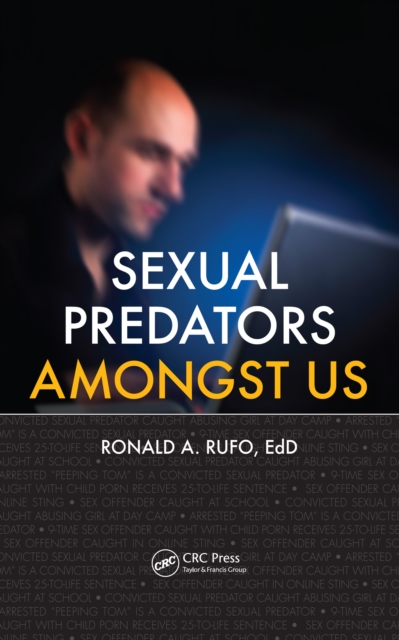
Sexual Predators Amongst Us
Written from a police perspective, this volume examines the problem of sexual predation, how the Internet has contributed to its growth, and how we can protect the public from these offenders. The book identifies characteristics associated with sexual predation and explains how the predator \"grooms\" his victims by gaining their trust. Chapters cover a range of topics, including child abuse, incest, pedophilia in the clergy, sex trafficking, female sex offenders, and child pornography. The author explains how the Internet through social networking sites provides ample opportunities for sexual predators to entice their victims. He examines rehabilitation issues, describes relevant legislation, and discusses sex offender registration.
eBook
Child sexual abuse material on the darknet: A script analysis of how offenders operate
The development of online technologies in recent decades has facilitated the distribution and consumption of child sexual abuse material (CSAM) over the internet, which also led to the emergence of CSAM on the darknet-the segment of the internet hidden from the general public.
Using data obtained from interviews with online investigators, this study uses crime script analysis to reconstruct step-by-step how offenders operate on the darknet. The findings highlight the three phases of the script: (1) the crime set-up phase, (2) the crime completion phase, and (3) the crime continuation phase. Scripting is a practical method of developing concrete ways to address this problem. The implications of using crime scripts to fight CSAM are discussed.
Journal Article

Child sexual abuse material on the darknet: A script analysis of how offenders operate
The development of online technologies in recent decades has facilitated the distribution and consumption of child sexual abuse material (CSAM) over the internet, which also led to the emergence of CSAM on the darknet-the segment of the internet hidden from the general public. Using data obtained from interviews with online investigators, this study uses crime script analysis to reconstruct step-by-step how offenders operate on the darknet. The findings highlight the three phases of the script: (1) the crime set-up phase, (2) the crime completion phase, and (3) the crime continuation phase. Scripting is a practical method of developing concrete ways to address this problem. The implications of using crime scripts to fight CSAM are discussed.
Journal Article