
Catalogue Search | MBRL


Are you sure you want to remove the book from the shelf?

{{itemTitle}}
234
result(s) for
"Opera Political aspects."
Sort by:

The politics of opera : a history from Monteverdi to Mozart
The Politics of Opera\" takes readers on a fascinating journey into the entwined development of opera and politics, from the Renaissance through the turn of the nineteenth century. What political backdrops have shaped opera? How has opera conveyed the political ideas of its times? Delving into European history and thought and an array of music by such greats as Lully, Rameau, and Mozart, Mitchell Cohen reveals how politics--through story lines, symbols, harmonies, and musical motifs--has played an operatic role both robust and sotto voce. Cohen begins with opera's emergence under Medici absolutism in Florence during the late Renaissance--where debates by humanists, including Galileo's father, led to the first operas in the late sixteenth century. Taking readers to Mantua and Venice, where composer Claudio Monteverdi flourished, Cohen examines how early operatic works like Orfeo used mythology to reflect on governance and policy issues of the day, such as state jurisdictions and immigration. Cohen explores France in the ages of Louis XIV and the Enlightenment and Vienna before and during the French Revolution, where the deceptive lightness of Mozart's masterpieces touched on the havoc of misrule and hidden abuses of power. Cohen also looks at smaller works, including a one-act opera written and composed by philosopher Jean-Jacques Rousseau.
Book

The Politics of Opera in Handel's Britain
The Politics of Opera in Handel's Britain examines the involvement of Italian opera in British partisan politics in the first half of the eighteenth century, which saw Sir Robert Walpole's rise to power and George Frideric Handel's greatest period of opera production. McGeary argues that the conventional way of applying Italian opera to contemporary political events and persons by means of allegory and allusion in individual operas is mistaken; nor did partisan politics intrude into the management of the Royal Academy of Music and the Opera of the Nobility. This book shows instead how Senesino, Faustina, Cuzzoni and events at the Haymarket Theatre were used in political allegories in satirical essays directed against the Walpole ministry. Since most operas were based on ancient historical events, the librettos - like traditional histories - could be sources of examples of vice, virtue, and political precepts and wisdom that could be applied to contemporary politics.
eBook

Opera and the political imaginary in old regime France
\"From its origins in the 1670s through the French Revolution, serious opera in France was associated with the power of the absolute monarchy, and its ties to the crown remain at the heart of our understanding of this opera tradition (especially its foremost genre, the tragمaedie en musique). In Opera and the Political Imaginary in Old Regime France, however, Olivia Bloechl reveals another layer of French opera's political theater. The make-believe worlds on stage, she shows, involved not just fantasies of sovereign rule but also aspects of government. Plot conflicts over public conduct, morality, security, and law thus appear side-by-side with tableaus hailing glorious majesty. What's more, opera's creators dispersed sovereign-like dignity and powers well beyond the genre's larger-than-life rulers and gods, to its lovers, magicians, and artists. This speaks to the genre's distinctive combination of a theological political vocabulary with a concern for mundane human capacities, which is explored here for the first time. By looking at the political relations among opera characters and choruses in recurring scenes of mourning, confession, punishment, and pardoning, we can glimpse a collective political experience underlying, and sometimes working against, ancienrمaegime absolutism. Through this lens, French opera of the period emerges as a deeply conservative, yet also more politically nuanced, genre than previously thought.\" --Amazon.com.
Book
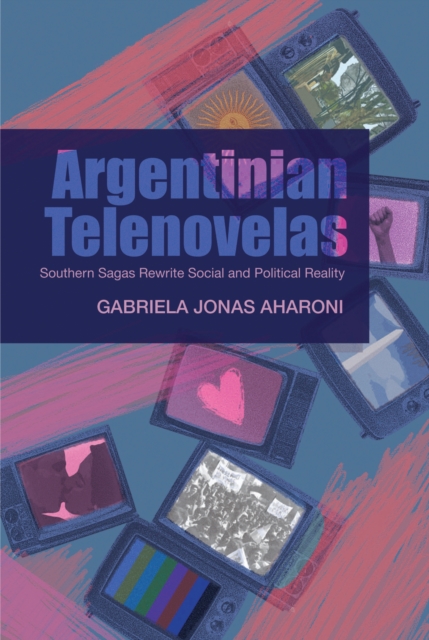
Argentinian Telenovelas
This work explores the way in which telenovelas (TV serial dramas) give voice to contemporary and historical Argentinian social and political issues. Telenovelas have multiple layers of socio-cultural message -- local as well as global -- and are invariably laden with appealing drama and emotion, and sometimes comedy. The discussion focuses on how telenovelas reflect society's perception of, and adjustment toward, issues of globalisation. They are a means of portraying how individuals and families rationalize and incorporate rapid social and economic changes. The book explores how telenovelas might offer a subversive interpretation of reality; or provide a channel of dialogue with the government's political aims. The author challenges the assumption that they are merely a reflection of historical, political and social circumstance. One of the many telenovela examples addressed in this book is whether the serial Padre Coraje constructs a parallel between the current Kirchner government and that of Juan Peron, fifty years earlier. The serial explores the two leaders' relationship with the Church and implicitly presents President Kirchner as Peron's successor. Explaining telenovelas as cultural texts (they are not soap operas) provides the primary basis for this study, backed by Argentinian newspaper articles and secondary sources on Latin American history, culture and economy, as well as TV and cinema studies. The result is a more profound and nuanced interpretation than hitherto of Argentinian telenovelas. Analysis enables identification of the links between the serials' storylines and contemporary political and social events. These popular culture texts bring new meaning to the Argentinian historical narrative, and for TV viewers puts the processes and effects of economic and social globalisation on a local multi-cultural level perspective.
eBook

Opera, society, and politics in modern China
\"Explores the themes of opera, city, and space in the context of the extensive theatrical reform movement that took place in China in the twentieth century. Illustrates the \"politicization\" of Chinese opera to understand the implications of \"modern\" theater experiences and its changing features\"--Provided by publisher.
Book

Opera and the City
In late imperial China, opera transmitted ideas across the social hierarchy about the self, family, society, and politics. Beijing attracted a diverse array of opera genres and audiences and, by extension, served as a hub for the diffusion of cultural values.
It is in this context that historian Andrea S. Goldman harnesses opera as a lens through which to examine urban cultural history. Her meticulous yet playful account takes up the multiplicity of opera types that proliferated at the time, exploring them as contested sites through which the Qing court and commercial playhouses negotiated influence and control over the social and moral order. Opera performance blurred lines between public and private life, and offered a stage on which to act out gender and class transgressions. This work illuminates how the state and various urban constituencies manipulated opera to their own ends, and sheds light on empire-wide transformations underway at the time.
eBook

Waiting for Verdi : Italian opera and political opinion, 1815-1848
\"The name Giuseppe Verdi conjures images of Italians singing opera in the streets and bursting into song at political protests, or even while facing the firing squad. Whereas many of those stories were exaggerated or even invented by later generations, opera--by Verdi, but also by Rossini, Donizetti, and Mercadante--did play a key role in priming Italians to imagine Italy as an independent and unified nation. Capturing what it was like to attend the opera or to join in the music at an aristocratic salon, Waiting for Verdi shows that the moral dilemmas, emotional reactions, and journalistic polemics sparked by these performances set new horizons for what Italians could think, feel, say, and write. Among the lessons taught by this music were that rules enforced by artistic tradition could be broken, that opera or ballet could jolt the spectator into intense feeling as well as edify, and that Italy could be in the vanguard of stylistic and technical innovation, rather than clinging to the glories of centuries past. More practically, theatrical performances showed spectators that political change really was possible, making the newly engaged spectator in the opera house into an actor on the political stage\"--Provided by publisher.
BOOK
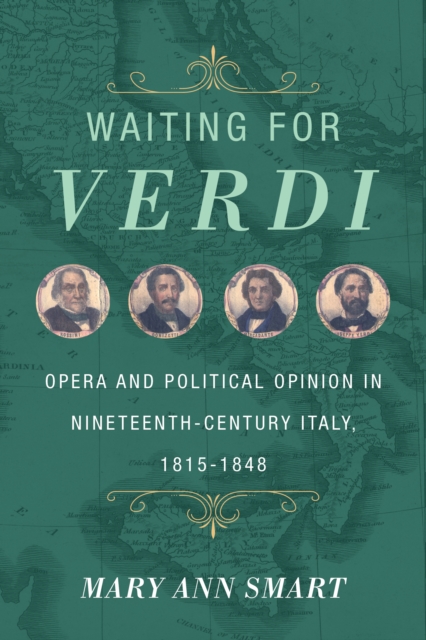
Waiting for Verdi
The name Giuseppe Verdi conjures images of Italians singing opera in the streets and bursting into song at political protests, or even while facing the firing squad. Whereas many of those stories were exaggerated or even invented by later generations, opera--by Verdi, but also by Rossini, Donizetti, and Mercadante--did play a key role in priming Italians to imagine Italy as an independent and unified nation. Capturing what it was like to attend the opera or to join in the music at an aristocratic salon, Waiting for Verdi shows that the moral dilemmas, emotional reactions, and journalistic polemics sparked by these performances set new horizons for what Italians could think, feel, say, and write. Among the lessons taught by this music were that rules enforced by artistic tradition could be broken, that opera or ballet could jolt the spectator into intense feeling as well as edify, and that Italy could be in the vanguard of stylistic and technical innovation, rather than clinging to the glories of centuries past. More practically, theatrical performances showed spectators that political change really was possible, making the newly engaged spectator in the opera house into an actor on the political stage
eBook

Opera and the city : the politics of culture in Beijing, 1770-1900
In late imperial China, opera was an integral part of life and culture, shared across the social hierarchy. It is in this context that historian Andrea S. Goldman harnesses opera as a lens through which to examine urban cultural history.
Book

The Metamorphosis of Tianxian pei
This volume is the most extensive social and cultural history of twentiethcentury Huangmei Opera to date. A regional Chinese theater originating in the Anqing countryside, Huangmei Opera gained popularity with the success of the 1950s play and movie, Tianxian pei 天仙配 (Married to a Heavenly Immortal). Through a case study of this work, the author juxtaposes the complex process of rewriting and revising the play and movie against the rapidly changing cultural and ideological climate of the Communist theater reform movement. As a result, the traditional theme of filial piety becomes a struggle over class and free love. This volume features a full translation of the original play and its revision in the 1950s, as well as selected articles by scriptwriters, directors, performers, and critics. These primary sources allow readers to gain access to inside views of the contemporaries and their political and artistic concerns. “Wilt Idema is one of the most important scholars in Chinese literary and cultural studies. Few in the academia can emulate him in both the spectrum of specializations and the depth of scholarship. From Yuan drama to Ming fiction, and traditional folk culture to modern performing arts, Idema’s work demonstrates a Sinologist’s dedication, erudition, and originality at its best. Tianxian pei is arguably the most popular play in midtwentieth century China. In his book, Idema discusses the play’s roots and ramifications, its incarnations in multiple genes and medial forms, and its significance in modern Chinese cultural politics. His critical insight is illuminating and his translational expertise impeccable. The Metamorphosis of Tianxian pei is a major contribution to the studies of Chinese folklore, literature, theatre, and media.\" David Derwei Wang, Harvard University “This is a real contribution to the literature on Chinese popular theatre. The particular opera chosen is a famous love story between a mortal and an immortal that has touched and charmed ordinary Chinese people over generations. The author’s translations and his own writing style show a sense of style and expertise that make a perfect combination for such a work as this. The commentary is always penetrating and interesting. This book will appeal to the general reader as much as it will to specialists.\" Colin Mackerras, Griffith University
eBook