
Catalogue Search | MBRL


Are you sure you want to remove the book from the shelf?

{{itemTitle}}
19
result(s) for
"Operas China Beijing"
Sort by:


Opera and the City
In late imperial China, opera transmitted ideas across the social hierarchy about the self, family, society, and politics. Beijing attracted a diverse array of opera genres and audiences and, by extension, served as a hub for the diffusion of cultural values.
It is in this context that historian Andrea S. Goldman harnesses opera as a lens through which to examine urban cultural history. Her meticulous yet playful account takes up the multiplicity of opera types that proliferated at the time, exploring them as contested sites through which the Qing court and commercial playhouses negotiated influence and control over the social and moral order. Opera performance blurred lines between public and private life, and offered a stage on which to act out gender and class transgressions. This work illuminates how the state and various urban constituencies manipulated opera to their own ends, and sheds light on empire-wide transformations underway at the time.
eBook
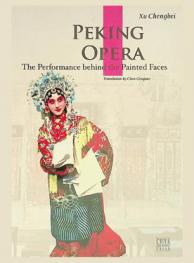

Drama kings
In this colorful and detailed history, Joshua Goldstein describes the formation of the Peking opera in late Qing and its subsequent rise and re-creation as the epitome of the Chinese national culture in Republican era China. Providing a fascinating look into the lives of some of the opera’s key actors, he explores their methods for earning a living; their status in an ever-changing society; the methods by which theaters functioned; the nature and content of performances; audience make-up; and the larger relationship between Peking opera and Chinese nationalism.
eBook

Opera and the city : the politics of culture in Beijing, 1770-1900
In late imperial China, opera was an integral part of life and culture, shared across the social hierarchy. It is in this context that historian Andrea S. Goldman harnesses opera as a lens through which to examine urban cultural history.
Book

The Rise of Cantonese Opera
Defined by its distinct performance style, stage practices, and regional and dialect based identities, Cantonese opera originated as a traditional art form performed by itinerant companies in temple courtyards and rural market fairs. In the early 1900s, however, Cantonese opera began to capture mass audiences in the commercial theaters of Hong Kong and Guangzhou--a transformation that changed it forever. Wing Chung Ng charts Cantonese opera's confrontations with state power, nationalist discourses, and its challenge to the ascendancy of Peking opera as the country's preeminent \"national theatre.\" Mining vivid oral histories and heretofore untapped archival sources, Ng relates how Cantonese opera evolved from a fundamentally rural tradition into urbanized entertainment distinguished by a reliance on capitalization and celebrity performers. He also expands his analysis to the transnational level, showing how waves of Chinese emigration to Southeast Asia and North America further re-shaped Cantonese opera into a vibrant part of the ethnic Chinese social life and cultural landscape in the many corners of a sprawling diaspora.
eBook

Ruling the Stage
Through an innovative interdisciplinary reading and field research, Igor Chabrowski analyses the history of the development of opera in Sichuan, arguing that opera serves as a microcosm of the profound transformation of modern Chinese culture between the 18th century and 1950s. He investigates the complex path of opera over this course of history: exiting the temple festivals, becoming a public obsession on commercial stages, and finally being harnessed to partisan propaganda work. The book analyzes the process of cross-regional integration of Chinese culture and the emergence of the national opera genre. Moreover, opera is shown as an example of the culture wars that raged inside China’s popular culture.
eBook

The Metamorphosis of Tianxian pei
This volume is the most extensive social and cultural history of twentiethcentury Huangmei Opera to date. A regional Chinese theater originating in the Anqing countryside, Huangmei Opera gained popularity with the success of the 1950s play and movie, Tianxian pei 天仙配 (Married to a Heavenly Immortal). Through a case study of this work, the author juxtaposes the complex process of rewriting and revising the play and movie against the rapidly changing cultural and ideological climate of the Communist theater reform movement. As a result, the traditional theme of filial piety becomes a struggle over class and free love. This volume features a full translation of the original play and its revision in the 1950s, as well as selected articles by scriptwriters, directors, performers, and critics. These primary sources allow readers to gain access to inside views of the contemporaries and their political and artistic concerns. “Wilt Idema is one of the most important scholars in Chinese literary and cultural studies. Few in the academia can emulate him in both the spectrum of specializations and the depth of scholarship. From Yuan drama to Ming fiction, and traditional folk culture to modern performing arts, Idema’s work demonstrates a Sinologist’s dedication, erudition, and originality at its best. Tianxian pei is arguably the most popular play in midtwentieth century China. In his book, Idema discusses the play’s roots and ramifications, its incarnations in multiple genes and medial forms, and its significance in modern Chinese cultural politics. His critical insight is illuminating and his translational expertise impeccable. The Metamorphosis of Tianxian pei is a major contribution to the studies of Chinese folklore, literature, theatre, and media.\" David Derwei Wang, Harvard University “This is a real contribution to the literature on Chinese popular theatre. The particular opera chosen is a famous love story between a mortal and an immortal that has touched and charmed ordinary Chinese people over generations. The author’s translations and his own writing style show a sense of style and expertise that make a perfect combination for such a work as this. The commentary is always penetrating and interesting. This book will appeal to the general reader as much as it will to specialists.\" Colin Mackerras, Griffith University
eBook

The Soul of Beijing Opera
Any traditional theatre has to engage the changing world to avoid becoming a living fossil. How has Beijing opera - a highly stylized theatre with breath-taking acrobatics and martial arts, fabulous costumes and striking makeup - survived into the new millennium while coping with a century of great upheavals and competition from new entertainment forms? Li Ruru'sThe Soul of Beijing Operaanswers that question, looking at the evolution of singing and performance styles, make-up and costume, audience demands, as well as stage and street presentation modes amid tumultuous social and political changes. Li's study follows a number of major artists' careers in mainland China and Taiwan, drawing on extensive primary print sources as well as personal interviews with performers and their cultural peers. One chapter focuses on the illustrious career of Li's own mother and how she adapted to changes in Communist ideology. In addition, she explores how performers as social beings have responded to conflicts between tradition and modernity, and between convention and innovation. Through performers' negotiation and compromises, Beijing opera has undergone constant re-examination of its inner artistic logic and adjusted to the demands of the external world.
eBook