
Catalogue Search | MBRL


Are you sure you want to remove the book from the shelf?

{{itemTitle}}
590
result(s) for
"Oranges History."
Sort by:


Forging Rights in a New Democracy
The last two decades have been marked by momentous changes in forms of governance throughout the post-Soviet region. Ukraine's political system, like those of other formerly socialist states of Eastern Europe, has often been characterized as being \"in transition,\" moving from a Soviet system to one more closely aligned with Western models. Anna Fournier challenges this view, investigating what is increasingly recognized as a critical aspect of contemporary global rights discourse: the active involvement of young people living in societies undergoing radical change. Fournier delineates a generation simultaneously embracing various ideological stances in an attempt to make sense of social conditions marked by the disjuncture between democratic ideals and the everyday realities of growing economic inequality. Based on extensive fieldwork in public and private schools in the Ukrainian capital city of Kyiv,Forging Rights in a New Democracyexplores high-school-aged students' understanding of rights and justice, and the ways they interpret and appropriate discourses of citizenship and civic values in the educational setting and beyond. Fournier's rich ethnographic account assesses the impact on the making of citizens of both formal and informal pedagogical practices, in schools and on the streets. Chronicling her subjects' encounters with state representatives and \"violent entrepreneurs\" as well as their involvement in peaceful protests alongside political activists, Fournier demonstrates the extent to which young people both reproduce and challenge the liberal discourse of rights in ways that illuminate the everyday paradoxes of market democracy. By tracking students' active participation in larger contests about the nature of liberty and entitlement in the context of redefined rights, her book provides insight into emergent configurations of citizenship in the New Europe.
eBook

The orange and the dream of California
\"The Orange and the Dream of California takes a lively, literary, and extraordinarily visual look at the symbiotic and highly symbolic relationship between the golden State and it \"golden apple,\" paring that resulted in a compelling fantasy and a fantastic reality. Untold numbers of people came West in the twentieth century lured by postcards showing orange blossoms juxtaposed with snow-capped mountains. And across the country, daily glasses of navel orange juice were a must after Sunkist's Mad Men-style ad campaign spread the word that drinking a California orange was as sweet and delicious as eating one -- and held the promise of a healthy life.\"--Front cover flap.
Book
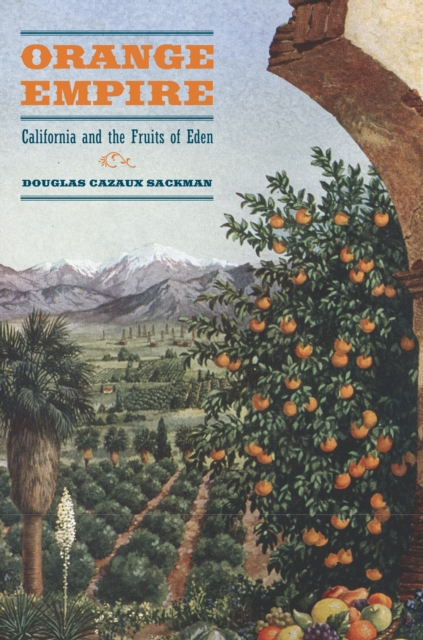
Orange Empire
This innovative history of California opens up new vistas on the interrelationship among culture, nature, and society by focusing on the state's signature export-the orange. From the 1870s onward, California oranges were packaged in crates bearing colorful images of an Edenic landscape. This book demystifies those lush images, revealing the orange as a manufactured product of the state's orange industry.Orange Empirebrings together for the first time the full story of the orange industry-how growers, scientists, and workers transformed the natural and social landscape of California, turning it into a factory for the production of millions of oranges. That industry put up billboards in cities across the nation and placed enticing pictures of sun-kissed fruits into nearly every American's home. It convinced Americans that oranges could be consumed as embodiments of pure nature and talismans of good health. But, as this book shows, the tables were turned during the Great Depression when Upton Sinclair, Carey McWilliams, Dorothea Lange, and John Steinbeck made the Orange Empire into a symbol of what was wrong with America's relationship to nature.
eBook

Ukraine's orange revolution
A close-up account of the 2004 popular revolution in Ukraine, and what it means.
eBook
Aspects of the Orange Revolution II. Information and Manipulation Strategies in the 2004 Ukrainian Presidential Elections
In Ukraine’s presidential election of 2004, the establishment candidate Viktor Yanukovych had the advantage of a solid regional base, access to administrative resources, dominance in the media, Russian spin-doctors, and the support of Moscow. Yet the winner was the pro-Western challenger, Viktor Yushchenko. How did Ukrainian voters break through the barrage of propaganda so as to deliver their ultimate verdict? Was the divide between East and West Ukraine fact or PR fiction? In this volume scholars from two continents examine various aspects of the election that turned into an “Orange Revolution.” Following the editor’s scene-setting chapter which looks at the electoral laws and their consequences in the previous decade’s elections, presidential and parliamentary, the other contributors take up specific features of the 2004 contest. The critical part played by a single independent television broadcaster is one such contribution. Another reviews the coverage of the elections in the Russian press in Moscow, generally favourable to Yanukovych and always looking for parallels between Russia and Ukraine as well as for Russia’s interests. The myths and stereotypes of the campaign are taken up by two other contributors. Clearly, these overshadowed real issues. A fascinating essay exposes the linguistic innovations of the campaign, including the irony and humour unleashed by such incidents as the “egg attack” on Yanukovych. In the final essay, the machine politics, administrative resources, and fraud, which had worked so well in Donets’k are shown to have been less than successful on the national level for reasons of scale and impersonality. But like so much of contemporary politics, one still wonders if the “Orange Revolution” was only a media event.
eBook
Aspects of the Orange Revolution III. The Context and Dynamics of the 2004 Ukrainian Presidential Elections
The third volume of Aspects of the Orange Revolution complements the essays of the first two collections providing further historical background on, and analytical insight into, the events at Kyiv in late 2004. Its seven contributions by both established and younger specialists range from electoral statistics to musicology, and deal with, among other issues, such questions as: Why had blatant election fraud not generated mass protest before 2004, but, in that year, did? How was Viktor Yushchenko able to collect enough votes to defeat the establishment candidate Viktor Yanukovych, and become the new President of a socially, geographically and culturally divided country? How was it possible to prevent large-scale violence, and which role did the judiciary play during the quasi-revolutionary events in autumn-winter 2004? What legal foundations and court decisions made the repetition of the second round of the presidential elections possible? Which campaign instruments, and political ‘technologies’ were applied by various domestic and foreign actors to activate the Ukrainian population? How did the internet and music become factors in the emergence of mass protests involving hundreds of thousands of people? To which degree and how did external influences affect the Orange Revolution?Erik S. Herron, Paul E. Johnson, Dominique Arel, Ivan Katchanovski, Ralph S. Clem, Peter R. Craumer, Hartmut Rank, Stephan Heidenhain, Adriana Helbig and Andrew Wilson present a multifarious panorama of the origins and dynamics of the processes that changed the nature of political and civic life during and between the three rounds of Ukraine’s fateful 2004 presidential elections.
eBook
Aspects of the Orange Revolution VI. Post-Communist Democratic Revolutions in Comparative Perspective
Post-communist democratic revolutions have, so far, taken place in six countries: Slovakia (1998), Croatia (1999-2000), Serbia (2000), Georgia (2003), Ukraine (2004) and Kyrgyzstan (2005). The seven chapters in this volume situate these events within a theoretical and comparative perspective. The volume draws upon extensive experience and field research conducted by political scientists specializing in comparative democratization, regime politics, political transitions, electoral studies, and the post-communist world. The papers by Valerie Bunce and Sharon Wolchik, Henry Hale, Paul D’Anieri, David R. Marples, Taras Kuzio, Lucan A. Way and Steven Levitsky, as well as Anika Locke Binnendijk and Ivan Marovic explore different regime types and opposition strategies in post-communist states, the diffusion of opposition strategies between states in which democratic revolutions were attempted, the strategic importance of youth NGO’s in mobilizing oppositions towards democratic revolutions, the use of non-violent strategies by the opposition, path dependent, theoretical and comparative explanations of the sources of successful and failed democratic revolutions, and the factors that lie behind divergent post-revolutionary trajectories.The volume represents a breakthrough in our understanding of why and how democratic revolutions take place in the post-communist world. It provides an integrated analysis of why such upheavals succeed in some, but fail in other states. The contributions point to, among other issues, why the post-revolutionary breakthroughs in Serbia, Ukraine and Kyrgyzstan have encountered obstacles, the ousted regime was never fully defeated and its representatives were able to launch counter-revolutions, as well as why, in Serbia and Ukraine, the political forces of the ousted regimes have returned to power in free elections held after democratic revolutions.Post-Communist Democratic Revolutions in Comparative Perspective will be important reading for scholars and policy makers alike.
eBook
African American life and culture in Orange Mound
African American Life and Culture in Orange Mound is an exploration of the conditions of living for residents of a segregated subdivision in the deep south from 1890 to 1919. It is also a study of contemporary approaches to community building during a time period of racial segregation and polarization. The town of Orange Mound, built by Elzey E. Meacham as an all-black subdivision for “negroes,” represents a unique chapter in American history. There is no other case, neither in the deep South nor in the far West, of such a tremendous effort on the part of African Americans to come together to occupy a carved out space—eventually making it into a black community on the outskirts of Memphis on a former slave plantation. The significance of “community” continues to be relevant to our ever-evolving understanding of racial and ethnic formations in the South. This ethnography of community, family, and institution in the latter nineteenth and early twentieth-century Shelby County Tennessee reveals the richness and complexity of community building through an investigation of cultural and historic community development, settlement patterns, kinship networks, and sociopolitical, economic, and religious value systems in the historic black community of Orange Mound. This research is the product of a thorough ethnographic study conducted over a three-year period which involves participation observation, in-depth interviews, textual analysis of family histories, newspapers, census data, and local government and church records. Even though textual analysis was used throughout the text, its intent was to utilize the concepts and categories that were relevant and meaningful to the people of Orange Mound.
eBook

Squeezed
Close to three quarters of U.S. households buy orange juice. Its popularity crosses class, cultural, racial, and regional divides. Why do so many of us drink orange juice? How did it turn from a luxury into a staple in just a few years? More important, how is it that we don't know the real reasons behind OJ's popularity or understand the processes by which the juice is produced?
In this enlightening book, Alissa Hamilton explores the hidden history of orange juice. She looks at the early forces that propelled orange juice to prominence, including a surplus of oranges that plagued Florida during most of the twentieth century and the army's need to provide vitamin C to troops overseas during World War II. She tells the stories of the FDA's decision in the early 1960s to standardize orange juice, and the juice equivalent of the cola wars that followed between Coca-Cola (which owns Minute Maid) and Pepsi (which owns Tropicana). Of particular interest to OJ drinkers will be the revelation that most orange juice comes from Brazil, not Florida, and that even \"not from concentrate\" orange juice is heated, stripped of flavor, stored for up to a year, and then reflavored before it is packaged and sold. The book concludes with a thought-provoking discussion of why consumers have the right to know how their food is produced.
eBook