
Catalogue Search | MBRL


Are you sure you want to remove the book from the shelf?

{{itemTitle}}
1,158
result(s) for
"Order Religious aspects."
Sort by:

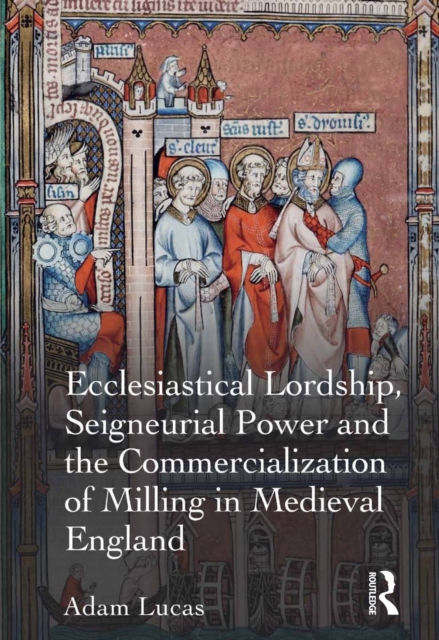
Ecclesiastical Lordship, Seigneurial Power and the Commercialization of Milling in Medieval England
This is the first detailed study of the role of the Church in the commercialization of milling in medieval England. Focusing on the period from the late eleventh to the mid sixteenth centuries, it examines the estate management practices of more than thirty English religious houses founded by the Benedictines, Cistercians, Augustinians and other minor orders, with an emphasis on the role played by mills and milling in the establishment and development of a range of different sized episcopal and conventual foundations. Contrary to the views espoused by a number of prominent historians of technology since the 1930s, the book demonstrates that patterns of mill acquisition, innovation and exploitation were shaped not only by the size, wealth and distribution of a house's estates, but also by environmental and demographic factors, changing cultural attitudes and legal conventions, prevailing and emergent technical traditions, the personal relations of a house with its patrons, tenants, servants and neighbours, and the entrepreneurial and administrative flair of bishops, abbots, priors and other ecclesiastical officials.
eBook

Poverty and Prosperity
As the papers in this volume demonstrate, Franciscan poverty has and continues to develop and to elicit new forms in the life of the Church. This 2009 Symposium has raised many important questions and possibilities as to how Franciscans can and should use money that will be valuable for the Franciscan family to consider. Even so, the issues relating to prosperity still need further consideration. When one studies the history of the divisions of the Franciscan communities, it seems that they arise out of prosperity rather than poverty. How Franciscans respond to prosperity seems to play a significant role in how Franciscans respond to each other.
eBook

Discipline and debate
The Dalai Lama has represented Buddhism as a religion of non-violence, compassion, and world peace, but this does not reflect how monks learn their vocation. This book shows how monasteries use harsh methods to make monks of men, and how this tradition is changing as modernist reformers—like the Dalai Lama—adopt liberal and democratic ideals, such as natural rights and individual autonomy. In the first in-depth account of disciplinary practices at a Tibetan monastery in India, Michael Lempert looks closely at everyday education rites—from debate to reprimand and corporal punishment. His analysis explores how the idioms of violence inscribed in these socialization rites help produce educated, moral persons but in ways that trouble Tibetans who aspire to modernity. Bringing the study of language and social interaction to our understanding of Buddhism for the first time, Lempert shows and why liberal ideals are being acted out by monks in India, offering a provocative alternative view of liberalism as a globalizing discourse.
eBook

American Catholic Hospitals
InAmerican Catholic Hospitals, Barbra Mann Wall chronicles changes in Catholic hospitals during the twentieth century, many of which are emblematic of trends in the American healthcare system.
Wall explores the Church's struggle to safeguard its religious values. As hospital leaders reacted to increased political, economic, and societal secularization, they extended their religious principles in the areas of universal health care and adherence to the Ethical and Religious Values in Catholic Hospitals, leading to tensions between the Church, government, and society. The book also examines the power of women--as administrators, Catholic sisters wielded significant authority--as well as the gender disparity in these institutions which came to be run, for the most part, by men. Wall also situates these critical transformations within the context of the changing Church policy during the 1960s. She undertakes unprecedented analyses of the gendered politics of post-Second Vatican Council Catholic hospitals, as well as the effect of social movements on the practice of medicine.
eBook

The saint in the banyan tree
The Saint in the Banyan Tree is a nuanced and historically persuasive exploration of Christianity's remarkable trajectory as a social and cultural force in southern India. Starting in the seventeenth century, when the religion was integrated into Tamil institutions of caste and popular religiosity, this study moves into the twentieth century, when Christianity became an unexpected source of radical transformation for the country's 'untouchables' (dalits). Mosse shows how caste was central to the way in which categories of 'religion' and 'culture' were formed and negotiated in missionary encounters, and how the social and semiotic possibilities of Christianity lead to a new politic of equal rights in South India. Skillfully combining archival research with anthropological fieldwork, this book examines the full cultural impact of Christianity on Indian religious, social and political life. Connecting historical ethnography to the preoccupations of priests and Jesuit social activists, Mosse throws new light on the contemporary nature of caste, conversion, religious synthesis, secularization, dalit politics, the inherent tensions of religious pluralism, and the struggle for recognition among subordinated people.
eBook

Single-cell transcriptomic analysis of Alzheimer’s disease
Alzheimer’s disease is a pervasive neurodegenerative disorder, the molecular complexity of which remains poorly understood. Here, we analysed 80,660 single-nucleus transcriptomes from the prefrontal cortex of 48 individuals with varying degrees of Alzheimer’s disease pathology. Across six major brain cell types, we identified transcriptionally distinct subpopulations, including those associated with pathology and characterized by regulators of myelination, inflammation, and neuron survival. The strongest disease-associated changes appeared early in pathological progression and were highly cell-type specific, whereas genes upregulated at late stages were common across cell types and primarily involved in the global stress response. Notably, we found that female cells were overrepresented in disease-associated subpopulations, and that transcriptional responses were substantially different between sexes in several cell types, including oligodendrocytes. Overall, myelination-related processes were recurrently perturbed in multiple cell types, suggesting that myelination has a key role in Alzheimer’s disease pathophysiology. Our single-cell transcriptomic resource provides a blueprint for interrogating the molecular and cellular basis of Alzheimer’s disease.
Single-cell transcriptomics from 48 individuals with varying degrees of Alzheimer’s disease pathology demonstrates that gene-expression changes in Alzheimer’s disease are both cell-type specific and shared, and that transcriptional responses show sexual dimorphism.
Journal Article

Family and household religion : toward a synthesis of Old Testament studies, archaeology, epigraphy, and cultural studies
This volume is the most recent collective contribution of a group of biblical scholars and archaeologists who are engaged in an ongoing debate about the nature of family and household religion in ancient Israel and its environment. It is intended to complement the volume Household and Family Religion in Antiquity, edited by John Bodel and Saul M. Olyan, which grew out of a conference held at Brown University in 2005 on household and family religion in the ancient Mediterranean world, with an emphasis on cross-cultural comparison. Several meetings after the Brown conference carried the theme forward, and a fourth meeting at Westfälische Wilhelms-Universität Münster in April 2009 emphasized theoretical and methodological challenges facing scholars of household and family religion (e.g., the conceptualization of family/household religion, the problem of identifying pertinent artifacts, and the difficulties inherent in using texts together with material evidence). This volume is a direct outgrowth of the Münster meeting.
For both the meeting and the volume, the goal was to bring together a group of specialists in biblical studies, epigraphy, and archaeology who would utilize a variety of humanistic and social-scientific approaches to the data and would also be willing to engage in dialogue and debate; during the conference in Münster, there was much vigorous intellectual engagement. The essays published here reflect the energy of that conference and will contribute, both individually and collectively, to the advancement of our knowledge of Israelite family and household religion.
eBook

Virtual orientalism : Asian religions and American popular culture
Saffron-robed monks and long-haired gurus have become familiar characters on the American popular culture scene. This book examines the contemporary fascination with Eastern spirituality and provides a cultural history of the representation of Asian religions in American mass media. Initial engagements with Asian spiritual heritages were mediated by monks, gurus, bhikkhus, sages, sifus, healers, and masters from a wide variety of ethnic backgrounds and religious traditions. Virtual Orientalism shows the evolution of these interactions, from direct engagements with specific individuals, to mediated relations with a conventionalized icon. Visually and psychically compelling, the Oriental Monk becomes for Americans a “figure of translation” - a convenient symbol for alternative spiritualities and modes of being. Through the figure of the solitary Monk, who generously and purposefully shares his wisdom with the West, Asian religiosity is made manageable — psychologically, socially, and politically — for popular culture consumption. On an historical level, the books argues that American mass awareness of Asian religions coincides with the advent of visually-oriented media (magazines, television, and film) and examines how technological transformations ushered in a new form of Orientalism — virtual Orientalism — prevalent since the late 1950s. Although popular engagement with Asian religions in the U.S. has increased, the fact that much of this has taken virtual form makes stereotypical constructions of “the spiritual East” obdurate and especially difficult to challenge. Representational moments in Virtual Orientalism’s development that are examined include: D.T. Suzuki and the 1950s Zen Boom; the Maharishi Mahesh and his celebrity followers in the 1960s and; Kwai Chang Caine in the popular 1970 television series, Kung Fu.
eBook

Integrative transcriptome analyses of the aging brain implicate altered splicing in Alzheimer’s disease susceptibility
Here we use deep sequencing to identify sources of variation in mRNA splicing in the dorsolateral prefrontal cortex (DLPFC) of 450 subjects from two aging cohorts. Hundreds of aberrant pre-mRNA splicing events are reproducibly associated with Alzheimer’s disease. We also generate a catalog of splicing quantitative trait loci (sQTL) effects: splicing of 3,006 genes is influenced by genetic variation. We report that altered splicing is the mechanism for the effects of the
PICALM, CLU
and
PTK2B
susceptibility alleles. Furthermore, we performed a transcriptome-wide association study and identified 21 genes with significant associations with Alzheimer’s disease, many of which are found in known loci, whereas 8 are in novel loci. These results highlight the convergence of old and new genes associated with Alzheimer’s disease in autophagy–lysosomal-related pathways. Overall, this study of the transcriptome of the aging brain provides evidence that dysregulation of mRNA splicing is a feature of Alzheimer’s disease and is, in some cases, genetically driven.
Analysis of mRNA splicing in the dorsolateral prefrontal cortex from two cohorts established to study aging identifies variations in pre-mRNA splicing events that are associated with Alzheimer’s disease.
Journal Article