
Catalogue Search | MBRL


Are you sure you want to remove the book from the shelf?

{{itemTitle}}
125
result(s) for
"Oreamnos"
Sort by:
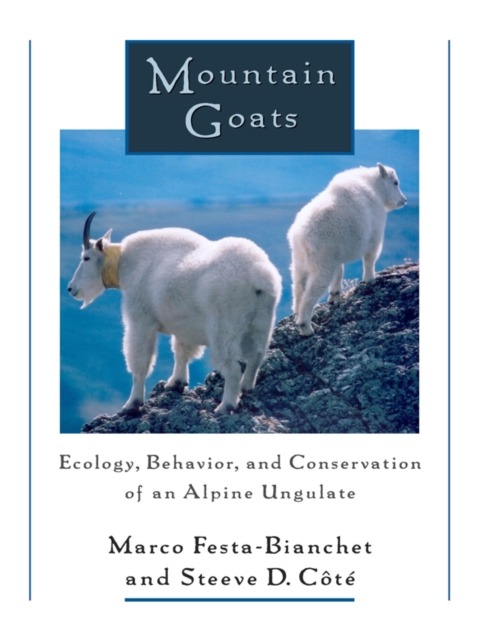
Mountain goats : ecology, behavior, and conservation of an alpine ungulate
Mountain goats have been among the least studied of North American ungulates, leaving wildlife managers with little information on which to base harvest strategies or conservation plans.
This book offers the first comprehensive assessment of the ecology and behavior of mountain goats, setting forth the results of a remarkable 16-year longitudinal study of more than 300 marked individuals in a population in Alberta, Canada. The authors' thorough, long-term study allowed them to draw important conclusions about mountain goat ecology—including individual reproductive strategies, population dynamics, and sensitivity to human disturbance—and to use those conclusions in offering guidance for developing effective conservation strategies.
Chapters examine:
-habitat use, vegetation quality, and seasonal movements
-sexual segregation and social organization
-individual variability in yearly and lifetime reproductive success of females
-age- and sex-specific survival and dispersal
-reproductive strategies and population dynamics
-management and conservation of mountain goats
The book also draws on the rich literature on long-term monitoring of marked ungulates to explore similarities and differences between mountain goats and other species, particularly bighorn sheep and ibex.
By monitoring a marked population over a long period of time, researchers were able to document changes in sex-age structure and identify factors driving population dynamics. Because it explores the links between individual life-history strategy and population dynamics in a natural setting, Mountain Goats will be an invaluable resource for wildlife managers, researchers in ecology and animal behavior, conservationists, population biologists, and anyone concerned with the ecology and management of natural populations, especially in alpine environments.
eBook

Long-term studies of bighorn sheep and mountain goats reveal fitness costs of reproduction
Fitness costs of reproduction are expected when resources are limited. Costs drive the evolution of life‐history strategies and can affect population dynamics if females change their allocation of resources to reproduction. We studied fitness costs of reproduction in mountain ungulates in Alberta, Canada. We monitored two populations of bighorn sheep (Ovis canadensis) for 44 and 30 years, and one of mountain goats (Oreamnos americanus) for 30 years. Both species are highly iteroparous. Heterogeneity in individual reproductive potential makes fitness costs of reproduction difficult to detect and quantify without manipulations. In capital breeders, individual differences can be partly accounted for by considering body mass and other correlates of reproductive potential. Long‐term monitoring can reveal costs that only manifest under stressful conditions such as disease or resource scarcity. Despite individual differences in reproductive potential, we detected fitness costs of reproduction in females. Costs, in terms of mass gain and survival, are almost entirely born by subsequent offspring, as mothers prioritize their own maintenance and survival. Costs are greater for primiparous females, decrease with increasing body mass and increase as resource availability declines, and sons are costlier than daughters. Costs may increase for senescent females that appear to reduce allocation to reproduction. In bighorn sheep, costs mostly involve reduced mass gain and lower survival of subsequent offspring. In mountain goats, costs include reductions in mass gain, subsequent fecundity and juvenile survival. In males, fitness costs derive mostly from attempts to reproduce rather than from siring success and likely depend upon individual competitiveness. In the absence of selective harvests, dominant males may enjoy high fitness and possibly lower costs compared to subordinates. The conservative reproductive tactic of mountain ungulate females likely explains why density dependence mostly involves later primiparity and lower recruitment, but rarely affects adult survival. Future research will seek to better account for heterogeneity in reproductive potential, assess cumulative reproductive costs and investigate the potential effects of fathers on maternal allocation tactics. Fitness costs of reproduction affect the evolution of life histories, morphology and population dynamics of wild species. They are key to the consequences of different forms of exploitation. The authors combine 104 population‐years of monitoring two species of mountain ungulates to show that fitness costs are mostly transferred to subsequent offspring. Résumé Les coûts de la reproduction émergent lorsque les ressources sont limitées et influencent l’évolution des stratégies d’histoire de vie. Si les femelles modifient l’allocation des ressources dans la reproduction pour mitiger ces coûts, ils peuvent aussi affecter la dynamique de population. Nous avons étudié les coûts de la reproduction chez des ongulés en Alberta, Canada. Nous avons suivi deux populations de mouflons d’Amérique (Ovis canadensis) pour 44 et 30 ans, et une de chèvre de montagne (Oreamnos americanus) pour 30 ans. Ces deux espèces sont itéropares. L’hétérogénéité dans le potentiel reproducteur des individus peut masquer les coûts en fitness liés à la reproduction. Ils sont donc plus souvent détectables à l’aide de manipulation expérimentale. Chez les espèces avec reproduction « sur capital », il est possible de contrôler pour les différences individuelles en incluant des variables liées au potentiel reproducteur telles que la masse corporelle. Les suivis à long terme permettent de détecter des coûts qui se manifestent seulement lors de conditions environnementales défavorables. Malgré les différences en potentiel reproducteur, nous avons détecté des coûts chez les femelles. Ces coûts, tels qu’une réduction en croissance ou en survie, sont presque toujours subis par les jeunes nés lors d’épisodes de reproduction subséquents. En effet, les mères priorisent leur propre maintien et leur survie. Les coûts sont supérieurs pour les femelles primipares et dans les conditions défavorables. Ils sont plus faibles pour les femelles plus lourdes et il semble que les fils soient plus coûteux que les filles. Les coûts augmentent aussi chez les femelles sénescentes qui semblent réduire leur allocation dans la reproduction. Chez les mouflons, les coûts impliquent une réduction du gain en masse et une survie plus faible des jeunes nés lors de reproductions subséquentes. Chez les chèvres de montagne, ces coûts sont accompagnés d’une réduction de la fécondité future. Chez les mâles, les coûts sont surtout influencés par l’investissement en temps et en énergie dans le rut plutôt que par le succès d’accouplement. Ces coûts devraient donc surtout dépendre de l’habileté compétitive individuelle. En absence de chasse sélective, les mâles dominants devraient avoir un fort succès reproducteur avec des coûts potentiellement plus faibles comparativement aux subordonnées. La tactique conservative adoptée par les ongulés de montagne femelles peut expliquer pourquoi les effets densité‐dépendant mènent à un retard dans l’âge à la primiparité et à un recrutement plus faible, mais affectent rarement la survie adulte. Nos recherches futures tenteront de mieux quantifier l’hétérogénéité individuelle, évalueront les coûts cumulatifs à la reproduction et investigueront l’effet potentiel des pères sur les tactiques d’allocation maternelles.
Journal Article

Of goats and heat, the differential impact of summer temperature on habitat selection and activity patterns in mountain goats of different ecotypes
Climate change disproportionately affects northern and alpine environments, with faster rates of warming than the global average. Because alpine and northern species are particularly well adapted to cool temperatures, most species must modify their behavior when temperatures exceed a critical threshold. Evaluating how temperature increases affect species inhabiting northern and alpine environments is therefore essential to understand the effects of projected climate change on these ecosystems. We analyzed the influence of temperature on the activity patterns and habitat selection of four populations of a cold-adapted, mountain specialist, the mountain goat (Oreamnos americanus). We collected GPS location and activity sensor data during 2010–2019 from 223 mountain goats from two distinct ecotypes: coastal and continental. Using a resource selection modeling approach, we determined that mountain goats of both ecotypes decreased selection for alpine meadows when temperatures increased. Reduced selection for open, forage rich habitat was associated with increased selection for habitat dominated by snow/ice patches in coastal areas, and by forests in continental sites. Mountain goats in continental environments selected higher elevation habitats only when temperature increased, whereas goats in coastal environments selected higher elevation habitat at all temperatures. Mountain goats of both ecotypes reduced the proportion of time spent active when temperatures increased during the middle of the day. Our study reveals that mountain goats use diverse tactics to mitigate thermal stress, and that these tactics vary between ecotypes, highlighting the need for considering adaptation to specific environments within a species when assessing climate change impacts on populations.
Journal Article
Accounting for individual-specific variation in habitat-selection studies
Popular frameworks for studying habitat selection include resource‐selection functions (RSFs) and step‐selection functions (SSFs), estimated using logistic and conditional logistic regression, respectively. Both frameworks compare environmental covariates associated with locations animals visit with environmental covariates at a set of locations assumed available to the animals. Conceptually, slopes that vary by individual, that is, random coefficient models, could be used to accommodate inter‐individual heterogeneity with either approach. While fitting such models for RSFs is possible with standard software for generalized linear mixed‐effects models (GLMMs), straightforward and efficient one‐step procedures for fitting SSFs with random coefficients are currently lacking. To close this gap, we take advantage of the fact that the conditional logistic regression model (i.e. the SSF) is likelihood‐equivalent to a Poisson model with stratum‐specific fixed intercepts. By interpreting the intercepts as a random effect with a large (fixed) variance, inference for random‐slope models becomes feasible with standard Bayesian techniques, or with frequentist methods that allow one to fix the variance of a random effect. We compare this approach to other commonly applied alternatives, including models without random slopes and mixed conditional regression models fit using a two‐step algorithm. Using data from mountain goats (Oreamnos americanus) and Eurasian otters (Lutra lutra), we illustrate that our models lead to valid and feasible inference. In addition, we conduct a simulation study to compare different estimation approaches for SSFs and to demonstrate the importance of including individual‐specific slopes when estimating individual‐ and population‐level habitat‐selection parameters. By providing coded examples using integrated nested Laplace approximations (INLA) and Template Model Builder (TMB) for Bayesian and frequentist analysis via the R packages R‐INLA and glmmTMB, we hope to make efficient estimation of RSFs and SSFs with random effects accessible to anyone in the field. SSFs with individual‐specific coefficients are particularly attractive since they can provide insights into movement and habitat‐selection processes at fine‐spatial and temporal scales, but these models had previously been very challenging to fit. The authors provide a coherent framework for fitting resource‐selection functions (RSFs) and step‐selection functions (SSFs) with random effects. To allow fitting of SSFs, the authors reformulate the conditional logistic regression model as a (likelihood‐equivalent) Poisson model, where stratum‐specific intercepts are included as a random effect with a fixed large prior variance.
Journal Article

Demographic uncertainty and disease risk influence climate-informed management of an alpine species
Climate change is expected to disproportionately affect species occupying ecosystems with relatively hard boundaries, such as alpine ecosystems. Wildlife managers must identify actions to conserve and manage alpine species into the future, while considering other issues and uncertainties. Climate change and respiratory pathogens associated with widespread pneumonia epidemics in bighorn sheep (Ovis canadensis) may negatively affect mountain goat (Oreamnos americanus) populations. Mountain goat demographic and population data are challenging to collect and sparsely available, making population management decisions difficult. We developed predictive models incorporating these uncertainties and analyzed results within a structured decision making framework to make management recommendations and identify priority information needs in Montana, USA. We built resource selection models to forecast occupied mountain goat habitat and account for uncertainty in effects of climate change, and a Leslie matrix projection model to predict population trends while accounting for uncertainty in population demographics and dynamics. We predicted disease risks while accounting for uncertainty about presence of pneumonia pathogens and risk tolerance for mixing populations during translocations. Our analysis predicted that new introductions would produce more area occupied by mountain goats at mid-century, regardless of the effects of climate change. Population augmentations, carnivore management, and harvest management may improve population trends, although this was associated with considerable uncertainty. Tolerance for risk of disease transmission affected optimal management choices because translocations are expected to increase disease risks for mountain goats and sympatric bighorn sheep. Expected value of information analyses revealed that reducing uncertainty related to population dynamics would affect the optimal choice among management strategies to improve mountain goat trends. Reducing uncertainty related to the presence of pneumonia-associated pathogens and consequences of mixing microbial communities should reduce disease risks if translocations are included in future management strategies. We recommend managers determine tolerance for disease risks associated with translocations that they and constituents are willing to accept. From this, an adaptive management program can be constructed wherein a portfolio of management actions are chosen based on risk tolerance in each population range, combined with the amount that uncertainty is reduced when paired with monitoring, to ultimately improve achievement of fundamental objectives.
Journal Article
Evaluating habitat selection models to predict critical habitat for mountain goats in northwest British Columbia
Anthropogenic activity imposes increasing pressure on wildlife populations globally; these pressures can affect habitat suitability and function, modify wildlife space use, and influence population viability. Native mountain goat (Oreamnos americanus) populations can be negatively affected by anthropogenic disturbance and modify their space use in response to land development and recreational activity. From 2018 to 2020, we studied space use of mountain goats northeast of Smithers, British Columbia, Canada, an area that is subject to increasing anthropogenic development and yearlong recreational activities. We aimed to generate models that would improve our ability to identify habitat for mountain goats relative to existing survey data and established ungulate winter ranges. Using resource selection function (RSF) analyses generated from global positioning system (GPS) collar data, we identified influential habitat covariates and compared these covariates and RSF values to existing habitat models. Additionally, we compared the extent to which our models were congruent with existing resource selection probability functions, were congruent with aerial survey data, and overlapped existing ungulate winter ranges previously derived from predictive models inside and outside of the study area. Overall, our models noted higher RSF values among GPS data relative to aerial survey data for winter months, while results for summer habitats were comparable. In extending our RSFs outside of the study area and evaluating the overlap with ungulate winter ranges in adjacent areas, values were similar, albeit lower, as is expected given that the models were developed elsewhere. Ultimately, these models, combined with existing methods, improve the accuracy and reliability of identified, important areas of habitat for mountain goats. We recommend that the RSF models generated here be used in conjunction with aerial survey data and existing methods to delineate ungulate winter ranges for mountain goats in similar eco-regions in British Columbia. The models developed here support existing methods that have been used to delineate or validate ungulate winter ranges for mountain goats in British Columbia and help facilitate mitigation measures to support the continued use of important winter habitat and significant landscape features that play a role in ensuring population viability and resilience through time.
Journal Article

Predation risk and mountain goat reproduction
Non‐consumptive effects of predation can strongly impact reproduction and demography of prey species. Still, the underlying mechanisms that drive non‐consumptive effects are not fully understood, and the circumstances under which chronic physiological stress may mediate these effects remain unclear. Benefiting from over 23 years of environmental, physiological and demographic data, we tested the hypothesis that predation risk may impair reproduction of mountain goats through chronic elevation of physiological stress. We conducted path analyses to assess the relationships between predation risk, faecal glucocorticoid metabolites and hair cortisol concentration, and reproduction, while taking into account the potential effects of age class, sex, body mass, season and within individual variation in glucocorticoid concentration. Predation risk had a direct positive effect on the average annual faecal glucocorticoid concentration in the population, which, in turn, negatively affected the proportion of reproductive females. The same pattern was observed with hair cortisol concentration, but these results were inconclusive potentially due to methodological challenges in estimating annual average of hair cortisol at the population level. Our study presents one of the first robust evidence that stress‐mediated breeding suppression can occur in a wild ungulate following increased predation risk, thereby providing a major insight on the mechanisms underlying non‐consumptive effects of predation in wild mammals. A free Plain Language Summary can be found within the Supporting Information of this article. A free Plain Language Summary can be found within the Supporting Information of this article.
Journal Article

Father-offspring phenotypic correlations suggest intralocus sexual conflict for a fitness-linked trait in a wild sexually
In sexually dimorphic and polygynous mammals, sexual selection often favours large males with well- developed weaponry, as these secondary sexual characters confer advantages in intrasexual competition and are often preferred by females. Little is known, however, about the effects of sexually selected paternal traits on offspring phenotype in wild mammals, especially when considering that shared phenotypic traits and selection can also differ greatly between genders. Here, we conducted molecular parentage analyses in a long-term study population of mountain goats (Oreamnos americanus), an ungulate exhibiting high sexual dimorphism in mass, to first assess the determinants of yearly reproductive success (YRS) in males. We then examined the effects of paternal characteristics on offspring mass at 1 year of age. Paternity was highly skewed, with 9 per cent of 57 males siring 51 per cent of 96 offspring assigned over 12 years. Male YRS increased with age until apparent reproductive senescence at 9 years, but mass was a stronger determinant of siring success than age, horn length or social rank. Mass of sons increased with paternal mass, but the mass of daughters was negatively related to that of their father, a finding consistent with recent theory on intralocus sexual conflict. Because early differences in mass persisted to early adulthood, sex-specific effects of paternal mass can have important fitness consequences, as adult mass is positively linked with reproduction in both sexes. Divergent father-offspring phenotypic correlations may partly explain the maintenance of sexual dimorphism in mountain goats and the large variance observed for this homologous trait within each gender in polygynous mammals.
Journal Article

Using community photography to investigate phenology: A case study of coat molt in the mountain goat (Oreamnos americanus) with missing data
Participatory approaches, such as community photography, can engage the public in questions of societal and scientific interest while helping advance understanding of ecological patterns and processes. We combined data extracted from community‐sourced, spatially explicit photographs with research findings from 2018 fieldwork in the Yukon, Canada, to evaluate winter coat molt patterns and phenology in mountain goats (Oreamnos americanus), a cold‐adapted, alpine mammal. Leveraging the community science portals iNaturalist and CitSci, in less than a year we amassed a database of almost seven hundred unique photographs spanning some 4,500 km between latitudes 37.6°N and 61.1°N from 0 to 4,333 m elevation. Using statistical methods accounting for incomplete data, a common issue in community science datasets, we identified the effects of intrinsic (sex and presence of offspring) and broad environmental (latitude and elevation) factors on molt onset and rate and compared our findings with published data. Shedding occurred over a 3‐month period between 29 May and 6 September. Effects of sex and offspring on the timing of molt were consistent between the community‐sourced and our Yukon data and with findings on wild mountain goats at a long‐term research site in west‐central Alberta, Canada. Males molted first, followed by females without offspring (4.4 days later in the coarse‐grained, geographically wide community science sample; 29.2 days later in our fine‐grained Yukon sample) and lastly females with new kids (6.2; 21.2 days later, respectively). Shedding was later at higher elevations and faster at northern latitudes. Our findings establish a basis for employing community photography to examine broad‐scale questions about the timing of ecological events, as well as sex differences in response to possible climate drivers. In addition, community photography can help inspire public participation in environmental and outdoor activities specifically with reference to iconic wildlife. We combined data extracted from community‐sourced, spatially explicit photographs with research findings from fieldwork in the Yukon, Canada, to evaluate winter coat molt patterns and phenology in mountain goats (Oreamnos americanus). Using statistical methods accounting for incomplete data—a common issue in community science datasets—we evaluated the effects of intrinsic and environmental factors on molt. Our findings that males molt first and before females and that females with offspring molt last were consistent between our focal research data in the Yukon and community‐sourced data, which, being more geographically broad, enabled us to also find that molt occurs later at higher elevations and is faster at northern latitudes.
Journal Article

Early onset of vegetation growth vs. rapid green-up: impacts on juvenile mountain ungulates
Seasonal patterns of climate and vegetation growth are expected to be altered by global warming. In alpine environments, the reproduction of birds and mammals is tightly linked to seasonality; therefore such alterations may have strong repercussions on recruitment. We used the normalized difference vegetation index (NDVI), a satellite-based measurement that correlates strongly with aboveground net primary productivity, to explore how annual variations in the timing of vegetation onset and in the rate of change in primary production during green-up affected juvenile growth and survival of bighorn sheep (Ovis canadensis), Alpine ibex (Capra ibex), and mountain goats (Oreamnos americanus) in four different populations in two continents. We indexed timing of onset of vegetation growth by the integrated NDVI (INDVI) in May. The rate of change in primary production during green-up (early May to early July) was estimated as (1) the maximal slope between any two successive bimonthly NDVI values during this period and (2) the slope in NDVI between early May and early July. The maximal slope in NDVI was negatively correlated with lamb growth and survival in both populations of bighorn sheep, growth of mountain goat kids, and survival of Alpine ibex kids, but not with survival of mountain goat kids. There was no effect of INDVI in May and of the slope in NDVI between early May and early July on juvenile growth and survival for any species. Although rapid changes in NDVI during the green-up period could translate into higher plant productivity, they may also lead to a shorter period of availability of high-quality forage over a large spatial scale, decreasing the opportunity for mountain ungulates to exploit high-quality forage. Our results suggest that attempts to forecast how warmer winters and springs will affect animal population dynamics and life histories in alpine environments should consider factors influencing the rate of changes in primary production during green-up and the timing of vegetation onset.
Journal Article