
Catalogue Search | MBRL


Are you sure you want to remove the book from the shelf?

{{itemTitle}}
26,080
result(s) for
"Oregon"
Sort by:

Fodor's Oregon
\"Fodor's correspondents highlight the best of Oregon, including Portland's quirky charm, the coast's beaches and bluffs, and outdoor activities in the Cascade Mountains. Our local experts vet every recommendation to ensure you make the most of your time, whether it's your first trip or your fifth.\" -- Back cover.
Book
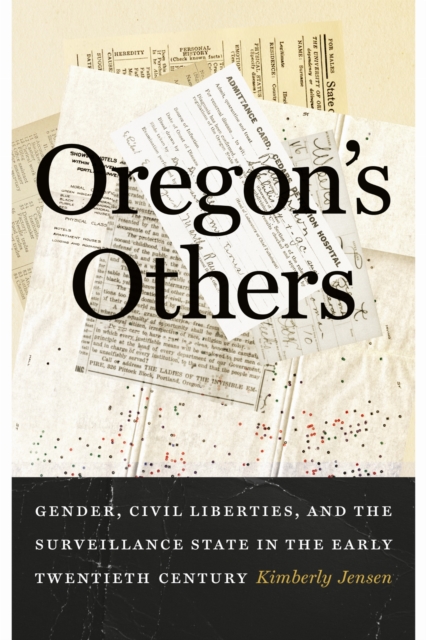
Oregon's Others
In the era of the First World War and its aftermath, the quest
to identify, restrict, and punish internal enemy \"others,\" combined
with eugenic thinking, severely curtailed civil liberties for many
people in Oregon and the nation. In Oregon's Others ,
Kimberly Jensen analyzes the processes that shaped the growing
surveillance state of the era and the compelling personal stories
that tell its history. The exclusionary and invasive practices
ranged from multiple wartime registrations for women and the
registration of \"enemy aliens\" to the incarceration of women with
sexually transmitted diseases, the use of deportations, and forced
sterilization at the Oregon State Hospital and other institutions.
But some Oregonians resisted the restrictions and challenges to
their civil liberties. Their fierce determination to maintain their
rights and freedoms fueled movements for human rights, social
justice, and dissent that still reverberate today.Comprehensive and
compelling, Oregon's Others examines the collision of
civil liberties and persecution through the lens of gender, gender
identity and presentation, ability, race, ethnicity, and class.
eBook


Stretched Thin
When the Personal Responsibility and Work Opportunity Reconciliation Act became law in 1996, the architects of welfare reform celebrated what they called the new \"consensus\" on welfare: that cash assistance should be temporary and contingent on recipients' seeking and finding employment. However, assessments about the assumptions and consequences of this radical change to the nation's social safety net were actually far more varied and disputed than the label \"consensus\" suggests.
By examining the varied realities and accountings of welfare restructuring, Stretched Thin looks back at a critical moment of policy change and suggests how welfare policy in the United States can be changed to better address the needs of poor families and the nation. Using ethnographic observations, in-depth interviews with poor families and welfare workers, survey data tracking more than 750 families over two years, and documentary evidence, Sandra Morgen, Joan Acker, and Jill Weigt question the validity of claims that welfare reform has been a success. They show how poor families, welfare workers, and welfare administrators experienced and assessed welfare reform differently based on gender, race, class, and their varying positions of power and control within the welfare state.
The authors document the ways that, despite the dramatic drop in welfare rolls, low-wage jobs and inadequate social supports left many families struggling in poverty. Revealing how the neoliberal principles of a drastically downsized welfare state and individual responsibility for economic survival were implemented through policies and practices of welfare provision and nonprovision, the authors conclude with new recommendations for reforming welfare policy to reduce poverty, promote economic security, and foster shared prosperity.
eBook


Oregon and the Collapse of Illahee
Modern western Oregon was a crucial site of imperial competition in North America during the formative decades of the United States. In this book, Gray Whaley examines relations among newcomers and between newcomers and Native peoples--focusing on political sovereignty, religion, trade, sexuality, and the land--from initial encounters to Oregon's statehood. He emphasizes Native perspectives, using the Chinook wordIllahee(homeland) to refer to the indigenous world he examines.Whaley argues that the process of Oregon's founding is best understood as a contest between the British Empire and a nascent American one, with Oregon's Native people and their lands at the heart of the conflict. He identifies race, republicanism, liberal economics, and violence as the key ideological and practical components of American settler-colonialism. Native peoples faced capriciousness, demographic collapse, and attempted genocide, but they fought to preserveIllaheeeven as external forces caused the collapse of their world. Whaley's analysis compellingly challenges standard accounts of the quintessential antebellum \"Promised Land.\"
eBook

The Oregon experiment : a novel
Performing field research in his job as a university professor, Oregon newcomer Scanlon Pratt becomes involved with an anarchist and a local secessionist movement, affiliations that are compromised by divided loyalties and the birth of his first child.
Book

Elephant House
In Elephant House, photographer Dick Blau and historian Nigel Rothfels offer a thought-provoking study of the Oregon Zoo's Asian Elephant Building and the daily routines of its residents—human and pachyderm alike. Without an agenda beyond a desire to build a deeper understanding of this enigmatic environment, Elephant House is the result of the authors' unique creative collaboration and explores the relationships between captive elephants and their human caregivers. Blau's evocative photographs are complex and challenging, while Rothfels's text offers a scholarly and personal response to the questions that surround elephants and captivity. Elephant House does not take sides in the debate over zoos but focuses instead on the bonds of attentiveness between the animals and their keepers. Accompanied by a foreword from retired elephant keeper Mike Keele, Elephant House is a frank, fascinating look at the evolving world of elephant husbandry.
eBook


Mixed-conifer forests of central Oregon: effects of logging and fire exclusion vary with environment
Twentieth-century land management has altered the structure and composition of mixed-conifer forests and decreased their resilience to fire, drought, and insects in many parts of the Interior West. These forests occur across a wide range of environmental settings and historical disturbance regimes, so their response to land management is likely to vary across landscapes and among ecoregions. However, this variation has not been well characterized and hampers the development of appropriate management and restoration plans. We identified mixed-conifer types in central Oregon based on historical structure and composition, and successional trajectories following recent changes in land use, and evaluated how these types were distributed across environmental gradients. We used field data from 171 sites sampled across a range of environmental settings in two subregions: the eastern Cascades and the Ochoco Mountains.
We identified four forest types in the eastern Cascades and four analogous types with lower densities in the Ochoco Mountains. All types historically contained ponderosa pine, but differed in the historical and modern proportions of shade-tolerant vs. shade-intolerant tree species. The Persistent Ponderosa Pine and Recent Douglas-fir types occupied relatively hot-dry environments compared to Recent Grand Fir and Persistent Shade Tolerant sites, which occupied warm-moist and cold-wet environments, respectively. Twentieth-century selective harvesting halved the density of large trees, with some variation among forest types. In contrast, the density of small trees doubled or tripled early in the 20th century, probably due to land-use change and a relatively cool, wet climate. Contrary to the common perception that dry ponderosa pine forests are the most highly departed from historical conditions, we found a greater departure in the modern composition of small trees in warm-moist environments than in either hot-dry or cold-wet environments. Furthermore, shade-tolerant trees began infilling earlier in cold-wet than in hot-dry environments and also in topographically shaded sites in the Ochoco Mountains. Our new classification could be used to prioritize management that seeks to restore structure and composition or create resilience in mixed-conifer forests of the region.
Journal Article