
Catalogue Search | MBRL


Are you sure you want to remove the book from the shelf?

{{itemTitle}}
358,545
result(s) for
"Organized crime"
Sort by:
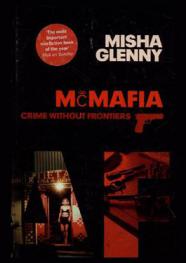
McMafia : crime without frontiers
\"In this book, Misha Glenny takes us on a journey through the new world of international organised crime. For three years, he has been recording the stories of gun runners in Ukraine, money launderers in Dubai, drug syndicates in Canada, cyber criminals in Brazil, racketeers in Japan and many more. During his investigation of the dark side, he has spoken to countless gangsters, policemen and victims of organised crime while also exploring the ferocious consumer demand for drugs, trafficked women, illegal labour and arms across five continents.\"--Jacket.

The Politics of Cross-Border Crime in Greater China
A study of how the state at the central and local levels has responded to the changing patterns and activities of cross-border crime in Greater China. It discusses the theoretical concept of organized crime; the transnational nature of organized crime; and, the significance of studying organized crime in Greater China.
eBook


Post-Communist Mafia State
Having won a two-third majority in Parliament at the 2010 elections, the Hungarian political party Fidesz removed many of the institutional obstacles of exerting power. Just like the party, the state itself was placed under the control of a single individual, who since then has applied the techniques used within his party to enforce submission and obedience onto society as a whole. In a new approach the author characterizes the system as the ‘organized over-world’, the ‘state employing mafia methods’ and the ’adopted political family', applying these categories not as metaphors but elements of a coherent conceptual framework.The actions of the post-communist mafia state model are closely aligned with the interests of power and wealth concentrated in the hands of a small group of insiders. While the traditional mafia channeled wealth and economic players into its spheres of influence by means of direct coercion, the mafia state does the same by means of parliamentary legislation, legal prosecution, tax authority, police forces and secret service. The innovative conceptual framework of the book is important and timely not only for Hungary, but also for other post-communist countries subjected to autocratic rules.
eBook

McMafia : a journey through the global criminal underworld
\"In this [book] ..., veteran reporter Misha Glenny travels across five continents to speak with participants from every level of the global underworld--police, victims, politicians, and even the criminals themselves. What follows is a ... look at an unprecedented phenomenon from a savvy, street-wise guide\"--Amazon.com.
BOOK

Murder, Inc., and the Moral Life
Murder, Inc. and the Moral Life: Gangsters and Gangbusters in La Guardia's New York focuses on the dramatic trials of a group of Brooklyn gangsters in 1940 and 1941. The media nicknamed the gangsters \"Murder, Inc.,\" and that nickname quickly became a kind of free-floating \"meme,\" linked at various times to criminals in general; to a record label; and even to a Bruce Springsteen song. The 1940-1941 trials inspired a wave of media coverage, several books and memoirs, and a sub-genre of the gangster film. The trials concluded with a notorious and unsolved murder mystery. Murder, Inc. narrates the life and times of the Brooklyn gang, and also relates their lives both to New York's Roaring Twenties and Depression era gangs and to the wider \"gangster\" culture expressed especially in the film. At the same time, Murder, Inc., is a moral reflection on the gangsters; the gangbusters, like Fiorello La Guardia and Thomas Dewey, who opposed them; and popular culture's fascination with \"gangsterism.\" It is especially this combination of crime story and moral reflection that makes Murder, Inc. unique.
eBook

Organized crime : a very short introduction
For many people around the world, instances of what is described as organized crime may be part of their everyday experience; in their neighborhoods, their streets, and the places they work and live. Policymakers, law enforcement, and the media rarely fail to bring up the issue when discussing the nature and seriousness of contemporary criminal threats, and the appropriate responses towards them. Many more people are familiar with the notion of organized crime, as the film and TV industry regularly draw on fictional and real figures and situations. Organized crime feels like a tangible, inescapable issue in today's world. In this 'Very Short Introduction', Georgios A. Antonopoulos and Georgios Papanicolaou uncover the reality of organized crime in our world today. Shining a light on the people involved in organized crime, Antonopoulos and Papanicolaou question whether the term 'organized' is used to evoke the image, the operations, and power of a legitimate organization, such as a corporation. Discussing whether there are particular crimes that the label 'organized crime' applies to, or if any crime can be organized, they also consider what happens when organized crime extends beyond borders. Using examples from across the globe, they analyze the different cultural traditions of organized crime, such as the Mafia, Yakuza, and Triads, and also the nature of organized crime, from arms trafficking and drug dealing to extortion. Finally they explore the methods and agencies in place to control and prevent organized crime.
Book

Mobsters, unions, and feds : the Mafia and the American labor movement
Nowhere in the world has organized crime infiltrated the labor movement as effectively as in the United States. Yet the government, the AFL-CIO, and the civil liberties community all but ignored the situation for most of the twentieth century. Since 1975, however, the FBI, Department of Justice, and the federal judiciary have relentlessly battled against labor racketeering, even in some of the nation's most powerful unions.
Mobsters, Unions, and Feds is the first book to document organized crime's exploitation of organized labor and the massive federal cleanup effort. A renowned criminologist who for twenty years has been assessing the government's attack on the Mafia, James B. Jacobs explains how Cosa Nostra families first gained a foothold in the labor movement, then consolidated their power through patronage, fraud, and violence and finally used this power to become part of the political and economic power structure of Twentieth century urban America.
Since FBI Director J. Edgar Hoover's death in 1972, federal law enforcement has aggressively investigated and prosecuted labor racketeers, as well as utilized the civil remedies provided for by the Racketeer Influenced and Corrupt Organization (RICO) statute to impose long-term court-supervised remedial trusteeships on mobbed-up unions. There have been some impressive victories, including substantial progress toward liberating the four most racketeer-ridden national unions from the grip of organized crime, but victory cannot yet be claimed.
The only book to investigate how the mob has exploited the American labor movement, Mobsters, Unions, and Feds is the most comprehensive study to date of how labor racketeering evolved and how the government has finally resolved to eradicate it.
eBook


Twenty-Five Sides of a Post-Communist Mafia State
The twenty-five essays accompany, illustrate and underpin the conceptual framework elaborated in Post-Communist Mafia State, published in conjunction with this volume. Leading specialists analyze the manifestations of the current political regime in Hungary from twenty-five angles. Topics discussed include the ideology, constitutional issues, social policy, the judiciary, foreign relations, nationalism, media, memory politics, corruption, civil society, education, culture and so on. Beyond the basic features of the economy the domains of taxation, banking system, energy policies and the agriculture are treated in dedicated studies. The essays are based on detailed empirical investigation about conditions in today's Hungary. They nevertheless contribute to the exploration of the characteristic features of post-communist authoritarian regimes, shared by an increasing number of countries in Europe and Central Asia.
eBook