
Catalogue Search | MBRL


Are you sure you want to remove the book from the shelf?

{{itemTitle}}
13,269
result(s) for
"Orson Welles"
Sort by:

At the end of the street in the shadow : Orson Welles and the city
The films of Orson Welles inhabit the spaces of cities--from America's industrializing midlandto its noirish borderlands, from Europe's medieval fortresses to its Kafkaesque labyrinths and postwar rubblescapes. His movies take us through dark streets to confront nightmarish struggles for power, the carnivalesque and bizarre, and the shadows and light of human character. This ambitious new study explores Welles's vision of cities by following recurring themes across his work, including urban transformation, race relations and fascism, the utopian promise of cosmopolitanism, and romantic nostalgia for archaic forms of urban culture. It focuses on the personal and political foundation of Welles's cinematic cities--the way he invents urban spaces on film to serve his dramatic, thematic, and ideological purposes. The book's critical scope draws on extensive research in international archives and builds on the work of previous scholars.
BOOK
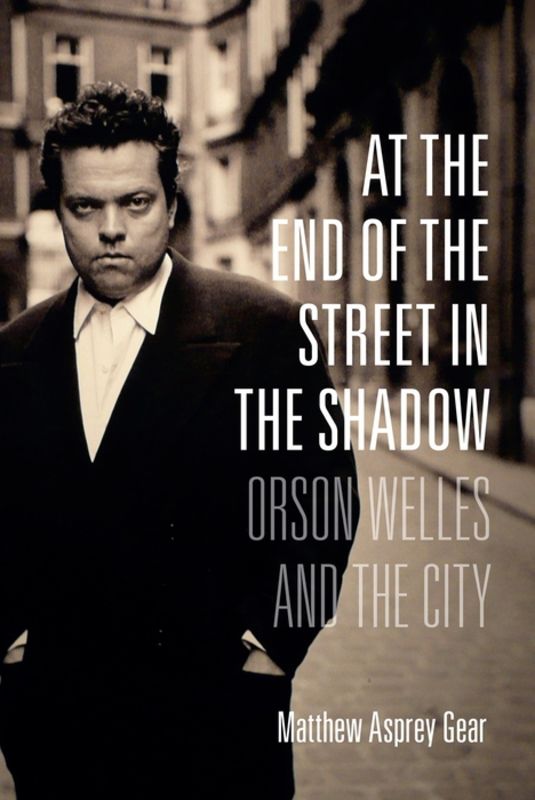
At the end of the street in the shadow
The films of Orson Welles inhabit the spaces of cities-from America's industrializing midland to its noirish borderlands, from Europe's medieval fortresses to its Kafkaesque labyrinths and postwar rubblescapes. His movies take us through dark streets to confront nightmarish struggles for power, the carnivalesque and bizarre, and the shadows and light of human character.
This ambitious new study explores Welles's vision of cities by following recurring themes across his work, including urban transformation, race relations and fascism, the utopian promise of cosmopolitanism, and romantic nostalgia for archaic forms of urban culture. It focuses on the personal and political foundation of Welles's cinematic cities-the way he invents urban spaces on film to serve his dramatic, thematic, and ideological purposes.
The book's critical scope draws on extensive research in international archives and builds on the work of previous scholars. Viewing Welles as a radical filmmaker whose innovative methods were only occasionally compatible with the commercial film industry, this volume examines the filmmaker's original vision for butchered films, such asThe Magnificent Ambersons(1942) andMr. Arkadin(1955), and considers many projects the filmmaker never completed-an immense \"shadow oeuvre\" ranging from unfinished and unreleased films to unrealized treatments and screenplays.
eBook

Discovering Orson Welles
Of the dozens of books written about Orson Welles, most focus on the central enigma of Welles's career: why did someone so extravagantly talented neglect to finish so many projects? Film critic Jonathan Rosenbaum has long believed that to dwell on this aspect of the Welles canon is to overlook the wealth of information available by studying the unrealized works.Discovering Orson Wellescollects Rosenbaum's writings to date on Welles-some thirty-five years of them-and makes an irrefutable case for the seriousness of his work, illuminating both Welles the artist and Welles the man. The book is also a chronicle of Rosenbaum's highly personal writer's journey and his efforts to arrive at the truth. The essays, interviews, and reviews are arranged chronologically and are accompanied by commentary that updates the scholarship. Highlights include Rosenbaum's 1972 interview with Welles about his first Hollywood project,Heart of Darkness;Rosenbaum's rebuttal to Pauline Kael's famous essay \"Raising Kane\"; detailed essays and comprehensive discussions of Welles's major unfinished work, including two unrealized projects,The Big Brass RingandThe Cradle Will Rock;and an account of Rosenbaum's work as consultant on the 1998 re-editing ofTouch of Evil,based on a studio memo by Welles.
eBook


Emotional Tears and Racial Stigma in Orson Welles's Othello and Vishal Bhardwaj's Omkara
On the basis of two film adaptations of Shakespeare's Othello , Orson Welles's (1952/1955) Othello and Vishal Bhardwaj's Omkara (2006), this article focuses on Othello's emotional tears, and how they mitigate, or not, the effects of racial stigmatization. The “Othello dilemma,” as I call it, refers to how Othello continues to be understood as an example of his race, rather than as an individual. How do the two films deal with this dilemma? This article draws on current research in cognitive neuroscience to underscore the pro-social function of emotional tears. Both films avoid direct views of Othello's tears but evoke lachrymal emotion to produce broader interpretations of the play, which is relevant to contemporary concerns. In black and white, Orson Welles uses Soviet montage to depict Othello's loneliness, which authenticates his grief, while Vishal Bhardwaj's colorful Bollywood film shifts attention to stigmatization on account of gender bias, invoking an array of culture-specific norms and values.
Journal Article


Vampirism in the Ether: Radio’s Horrific Potential in Orson Welles’s “Dracula”
KEYWORDS: Orson Welles. Dracula, twentieth century, modernism, radio, adaptation, sound studies The Mercury Theatre on the Air adaptation of Dracula updated the novel's protomodernist fears of technology, subsuming and enthralling its subjects through the new medium of radio. Retaining the novel's moments of travel, Orson Welles would bleed diegetic layers of the epistolary form together and rework the narrative's relationships to reflect the asymmetric dynamics of broadcaster and listener. I argue that Welles evokes debates around radio to highlight the medium's potential to both empower and subjugate.
Journal Article
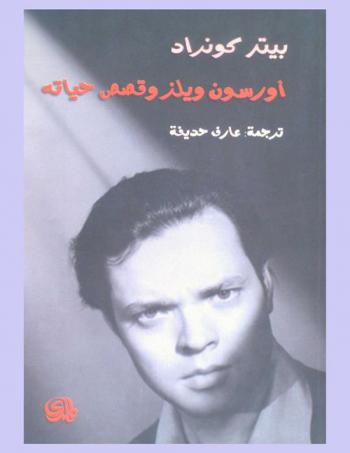
أورسون ويلز وقصص حياته
الكتاب سيرة ذاتية يحكي تفاصيل حياة واحد من أساطير هوليوود أورسون ويلز. كان ويلز مفسرا جريئا ولامعا للأدب أو خالقا له من جديد، وهو قد اختبر بالآراء أفكاره النقدية عن شكسبير وسرفانتس أو ملغيا ومارك توين أو كونراد وكافاك ودينيس، إن القصص التي أعاد ويلز روايتها أو طبقها على نفسه، قد عالجت كلها مشكلات عصية على الحل، تناقضات لم يكن ممكنا حسمها بالخاتمة المعدة وفق صيغة معينة، كان له شغف بالملوك المخلوعين والنهايات كان يقول : (النهايات السعيدة التي تسعى إليها لأنك مفرط العاطفة تتوقف على قطع القصة قبل أن تنتهي، إن الكوميديا تنتهي بالزواج والتراجيديا تنتهي بالموت، هذان الخياران هما أمامك).
BOOK

Drugie (cyfrowe) życie filmów Orsona Wellesa
Keywords: Orson Welles: unfinished movies: digitization: production studies Abstract In the light of recent archival research, the story of Orson Welles' life and work is no longer as enigmatic and mysterious as it was in previous decades. The author traces the influence of the technological process on the final shape of Welles' restored works, mainly through the examples of The Other Side of the Wind (2018), the director's last film, and Too Much Johnson (1938), his medium-length debut found in 2013. Premiera odbyła się w listopadzie 2015 r. w Museum of Modern Art w Nowym Jorku, a później można było te materiały obejrzeć między innymi w 2016 r. we Wrocławiu w ramach siódmej edycji American Film Festival. Tę pozbawioną dźwięku telewizyjną produkcję szekspirowską uzupełniono w Monachium w wyjątkowo pomysłowy sposób - wykorzystano dialogi z radiowej adaptacji Kupca weneckiego w reżyserii Wellesa emitowanej przez The Mercury Theatre On The Air w 1939 r. Kilka lat później w produkcji ostatniego filmu Wellesa - Drugiej strony wiatru9 - wykorzystano ten zabieg, ale i zaproponowano o wiele więcej.
Journal Article