
Catalogue Search | MBRL


Are you sure you want to remove the book from the shelf?

{{itemTitle}}
2,040
result(s) for
"Orthodox Jews"
Sort by:

Writing on water : the sounds of Jewish prayer
\"\"Writing on Water\" is a first-hand account of the thoughts, lives and rituals of the secretly practicing strictly religious Jews during the era of Communism in Eastern Europe (primarily in Budapest) with especial focus on their traditional ritual chant as part of a total acoustic experience (\"soundscape\"). The book is based on extensive fieldwork and analysis of orally transmitted material. The subject matter is unique both in the choice of the communities and its focus on sound. I attempt to explain how melodies and soundscapes become the sustaining/protective \"environment\", as well as the vehicle, for the expression of world-orientation - in a situation when open speech is inconceivable. The first part of the book is a journey toward the lives/sounds of these communities, the second contains documentary interviews, and the third describes the communities' disintegration after 1990. The book conveys scholarly results through poetry, prose-poems and art-photos\"-- Provided by publisher.
Book

Orthodox by Design
Orthodox by Design, a groundbreaking exploration of religion and media, examines ArtScroll, the world's largest Orthodox Jewish publishing house, purveyor of handsomely designed editions of sacred texts and a major cultural force in contemporary Jewish public life. In the first in-depth study of the ArtScroll revolution, Jeremy Stolow traces the ubiquity of ArtScroll books in local retail markets, synagogues, libraries, and the lives of ordinary users. Synthesizing field research conducted in three local Jewish scenes where ArtScroll books have had an impact-Toronto, London, and New York-along with close readings of key ArtScroll texts, promotional materials, and the Jewish blogosphere, he shows how the use of these books reflects a broader cultural shift in the authority and public influence of Orthodox Judaism. Playing with the concept of design, Stolow's study also outlines a fresh theoretical approach to print culture and illuminates how evolving technologies, material forms, and styles of mediated communication contribute to new patterns of religious identification, practice, and power. Finalist for the National Jewish Book Award in the scholarship category, Jewish Book Council
eBook

Becoming Frum
When non-Orthodox Jews becomefrum(religious), they encounter much more than dietary laws and Sabbath prohibitions. They find themselves in the midst of a whole new culture, involving matchmakers, homemade gefilte fish, and Yiddish-influenced grammar.Becoming Frumexplains how these newcomers learn Orthodox language and culture through their interactions with community veterans and other newcomers. Some take on as much as they can as quickly as they can, going beyond the norms of those raised in the community. Others maintain aspects of their pre-Orthodox selves, yielding unique combinations, like Matisyahu's reggae music or Hebrew words and sing-song intonation used with American slang, as in \"mamish(really) keepin' it real.\"Sarah Bunin Benor brings insight into the phenomenon of adopting a new identity based on ethnographic and sociolinguistic research among men and women in an American Orthodox community. Her analysis is applicable to other situations of adult language socialization, such as students learning medical jargon or Canadians moving to Australia.Becoming Frumoffers a scholarly and accessible look at the linguistic and cultural process of \"becoming.\"
eBook

Yeshiva fundamentalism : piety, gender, and resistance in the ultra-Orthodox world
2009 Choice Outstanding Academic Title
The ultra-Orthodox yeshiva, or Jewish seminary, is a space reserved for men, and for a focus on religious ideals. Fundamentalist forms of piety are usually believed to be quite resistant to change. In Yeshiva Fundamentalism , Nurit Stadler uncovers surprising evidence that firmly religious and pious young men of this community are seeking to change their institutions to incorporate several key dimensions of the secular world: a redefinition of masculinity along with a transformation of the family, and participation in civic society through the labor market, the army, and the construction of organizations that aid terror victims. In their private thoughts and sometimes public actions, they are resisting the demands placed on them to reject all aspects of the secular world.
Because women are not allowed in the yeshiva setting, Stadler's research methods had to be creative. She invented a way to simulate yeshiva learning with young yeshiva men by first studying with an informant to learn key religious texts, often having to do with family life, sexuality, or participation in the larger society. This informant then invited students over to discuss these texts with Stadler and himself outside of the yeshiva setting. This strategy enabled Stadler to gain access to aspects of yeshiva life in which a woman is usually unable to participate, and to hear unofficial thoughts and reactions which would have been suppressed had the interviews taken place within the yeshiva.
Yeshiva Fundamentalism provides an intriguing — and at times surprising — glimpse inside the all-male world of the ultra-orthodox yeshivas in Israel, while providing insights relevant to the larger context of transformations of fundamentalism worldwide. While there has been much research into how contemporary feminism has influenced the study of fundamentalist groups worldwide, little work has focused on ultra-Orthodox men's desires to change, as Stadler does here, showing how fundamentalist men are themselves involved in the formulation of new meanings of piety, gender, modernity and relations with the Israeli state.
eBook
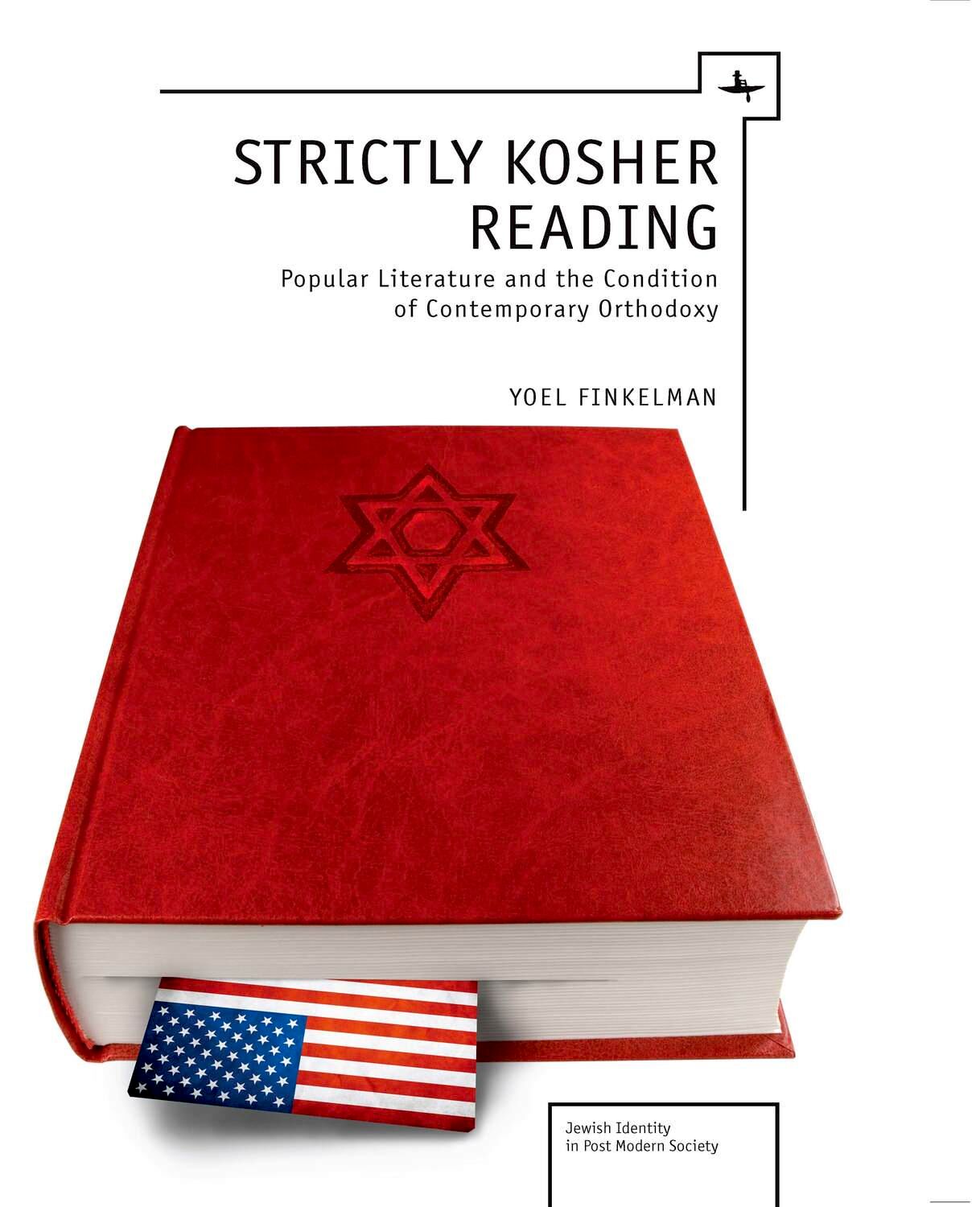

The Formation of Ḥaredism—Perspectives on Religion, Social Disciplining and Secularization in Modern Judaism
This article proposes a reassessment of the development of Ḥaredism, that is, the application of strict, maximalist, commandment-oriented Judaism to increasingly large lay publics, in light of confessionalization processes in Europe. Whereas historiographical and sociological convention locates the sources of Ḥaredism within the development of 19th century orthodox Jewish responses to the Jewish Enlightenment (Haskalah), Reform, and secular Zionism, this article argues that Ḥaredi structures and practices preceded these movements, and, in some cases, influenced their development. The basis for the priority of Ḥaredi identities to Jewish secular identities is rooted in the social disciplining and religious engineering of Jewish societies in the early modern era, until just before the Haskalah, and beyond. This disciplining was predicated on the imposition of religious, social, and ascetic education systems on growing segments of the population. Ḥaredism as a concept and as a phenomenon emerged in 16th century Safed (Ottoman Palestine); there, previous Jewish ascetic patterns were reworked, reorganized and structured under the aegis of the print era, and became a basis for mass, super-regional education. In the 17th and 18th centuries, Ḥaredi religiosity steadily percolated through European Jewish societies by means of works of personal ethic and conduct that were written, printed, and reprinted many times, in Hebrew and Yiddish, through works that enumerate the commandments, and through popular works that make the Jewish halakhic code, Shulḥan Arukh, accessible to the masses by abridging or reworking it. Starting in the early 19th century, with the mediation of the Ḥasidic and Lithuanian religious movements, this process massively penetrated broad strata of society.
Journal Article

Eating at God's Table
This rich exploration of kosher Orthodox foodways and their meanings demonstrates the inadequacy of limited or simple definitions of Orthodox Jewishness and offers insight into the religious diversity in American communities.
eBook

\DOING RELIGION\ IN A SECULAR WORLD: Women in Conservative Religions and the Question of Agency
Sociological studies of women's experiences with conservative religions are typically framed by a paradox that ponders women's complicity. The prevailing view associates agency with strategic subjects who use religion to further extra-religious ends and pays little attention to the cultural and institutional contexts that shape \"compliance.\" This paper suggests an alternative framing. Rather than asking why women comply, I examine agency as religious conduct and religiosity as a constructed status. Drawing on a study that examined how orthodox Jewish Israeli women observe, negotiate, and make sense of regulations of martial sexuality, this paper explains religious women's agency as religious conduct, or the \"doing\" of religion. I demonstrate that doing religion is associated with a search for authentic religious subjecthood and that religiosity is shaped in accordance with the logics of one's religion, and in the context of controlling messages about threatened symbolic boundaries and cultural Others.
Journal Article
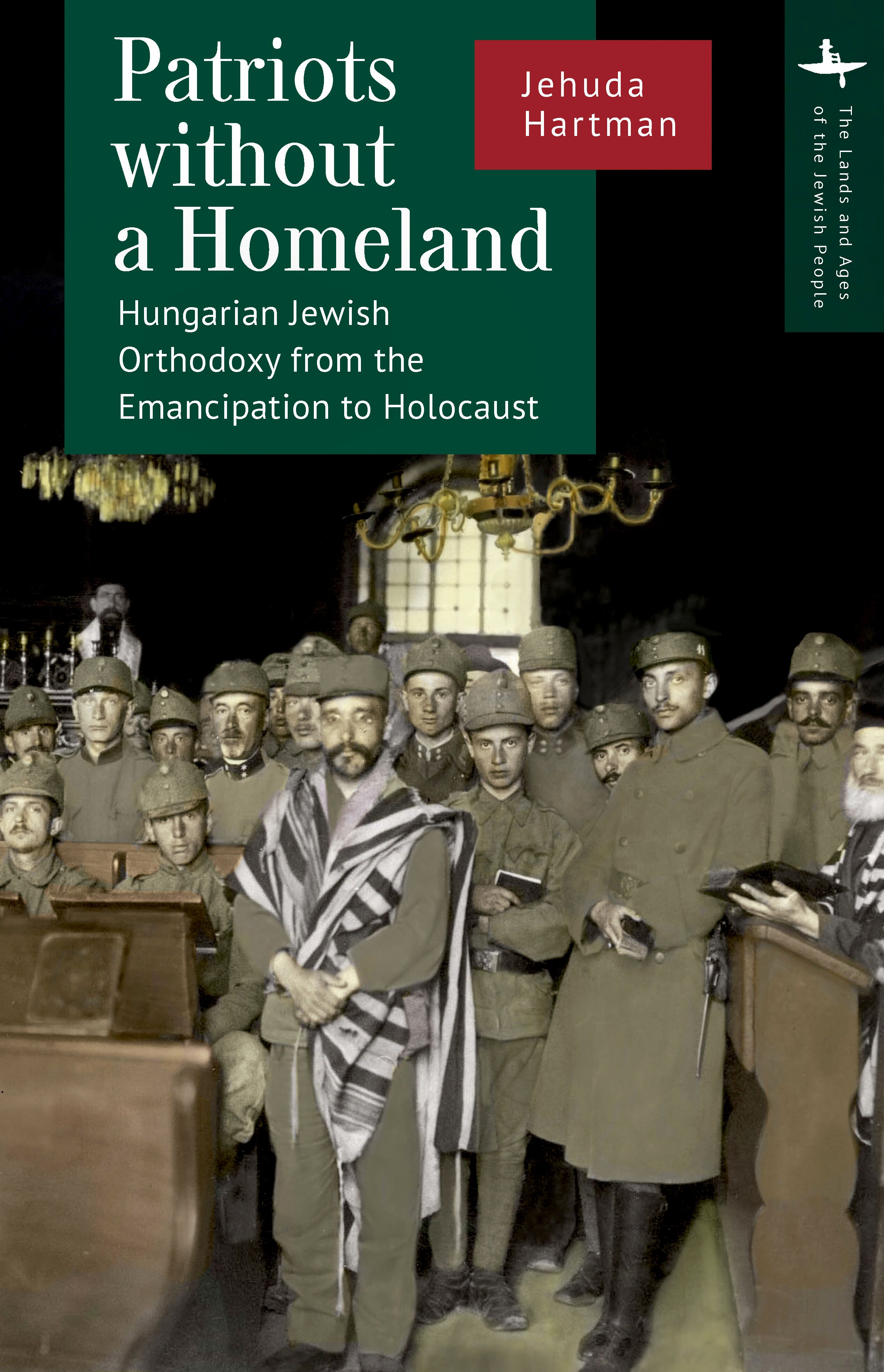
Patriots without a Homeland
Patriots without a Homeland
dissects an important underexplored theme in Hungarian Jewry: Modern Orthodoxy.
This study clearly demonstrates that beginning from the late nineteenth century, a strong modernizing trend developed within Orthodoxy based on the adoption of Hungarian national identity alongside the preservation of tradition. Modern Orthodoxy was receptive to the Hungarian language, culture, and religion. However, the attempt to integrate failed.
The book traces the journey of Hungarian Jews from Emancipation to the Holocaust and seeks to understand the reasons for the Jews’ complete trust in Hungarian integrity. For instance, why did they believe until the very last moment that the Holocaust would not affect them? How could they fail to notice the impending disaster?
This is the story of a community that felt rooted in the land and contributed greatly to its well-being, but was eventually rejected: the story of patriots without a homeland.
eBook

Disaffiliation from Jewish Ultra-Orthodox Communities
Increasing numbers of young Israelis annually leave the enclave of the ultra-Orthodox Jewish community. Relying on 16 in-depth interviews, we examine the effects of this disaffiliation on life trajectories and identity reconstruction of individuals who left their society of origin two decades ago. This unveiled a multistep longitudinal process, characterized by moving in and out of various structural stages, coupled with disaffiliates’ agency to highlight specific sociocultural characteristics or the more universal nature of the human condition. The life course of disaffiliates begins with a phase of early struggle with the immediate tolls of disaffiliation, followed by a formative period marked by two steps: military service and acquisition of higher education. Here disaffiliates practice adoption of increasingly inclusive identities, in which the past and present are enmeshed. The formative period is followed by three alternative trajectories: (a) adherence to restrictive Israeli conformity, (b) ongoing search for singularity, and (c) integration of ultra-Orthodox heritage with contemporary Israeli realities. The disaffiliation trajectory from the ultra-Orthodox society is embedded in particular sociocultural, political, and historical contexts. However, narratives of disaffiliates adhere to frameworks of cultural Jewish-Israeli particularism, as much as to those of human universalism, plugging in to certain universal themes of the human condition, namely rigidity, fluidity, alterity, and inclusion.
Journal Article