
Catalogue Search | MBRL


Are you sure you want to remove the book from the shelf?

{{itemTitle}}
426
result(s) for
"Orthodox and Oriental Churches"
Sort by:

The Doctrine of Deification in the Greek Patristic Tradition
Deification in the Greek patristic tradition was the fulfilment of the destiny for which humanity was created — not merely salvation from sin but entry into the fullness of the divine life of the Trinity. This book traces the history of deification, from its birth as a second-century metaphor with biblical roots to its maturity as a doctrine central to the spiritual life of the Byzantine Church. Drawing attention to the richness and diversity of the patristic approaches from Irenaeus to Maximus the Confessor, the book offers a full discussion of the background and context of the doctrine, at the same time highlighting its distinctively Christian character.
eBook
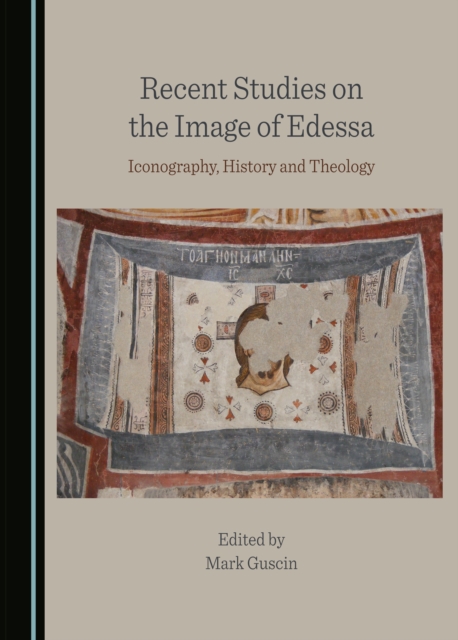
Recent Studies on the Image of Edessa
This volume presents the latest historical, theological and site-specific developments in the study of the Image of Edessa, shedding new light onto various different aspects of the icon. Experts from Russia, Spain, Australia, Georgia, Italy and the United Kingdom bring their latest findings together in order to reach a deeper understanding of this fascinating object.
eBook
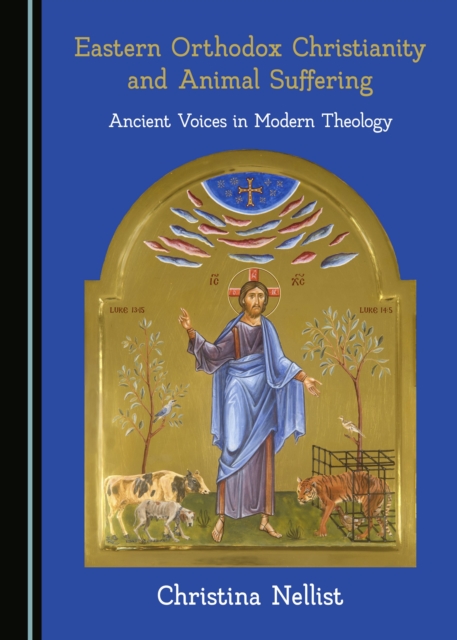
Eastern Orthodox Christianity and Animal Suffering
This book is the first academic work in Eastern Orthodox theological literature on the subject of animal suffering and human soteriology. It represents a natural progression of the contemporary Eastern Orthodox academic debate on the environment, and will be of interest not only to academic scholars in theology, religion, philosophy and ethics, but also to the wider Christian and secular communities. Using Biblical and Patristic teachings, together with new social science research and contemporary science, it presents arguments that animal suffering is against God's Will, and that the abuse or misuse of animals or indifference to animal suffering will result in negative consequences for human salvation. The book posits a revisionist interpretation of the Noahic narrative when addressing the challenging question of why God allows the dispensation of animals as food, and offers compelling arguments on why the contemporary animal food production industries and animal testing model should be rejected.
eBook
Europe, Byzantium, and the \Intellectual Silence\ of Rus' Culture
This book sets out to answer the question of why Eastern Church writers showed no interest in analytical reasoning - the so-called \"intellectual silence\" of Rus' culture - while Western Church writers, by the time of the Scholastics, routinely incorporated analytical reasoning into their defences of the faith. Donald Ostrowski suggests that Western, post-Enlightenment- trained, analytical scholars miss the point, not because of an inability to comprehend cultural ideas which seem abstract and ineffable, but because the agenda is different. For the Eastern Church, faith was superior to reason. Eastern Church thinkers did not see any worth in disputation. If God is a mystery, and this world is an emanation from God, then this world is a mystery too. In the Eastern Church, they did not ask “Why” because, for them, any answer, any explanation, was merely a begging of the question. Why divide into categories what is whole and seamless? Why try to articulate what is ineffable?
eBook
Europe, Byzantium, and the \Intellectual Silence\ of Rus' Culture
This book sets out to answer the question of why Eastern Church writers showed no interest in analytical reasoning - the so-called \"intellectual silence\" of Rus' culture - while Western Church writers, by the time of the Scholastics, routinely incorporated analytical reasoning into their defences of the faith.Donald Ostrowski suggests that Western, post-Enlightenment- trained, analytical scholars often miss the point, not because of an inability to comprehend cultural ideas which seem abstract and ineffable, but because the agenda is different.
eBook
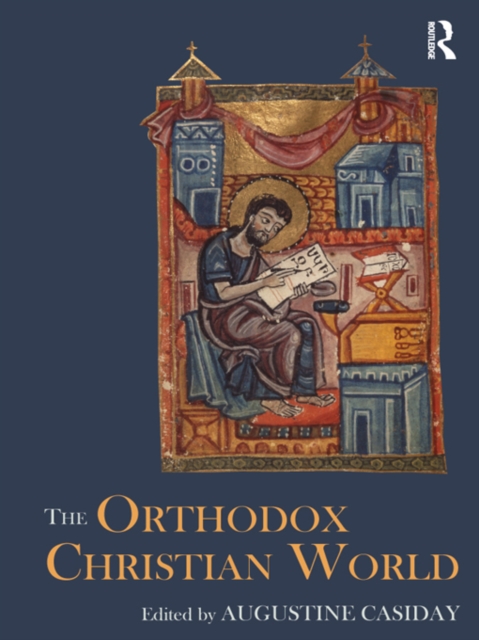
The Orthodox Christian World
Over the last century unprecedented numbers of Christians from traditionally Orthodox societies migrated around the world. Once seen as an 'oriental' or 'eastern' phenomenon, Orthodox Christianity is now much more widely dispersed, and in many parts of the modern world one need not go far to find an Orthodox community at worship. This collection offers a compelling overview of the Orthodox world, covering the main regional traditions of Orthodox Christianity and the ways in which they have become global. The contributors are drawn from the Orthodox community worldwide and explore a rich selection of key figures and themes. The book provides an innovative and illuminating approach to the subject, ideal for students and scholars alike.
eBook
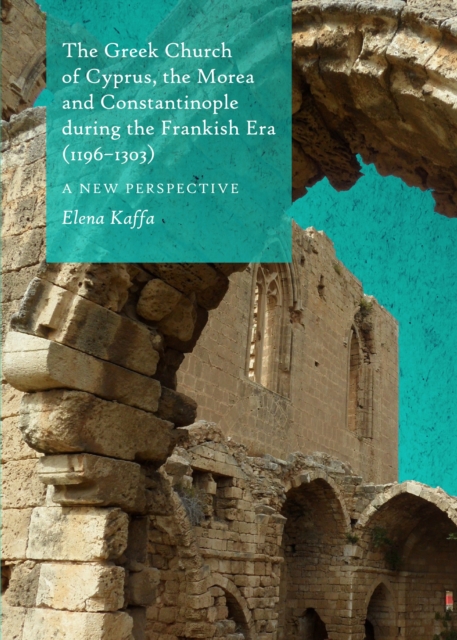
The Greek Church of Cyprus, the Morea and Constantinople during the Frankish Era (1196-1303)
This book provides a concise presentation of the Greek Church of Cyprus, the Morea and Constantinople during the earlier part of the Frankish Era (1196-1303). It examines the establishment of the Latin Church in Cyprus, Morea and Constantinople and the consequences that followed. Moreover the text analyses the relations between the Greek Church in Cyprus, Morea and Constantinople with the Latin Church. At the same time, it demonstrates the relationship between the Greek Church of Cyprus, More.
eBook
The neo-Palamite synthesis of Father Dumitru Staniloae
This book aims at presenting in a critical manner the contribution offered by Fr. Dumitru Staniloae, the most renowned Romanian Orthodox theologian and one of the leading figures of the Modern Orthodox Theologians, to the interpretation and modern assessment of the writings of Gregory Palamas. The book presents in its introduction the life and Patristic contribution of Fr. Dumitru Staniloae. Although the general view is that Staniloae was mainly a Systematic theologian, the reality is that he was also a Patristic scholar. All the chapters include an analysis of different books and studies of Fr. Staniloae and how he developed his Neo-Palamite Synthesis during his life-time. I chose to present his results in a chronological manner so that one can easily identify the different views that he had in what concerns the writings of Gregory Palamas during his long research activity. - I consider that this book is addressed to academics, theologians and persons who take an interest in the study of Eastern Orthodoxy and significant Modern Orthodox Theologians. It can offer them a good analysis in what concerns the Patristic contribution of Fr. Dumitru Staniloae. - - -
eBook

The Archbishops of Cyprus in the Modern Age
Since the onset of Ottoman rule, but more especially from the mid-18th Century, the archbishops of the autocephalous Cypriot Orthodox Church have wielded a great deal of political power. Most people of a certain age will remember the bearded monk who became a Greek nationalist politician and the first President of the Republic of Cyprus in 1960, Archbishop Makarios III. Indeed his presence at Madame Tussauds is a reminder of his stature. But were all Cypriot archbishops such political and po.
eBook

Eastern Orthodox Churches and Oriental Orthodox Churches in Dialogue: Reception, Disagreement and Convergence
This paper presents details pertaining to the dialogue between Eastern Orthodox Churches and Oriental Orthodox Churches. A brief history of the official bilateral meetings between the representatives of these two Christian traditions is sketched in the first part of the paper. The texts which converge by way of doctrine are highlighted. In the second part I present some of the difficulties which still prevent Eucharistic intercommunion between Eastern Orthodoxy and Oriental Orthodoxy, in spite of the doctrinal agreement which has been reached. Finally, some possible solutions are drafted in the last part of the paper, with special reference to Fr. Dumitru Stăniloae’s proposal of broadening the dogmatic expression from Chalcedon.
Journal Article