
Catalogue Search | MBRL


Are you sure you want to remove the book from the shelf?

{{itemTitle}}
116
result(s) for
"Orthodoxe Kirche"
Sort by:


Endgültig zerbombt
Russlands Krieg gegen die Ukraine hat die Verbindung zwischen der Russischen Orthodoxen Kirche und der Ukrainischen Orthodoxen Kirche endgültig zerstört. Bis zum Februar 2022 hatte die UOK wegen des innerukrainischen Kirchenstreits mit der Orthodoxen Kirche der Ukraine stets an ihrem Autonomiestatus innerhalb der gemeinsamen Kirche des Moskauer Patriarchats festgehalten. Doch die Bomben der russländischen Armee und die imperiale Haltung des Moskauer Patriarchen, der den Angriffskrieg unterstützt, haben zu einer tektonischen Verschiebung geführt. Das Ende der gemeinsamen Kirche ist besiegelt, offen steht, wie sich das Verhältnis der orthodoxen Kirchen in der Ukraine entwickeln wird.
Russia’s war against Ukraine has finally destroyed the connection between the Russian Orthodox Church and the Ukrainian Orthodox Church. Until February 2022, the UOC had always maintained its autonomous status within the common church of the Moscow Patriarchate because of an intra-Ukrainian church dispute with the Orthodox Church of Ukraine. But the bombs of Russia’s army and the imperial stance of the Moscow patriarch, who supports this war of aggression, have led to a tectonic shift. The fate of the common church is sealed. What remains open is how relations develop between the Ukraine’s Orthodox churches.
Journal Article
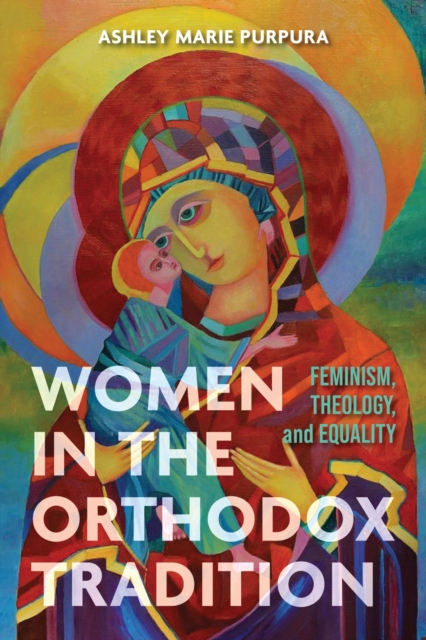
Women in the Orthodox Tradition
Women in the Orthodox Tradition brings feminist
insights into dialogue with Orthodox Christianity to
theologically identify and respond to challenges of gender
equality.
Orthodox Christianity places great importance upon
tradition, from doctrinal formulas and sainted teachings to
festal commemorations and a hymnic liturgy. But what does this
mean for women who are often missing, misrepresented, or
outnumbered in the androcentric historical tradition?
Women in the Orthodox Tradition engages with feminist
insights to argue that ignoring this bias in Christian
tradition is theologically problematic for Orthodox faith. By
critically examining the spiritual values that shape Orthodoxy,
the commemorations of women saints within it, and liturgical
and doctrinal expressions that shape it, author Ashley Marie
Purpura makes the case that it is theologically necessary to
unsay the patriarchal limits of tradition and seek a more
inclusive approach instead.
In acknowledging the messy entanglement between tradition,
theology, and historical patriarchal values,
Women in the Orthodox Tradition advocates for
women’s voices, contributions, and diverse humanity
within the church.
eBook

Serbian Orthodox Fundamentals
This book is a comprehensive exposition of the interaction of a national (the Serbian people) and a religiou (the Orthodox Christian faith) content, in the formation of a distinctive national identity and a mode of being. Its interdisciplinary approach, drawing on sociology, social anthropology, theology, political theory, Balkan historiography, and Serbian folklore, is deployed to provide a powerful and original analysis of how Serbian Orthodoxy has resulted in the sacralisation of the Serbian nation by framing the parameters of its existence. Addresses the following questions: what 'makes' a Serb? Are meaningful assumptions possible by introducing Serbian Orthodoxy as the primal point of reference? Why does religion appear to have an especially strong appeal?
eBook

The Crusades and the Christian World of the East
In the wake of Jerusalem's fall in 1099, the crusading armies of western Christians known as the Franks found themselves governing not only Muslims and Jews but also local Christians, whose culture and traditions were a world apart from their own. The crusader-occupied swaths of Syria and Palestine were home to many separate Christian communities: Greek and Syrian Orthodox, Armenians, and other sects with sharp doctrinal differences. How did these disparate groups live together under Frankish rule? InThe Crusades and the Christian World of the East, Christopher MacEvitt marshals an impressive array of literary, legal, artistic, and archeological evidence to demonstrate how crusader ideology and religious difference gave rise to a mode of coexistence he calls \"rough tolerance.\" The twelfth-century Frankish rulers of the Levant and their Christian subjects were separated by language, religious practices, and beliefs. Yet western Christians showed little interest in such differences. Franks intermarried with local Christians and shared shrines and churches, but they did not hesitate to use military force against Christian communities. Rough tolerance was unlike other medieval modes of dealing with religious difference, and MacEvitt illuminates the factors that led to this striking divergence. \"It is commonplace to discuss the diversity of the Middle East in terms of Muslims, Jews, and Christians,\" MacEvitt writes, \"yet even this simplifies its religious complexity.\" While most crusade history has focused on Christian-Muslim encounters, MacEvitt offers an often surprising account by examining the intersection of the Middle Eastern and Frankish Christian worlds during the century of the First Crusade.
eBook

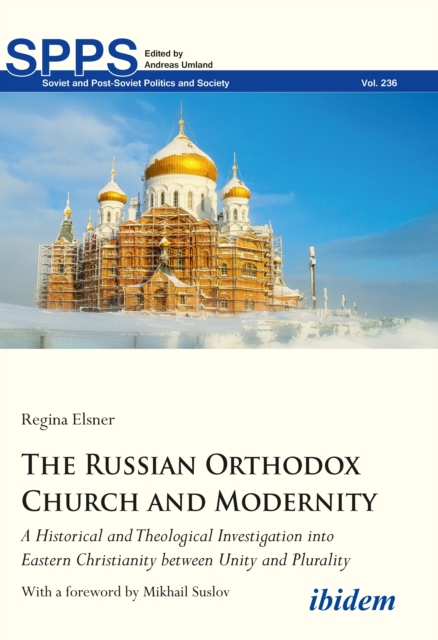
The Russian Orthodox Church and Modernity
The Russian Orthodox Church (ROC) faced various iterations of modernization throughout its history.This conflicted encounter continues in the ROCs current resistance againstwhat it perceives asWestern modernity including liberal and secular values.
eBook

Dialogue of Love: Breaking the Silence of Centuries
In 1964, a little-noticed albeit pioneering encounter in the Holy Land between the heads of the Roman Catholic Church and the Orthodox Church spawned numerous contacts and diverse openings between the two \"sister churches,\" which had not communicated with each other for centuries. Fifty years later, Pope Francis and Ecumenical Patriarch Bartholomew meet in Jerusalem to commemorate that historical event and celebrate the close relations that have developed through mutual exchanges of formal visits and an official theological dialogue that began in 1980. This book contains three unique chapters: The first is a sketch of the behind-the-scenes challenges and negotiations that accompanied the meeting in 1964, detailing the immediate consequences of the event and setting the tone for the volume. The second is an inspirational account, interwoven with a scholarly evaluation of the work of the North American Standing Council on Orthodox/Catholic relations over the past decades. The third chapter presents a recently discovered reflection on the meeting that took place fifty years ago by one of the most important Orthodox theologians of the twentieth century, expressing cautious optimism about the future of Christian unity.
eBook

Greek Orthodox Music in Ottoman Istanbul
During the late Ottoman period (1856-1922), a time of contestation about imperial policy toward minority groups, music helped the Ottoman Greeks in Istanbul define themselves as a distinct cultural group. A part of the largest non-Muslim minority within a multi-ethnic and multi-religious empire, the Greek Orthodox educated elite engaged in heated discussions about their cultural identity, Byzantine heritage, and prospects for the future, at the heart of which were debates about the place of traditional liturgical music in a community that was confronting modernity and westernization. Merih Erol draws on archival evidence from ecclesiastical and lay sources dealing with understandings of Byzantine music and history, forms of religious chanting, the life stories of individual cantors, and other popular and scholarly sources of the period. Audio examples keyed to the text are available online.
eBook

Between Nationalism and Pragmatism: The Roma Movement in Interwar Romania
In the interwar period, for the first time in their history, Romanian Roma managed to organise themselves on a modern basis, by forming Roma associations and unions, and issuing their own newspapers and programmes. In an effort to define themselves, they became politically active, claiming and negotiating rights. In my article I analyse the context of the interwar Roma movement, how Roma leaders of the time saw themselves and their movement, what programme(s) they had, and how they tried to achieve their goals. This was a serious challenge: As they were not self-sufficient, they heavily depended on support from Romanian institutions, and hence they had to act with caution in order to avoid any hostile reactions from the Romanian majority. Overall, the discourse of Roma elites in interwar Romania ranged between: 1) a national approach directed inwardly, toward the Roma, for ethnic mobilisation purposes, including calls to unite in order to acquire their rights, efforts to combat ethnic stigmatisation, discussions on ethnonyms (Gypsy vs. Roma) or on the importance of Roma in Romania and worldwide, the beginning of a national/ethnic mythology (past, origin, enslavement, heroization vs. victimization, etc.); and 2) a pragmatic approach directed outwardly, toward Romanian authorities and public opinion; rather than a national minority, Roma leaders presented the Roma as a social category with specific needs, due to their historical legacy. Of these two, throughout the interwar period, pragmatism prevailed. Special emphasis was placed on the issue of social inclusion, and on identifying specific problems and solutions (i.e., better access to education, settlement, deconstruction of prejudices, etc.).
Journal Article