
Catalogue Search | MBRL


Are you sure you want to remove the book from the shelf?

{{itemTitle}}
19
result(s) for
"Orwell, George, 1903-1950 Political and social views."
Sort by:


Hope Lies in the Proles
George Orwell was one of the most significant literary figures on the left in the twentieth century. While titles such as 1984, Animal Farm and Homage to Catalonia are still rightly regarded as modern classics, his own politics are less well understood. Hope Lies in the Proles offers a sympathetic yet critical account of Orwell's political thinking and its continued significance today. John Newsinger explores various aspects of Orwell's politics, detailing Orwell's attempts to change working-class consciousness, considering whether his attitude towards the working class was romantic, realistic or patronising - or all three at different times. He also asks whether Orwell's anti-fascism was eclipsed by his criticism of the Soviet Union, and explores his ambivalent relationship with the Labour Party. Newsinger also breaks important new ground regarding Orwell's shifting views on the USA, and his relationship with the progressive Left and feminism.
eBook

Orwell's ghosts : wisdoms and warnings for the twenty-first century
\"In Orwell's Ghosts, historian Laura Beers considers Orwell's full body of work--his six novels, three nonfiction works, and brilliant essays on politics, language, and the class system--to examine what 'Orwellian' truly means and reveal the misconstrued thinker in all his complexity. She explores how Orwell's writing on free speech addresses the proliferation of 'fake news' and the emergence of cancel culture, highlights his vivid critiques of capitalism and the oppressive nature of the British Empire, and, in contrast, analyzes his failure to understand feminism.\" -- Provided by publisher.
BOOK
The Betrayal of Dissent
Since his death in 1950, George Orwell has been canonised as England's foremost political writer, and the standard-bearer of honesty and decency for the honourable 'Left'. In this controversial polemic, Scott Lucas argues that the exaltation of Orwell, far from upholding dissent against the State, has sought to quash such opposition. Indeed, Orwell has become the icon of those who, in the pose of the contrarian, try to silence public opposition to US and U K foreign policy in the 'War on Terror'.
Lucas's lively and readable critique of public intellectuals including Christopher Hitchens, Michael Walzer, David Aaronovitch, and Johann Hari - who have all invoked Orwellian honesty and decency to shut down dissent - will appeal to anyone disillusioned with the wars in Afghanistan and Iraq.
eBook


Every intellectual's big brother : George Orwell's literary siblings
No detailed description available for \"Every Intellectual's Big Brother\".
eBook

George Orwell and Russia
\"For those living in the Soviet Union, Orwell's masterpieces Animal Farm and Nineteen Eighty Four were not dystopias, but accurate fictional descriptions of reality. Here, the Orwell scholar and Russian political expert Masha Karp - head of the BBC's Russian Service for nearly a decade - explores how Orwell's work was received in Russia, and how it affects the political reality of totalitarianism today. The book reveals for the first time new contextual articles written by Orwell which provide explanation for his naming of fellow communists to the authorities in the 1940s, and shows how Orwell's ideas percolated in Russia even under censorship. Karp also demonstrates why The Road to Wigan Pier - Orwell's famous exploration of British poverty - was never published in Russian, and how the ideas of totalitarianism laid out in Orwell's writings have taken root in Russia today. As Vladimir Putin's actions continue to shock the west, it seems clear we are witnessing a new transformation of totalitarianism, as predicted and described by Orwell. Now over 70 years after Orwell's death, his writing, at least as far as Russia is concerned, remains as timely and urgent as it has ever been\"-- Provided by publisher.
BOOK
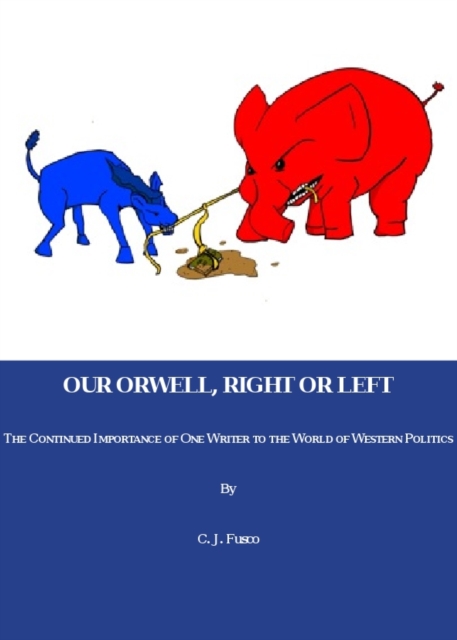
Our Orwell, Right or Left
Writers words have always been used by pundits and politicos in order to further their own agendas, but it is probable that no writers work has been used (and misused) as frequently and as effectively as George Orwells. Once the champion of Europes down-and-out and a self-proclaimed advocate of Socialism, Orwell was, understandably, embraced by many on the Left during his own lifetime. Following the publications of Animal Farm and Nineteen Eighty-Four and the writers own death shortly.
eBook

Churchill and Orwell : the fight for freedom
\"A dual biography of Winston Churchill and George Orwell, whose farsighted vision and inspired action preserved democracy from the threats of authoritarianism from the left and right alike\"--Amazon.com.
BOOK
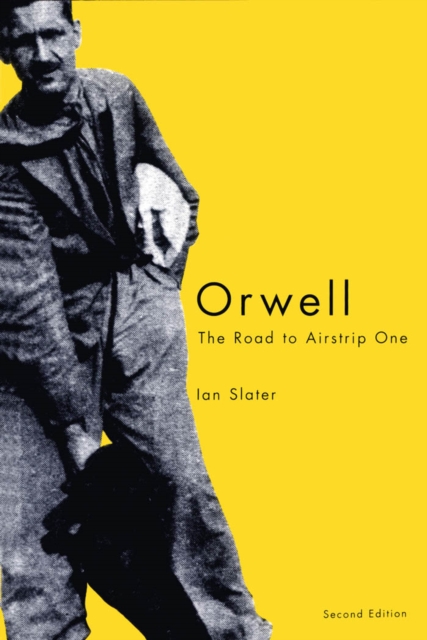
Orwell
\"In Moulmein, in Lower Burma, I was hated by large numbers of people ...\" So begins one of Orwell's most famous essays. In Orwell: The Road to Airstrip One Ian Slater explains why Orwell was hated in Moulmein and takes us on a fascinating intellectual journey that traces the development of Orwell's political and social criticism. Using a uniquely thematic approach, Slater also examines Orwell's self-criticism and, finally, the hidden and corrosive dangers of state and self-imposed censorship in a security-obsessed world. Slater's tour de force, critically acclaimed by those on both the left and the right, moves from Orwell's schooldays in England and his time as a policeman in Burma, through his years as a struggling poet, dishwasher, tramp in Paris, and tutor, schoolmaster, and bookshop assistant in London, to his critical experiences during the Spanish Civil War. Slater takes us beyond the events of Orwell's life to the bitter satire of the Russian Revolution in Animal Farm and the horrifying terror of Room 101 in 1984, Orwell's final novel, and shows that 1984 is as much a warning about the state of mind we call totalitarianism as it is a prophecy of an actual political state. As the war on terrorism continues and governments demand ever-increasing power over the individual in order to combat terrorism, Orwell: The Road to Airstrip One, reissued during Orwell's centenary, warns us that \"he who fights with monsters should be careful lest he thereby become a monster.\"
eBook