
Catalogue Search | MBRL


Are you sure you want to remove the book from the shelf?

{{itemTitle}}
57
result(s) for
"Ostkirche"
Sort by:

The making of the medieval Middle East : religion, society, and simple believers
In the second half of the first millennium CE, the Christian Middle East fractured irreparably into competing churches and Arabs conquered the region, setting in motion a process that would lead to its eventual conversion to Islam. Jack Tannous argues that key to understanding these dramatic religious transformations are ordinary religious believers, often called \"the simple\" in late antique and medieval sources. Largely agrarian and illiterate, these Christians outnumbered Muslims well into the era of the Crusades, and yet they have typically been invisible in our understanding of the Middle East's history. What did it mean for Christian communities to break apart over theological disagreements that most people could not understand? How does our view of the rise of Islam change if we take seriously the fact that Muslims remained a demographic minority for much of the Middle Ages? In addressing these and other questions, Tannous provides a sweeping reinterpretation of the religious history of the medieval Middle East. This provocative book draws on a wealth of Greek, Syriac, and Arabic sources to recast these conquered lands as largely Christian ones whose growing Muslim populations are properly understood as converting away from and in competition with the non-Muslim communities around them. -- Publisher, inside front flap of dust jacket.
Book

A Storm of Images
In the eighth century, the Byzantine Empire began a campaign to remove or suppress sacred images that depicted Christ, the Virgin, or other holy figures, whether in paintings, mosaics, murals, or other media. In some cases, the campaign extended to breaking or wrecking images through what became known as iconoclasm. Over the following years, the emperors' zealous movement involved other acts that closely foreshadowed the Reformation movement that would sweep Western Europe in the sixteenth century. Like that later Reformation, iconoclasm marked an authentic revolution in religious sensibility, with all that implied for theology, culture, and visual perceptions of holiness. This was a pivotal moment in the definition of Christianity and its relationship to the material creation. It was also a time of critical encounters with the other Abrahamic religions of Judaism and Islam. With A Storm of Images, Philip Jenkins offers a compelling retelling of the saga of how the iconoclastic movement detonated ferocious controversy within the church and secular society as icon supporters challenged the image breakers. Decades of internal struggle followed, marked by rebellions and civil wars, purges and persecutions, plotting and coups d'état. After their cause triumphed, image supporters made the cult of icons ever more central to the faith of Orthodox Christianity. Iconoclasm marked a watershed in the history of Late Antiquity and the Early Middle Ages, and it contributed to Western attempts to establish new empires. The questions raised during these struggles are all the more relevant at a time when such controversy rages over public depictions of history and the removal of statues, monuments, and names associated with hated figures. As in those earlier times, debates over images serve as vehicles for authentic cultural revolutions.
eBook

The Crusades and the Christian World of the East
In the wake of Jerusalem's fall in 1099, the crusading armies of western Christians known as the Franks found themselves governing not only Muslims and Jews but also local Christians, whose culture and traditions were a world apart from their own. The crusader-occupied swaths of Syria and Palestine were home to many separate Christian communities: Greek and Syrian Orthodox, Armenians, and other sects with sharp doctrinal differences. How did these disparate groups live together under Frankish rule? InThe Crusades and the Christian World of the East, Christopher MacEvitt marshals an impressive array of literary, legal, artistic, and archeological evidence to demonstrate how crusader ideology and religious difference gave rise to a mode of coexistence he calls \"rough tolerance.\" The twelfth-century Frankish rulers of the Levant and their Christian subjects were separated by language, religious practices, and beliefs. Yet western Christians showed little interest in such differences. Franks intermarried with local Christians and shared shrines and churches, but they did not hesitate to use military force against Christian communities. Rough tolerance was unlike other medieval modes of dealing with religious difference, and MacEvitt illuminates the factors that led to this striking divergence. \"It is commonplace to discuss the diversity of the Middle East in terms of Muslims, Jews, and Christians,\" MacEvitt writes, \"yet even this simplifies its religious complexity.\" While most crusade history has focused on Christian-Muslim encounters, MacEvitt offers an often surprising account by examining the intersection of the Middle Eastern and Frankish Christian worlds during the century of the First Crusade.
eBook

The Eastern Orthodox Church
An insider's account of the Eastern Orthodox Church, from its beginning in the era of Jesus and the Apostles to the modern age In this short, accessible account of the Eastern Orthodox Church, John McGuckin begins by tackling the question \"What is the Church?\" His answer is a clear, historically and theologically rooted portrait of what the Church is for Orthodox Christianity and how it differs from Western Christians' expectations. McGuckin explores the lived faith of generations, including sketches of some of the most important theological themes and individual personalities of the ancient and modern Church. He interweaves a personal approach throughout, offering to readers the experience of what it is like to enter an Orthodox church and witness its liturgy. In this astute and insightful book, he grapples with the reasons why many Western historians and societies have overlooked Orthodox Christianity and provides an important introduction to the Orthodox Church and the Eastern Christian World.
eBook
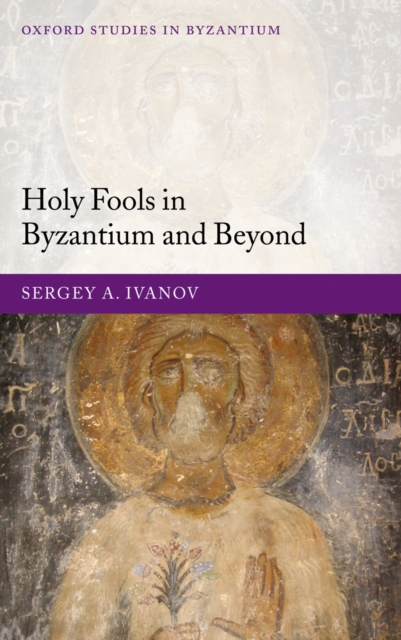
Holy fools in Byzantium and beyond
There are saints in Orthodox Christian culture who overturn the conventional concept of sainthood: their conduct is morally dubious. Such saints are called ‘holy fools’. They existed in Byzantium for about 1,000 years, but nearly vanished in modern Greece. In Russia, however, they are deeply worshipped by the believers up till this day. In this book holy foolery is treated as a cultural phenomenon: as a spontaneous response of the religious consciousness to the secularization of the church. The author has repudiated the traditional ‘Orthodox’ paradigm; he discovered a great number of Byzantine and Old Russian sources dealing with holy fools. By adopting a diachronic approach, this book identifies the prerequisites for this phenomenon, traces the way it was shaped in the religious mind. A holy fool comes into existence as an instinctive protest against the insipid, mundane existence of Christians who lost the scope for the blinding light of the Celestial. Holy foolery is a reaction to the diminution of the Absolute. The book tracks down holy foolery from its origins in Egyptian monasteries through its evolution in the cities of Byzantium, describes its prime and decline, followed by a new flourish and a gradual fading on Greek soil. It then proceeds to analyze Russian holy foolery, which borrowed some elements from the Byzantine model, but also reinterpreted it quite a bit. The book also considers other phenomena similar to holy foolery, in the Western medieval world, as well as the Islamic one.
eBook

Syrians and the Others
The volume contains the first editions of a number of works of Syrian authors and a publication of Coptic liturgical texts. It also includes a discussion of the letters of Nicetas Stethatos available only in Georgian and other patristic/hagiographical topics.
eBook

Gog and Magog in early eastern Christian and Islamic sources : Sallam's quest for Alexander's wall
An important contribution to the discussion about Christian Syriac influence on Koran and Early Muslim Tradition, this volume studies Eastern Christian and Islamic views on the Biblical and Koranic Gog and Magog. Connected with this theme is the quest for Alexander's wall.
eBook

Eastern Orthodox and Anglicans
Eastern Orthodox and Anglicans is the first sustained
study of inter-Orthodox relations, the special role of the Anglican
Church, and the problems of Orthodox nationalism in the modern age.
Despite many challenges, the interwar years were a time of intense
creativity in the Russian Orthodox Church. Russian émigrés, freed
from enforced isolation in the wake of the Russian Revolution,
found themselves in close contact with figures from other Orthodox
churches and from the Roman Catholic Church and all varieties of
Protestant confessions. For many reasons, Russian exiles found
themselves drawn to the Anglican Church in particular. The interwar
years thus witnessed a concentrated effort to bridge the gap
between Orthodox and Anglican. Geffert's book is a detailed history
of that effort. It is the story of efforts toward rapprochement by
two churches and their ultimate failure to achieve formal unity.
The same political, diplomatic, historical, personal, and religious
forces that first inspired contact were the ones that ultimately
undermined the effort. Bryn Geffert recounts the history of an
important chapter in the history of Christian ecumenism, one that
is relevant to contemporary efforts to achieve meaningful
interfaith dialogue.
eBook
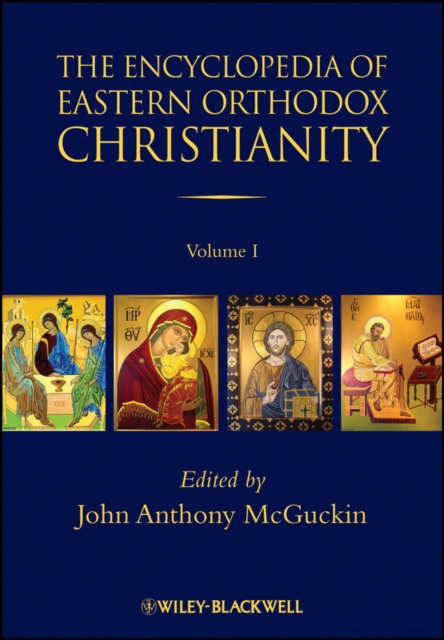
The encyclopedia of Eastern Orthodox Christianity
With a combination of essay-length and short entries written by a team of leading religious experts, the two-volume Encyclopedia of Eastern Orthodoxy offers the most comprehensive guide to the cultural and intellectual world of Eastern Orthodox Christianity available in English today. * An outstanding reference work providing the first English language multi-volume account of the key historical, liturgical, doctrinal features of Eastern Orthodoxy, including the Non-Chalcedonian churches * Explores of the major traditions of Eastern Orthodoxy in detail, including the Armenian, Byzantine, Coptic, Ethiopic, Slavic, Romanian, Syriac churches * Uniquely comprehensive, it is edited by one of the leading scholars in the field and provides authoritative but accessible articles by a range of top international academics and Orthodox figures * Spans the period from Late Antiquity to the present, encompassing subjects including history, theology, liturgy, monasticism, sacramentology, canon law, philosophy, folk culture, architecture, archaeology, martyrology, hagiography, all alongside a large and generously detailed prosopography * Structured alphabetically and topically cross-indexed, with entries ranging from 100 to 6,000 words
eBook