
Catalogue Search | MBRL


Are you sure you want to remove the book from the shelf?

{{itemTitle}}
875,326
result(s) for
"Other (Philosophy)"
Sort by:

Other people : takes & mistakes
\"An intellectually thrilling and emotionally wrenching investigation of otherness: the need for one person to understand another person completely, the impossibility of any such absolute knowing, and the erotics of this separation. Can one person know another person? How do we live through other people? Is it possible to fill the gap between people? If not, can art fill that gap? Grappling with these questions, David Shields gives us a book that is something of a revelation: seventy-plus essays, written over the last thirty-five years, reconceived and recombined to form neither a miscellany nor a memoir but a sustained meditation on otherness. The book is divided into five sections: Men, Women, Athletes, Performers, Alter Egos. Whether he is writing about sexual desire or information sickness, George W. Bush or Kurt Cobain, women's eyeglasses or Greek tragedy, Howard Cosell or Bill Murray, the comedy of high school journalism or the agony of first love, Shields's sustained, piercing focus is on the multiplicity of perspectives informing any situation, on the irreducible log jam of human information, and on the possibilities, and impossibilities, for human connection\"-- Provided by publisher.
Book

The Self-Emptying Subject
The result is an elaboration of a theory of ethics different from the two dominant modern conceptions: Foucault's ethics of the self and Levinas's ethics of the other.
Against the two dominant ethical paradigms of continental philosophy-Emmanuel Levinas's ethics of the Other and Michel Foucault's ethics of self-cultivation-The Self-Emptying Subjecttheorizes an ethics of self-emptying, orkenosis, that reveals the immanence of an impersonal and dispossessed life \"without a why.\" Rather than aligning immanence with the enclosures of the subject,The Self-Emptying Subjectengages the history of Christian mystical theology, modern philosophy, and contemporary theories of the subject to rethink immanence as what precedes and exceeds the very difference between the (human) self and the (divine) other, between the subject and transcendence. By arguing that transcendence operates and subjects life in secular no less than in religious domains, this book challenges the dominant distribution of concepts in contemporary theoretical discourse, which insists on associating transcendence exclusively with religion and theology and immanence exclusively with modern secularity and philosophy.
The Self-Emptying Subjectargues that it is important to resist framing the relationship between medieval theology and modern philosophy as a transition from the affirmation of divine transcendence to the establishment of autonomous subjects. Through an engagement with Meister Eckhart, G.W.F. Hegel, and Georges Bataille, it uncovers a medieval theological discourse that rejects the primacy of pious subjects and the transcendence of God (Eckhart); retrieves a modern philosophical discourse that critiques the creation of self-standing subjects through a speculative re-writing of the concepts of Christian theology (Hegel); and explores a discursive site that demonstrates the subjecting effects of transcendence across theological and philosophical operations and archives (Bataille). Taken together, these interpretations suggest that if we suspend the antagonistic relationship between theological and philosophical discourses, and decenter our periodizing assumptions and practices, we might encounter a yet unmapped theoretical fecundity of self-emptying that frees life from transcendent powers that incessantly subject it for their own ends.
Dubilet is a very lucid writer who does an excellent job of explaining philosophically sophisticated material without oversimplifying.Recovers a major but neglected concept drawn from Paul's letters, that underlies theories of subjectivity across a wide range of Western thought, from medieval mysticism to Hegel, to Bataille, confounding the conventional religious/secular divide.
eBook


Tensions of Modernity
Politics today is marked by tension between claims of universal human rights and diversity. From the war on terror to immigration, one of the major challenges facing liberalism is to understand the scope of equality in a world in which certain peoples are perceived to reject and/or violently resist democratic principles.
This book revisits Europe's initial encounter with the Native Americans of the New World to shed light on how the West's initial defense of so-called 'barbarians' has influenced the way we think about diversity today, and elucidate the arguments of exclusion that unconsciously permeate the moral world we live in. In doing so, Daniel R. Brunstetter traces Bartolomé de Las Casas's oft heralded defense of the Native Americans in the sixteenth century through the French Enlightenment. While this defense has been rightly lauded as an early example of human rights discourse, tracing Las Casas's arguments into the eighteenth century shows how his view of equality enabled arguments legitimizing the annihilation by 'just' war of those perceived to be 'barbarians'.
This philosophical narrative can be useful when thinking about concepts such as just war, multiculturalism, and immigration, or any area in which politics confronts radical difference.
eBook


Towards an Ethics of Empathy
This book examines the complex interplay between morality and the recognition of otherness. It explores ethical behavior through the lenses of narrow morality (restraint) and broad morality (action), emphasizing the need to evaluate moral relevance based on the qualities of otherness. The book aims to challenge anthropocentric frameworks, and understand otherness by avoiding both identification and alienation. The work examines the ethical dimensions of animality, emphasizing shared ontological foundations (metapredicates) and the heteronomous dependence of all species. Central to this exploration is the recognition of animal subjectivity. Traditional ethical models, including Maslow's hierarchy, are also revisited by addressing not only suffering but also the diverse expressions of pleasure across species. The book advocates an ethics of empathy that integrates affective engagement with cognitive rigor, fostering a balanced moral approach toward non-human entities based on a sentimental education that bridges ethical theory and empathetic action.
eBook

Monstrosity and philosophy : radical otherness in Greek and Latin culture
Amazons and giants, snakes and gorgons, centaurs and gryphons: monsters abounded in the ancient world. Del Lucchese grapples with the concept of monstrosity, showing how ancient philosophers explored metaphysics, ontology, theology and politics to respond to the challenge of radical otherness in nature and in thought.
Book
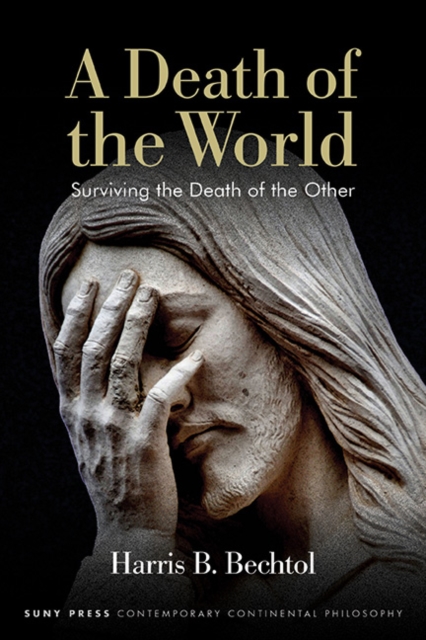
A Death of the World
Offers a description of what happens to survivors after
a death, based on the effect this death has on the survivor's
relation to the spatial and temporal world occupied after the
loss of the deceased.
A Death of the World offers a phenomenological
description of what happens to the world for those who survive
the death of someone. Bringing Jacques Derrida's works into
conversation with the philosophies of Martin Heidegger,
Emmanuel Levinas, Jean-Luc Marion, Maurice Blanchot, and Claude
Romano; the poetry and literature of Paul Celan, W. H. Auden,
Emily Dickinson, Ovid, and Jonathan Safran Foer; and
psychological works concerning trauma, mourning, epigenetics,
and memory, author Harris B. Bechtol provides interdisciplinary
language for understanding the death of the other as an event.
He argues that such death must be understood as an event
because this death is more than just the loss of the other who
has died insofar as the meaning of the world to and with this
other is also lost. Such loss manifests itself through the
transformations of both the spaces in which meaning takes place
and the lived time of a survivor's world. These transformations
of the world culminate in his account of workless mourning,
which establishes the contours of the life after these deaths
of the world.
eBook


All ears
The world of international politics has recently been rocked by a seemingly endless series of scandals involving auditory surveillance: the NSA’s warrantless wiretapping is merely the most sensational example of what appears to be a universal practice today. What is the source of this generalized principle of eavesdropping?All Ears: The Aesthetics of Espionage traces the long history of moles from the Bible, through Jeremy Bentham’s “panacoustic\" project, all the way to the intelligence-gathering network called “Echelon.\" Together with this archeology of auditory surveillance, Szendy offers an engaging account of spycraft’s representations in literature (Sophocles, Shakespeare, Joyce, Kafka, Borges), opera (Monteverdi, Mozart, Berg), and film (Lang, Hitchcock, Coppola, De Palma). Following in the footsteps of Orpheus, the book proposes a new concept of “overhearing\" that connects the act of spying to an excessive intensification of listening. At the heart of listening Szendy locates the ear of the Other that manifests itself as the originary division of a “split-hearing\" that turns the drive for mastery and surveillance into the death drive.
eBook