
Catalogue Search | MBRL


Are you sure you want to remove the book from the shelf?

{{itemTitle}}
4,694,354
result(s) for
"Other People"
Sort by:

No more beige food
\"Tired of the bland and mushy meals her parents make, Wilma and her little brother venture in search of some neighbors will to teach them how to cook new food. From Khun Joe's pad thai to Ms. Azar's Lebanese kibbe, they learn to make all sorts of tasty dishes\"-- Provided by publisher.
Book

The Native Ground
InThe Native Ground, Kathleen DuVal argues that it was Indians rather than European would-be colonizers who were more often able to determine the form and content of the relations between the two groups. Along the banks of the Arkansas and Mississippi rivers, far from Paris, Madrid, and London, European colonialism met neither accommodation nor resistance but incorporation. Rather than being colonized, Indians drew European empires into local patterns of land and resource allocation, sustenance, goods exchange, gender relations, diplomacy, and warfare. Placing Indians at the center of the story, DuVal shows both their diversity and our contemporary tendency to exaggerate the influence of Europeans in places far from their centers of power. Europeans were often more dependent on Indians than Indians were on them. Now the states of Arkansas, Oklahoma, Kansas, and Colorado, this native ground was originally populated by indigenous peoples, became part of the French and Spanish empires, and in 1803 was bought by the United States in the Louisiana Purchase. Drawing on archaeology and oral history, as well as documents in English, French, and Spanish, DuVal chronicles the successive migrations of Indians and Europeans to the area from precolonial times through the 1820s. These myriad native groups-Mississippians, Quapaws, Osages, Chickasaws, Caddos, and Cherokees-and the waves of Europeans all competed with one another for control of the region. Only in the nineteenth century did outsiders initiate a future in which one people would claim exclusive ownership of the mid-continent. After the War of 1812, these settlers came in numbers large enough to overwhelm the region's inhabitants and reject the early patterns of cross-cultural interdependence. As citizens of the United States, they persuaded the federal government to muster its resources on behalf of their dreams of landholding and citizenship. With keen insight and broad vision, Kathleen DuVal retells the story of Indian and European contact in a more complex and, ultimately, more satisfactory way.
eBook

Chloe's Lunar New Year
Chloe cannot wait to celebrate the Lunar New Year, but first she and her family must prepare for the holiday. Includes a recipe for fortune cake.
Book

From Chicaza to Chickasaw
In this sweeping regional history, anthropologist Robbie Ethridge traces the metamorphosis of the Native South from first contact in 1540 by Hernando De Soto to the dawn of the eighteenth century, when indigenous people no longer lived in a purely Indian world but rather on the edge of an expanding European empire and in a new social landscape that included a large population of Europeans and Africans. Despite the fact that thousands of Indians died or were enslaved and virtually all Native polities were radically altered in these years, the collapse of this complex Mississippian world did not extinguish the Native peoples of the South but rather transformed them.Using a new interpretive framework that Ethridge calls the \"Mississippian shatter zone\" to explicate these tumultuous times,From Chicaza to Chickasawexamines the European invasion and the collapse of the precontact Mississippian world and the restructuring of discrete chiefdoms into coalescent Native societies in a colonial world. Within this larger regional context, she closely follows the story of one group--the Chickasaws--throughout this period. With skillfully synthesized archaeological and documentary evidence, Ethridge illuminates the Native South in its earliest colonial context and sheds new light on the profound upheaval and cultural transformation experienced by the region's first peoples.
eBook

Julián is a mermaid
While riding the subway home from the pool with his abuela one day, Julián notices three women spectacularly dressed up. Their hair billows in brilliant hues, their dresses end in fishtails, and their joy fills the train car. When Julián gets home, daydreaming of the magic he's seen, all he can think about is dressing up just like the ladies in his own fabulous mermaid costume: a butter-yellow curtain for his tail, the fronds of a potted fern for his headdress. But what will Abuela think about the mess he makes -- and even more importantly, what will she think about how Julián sees himself?
Book
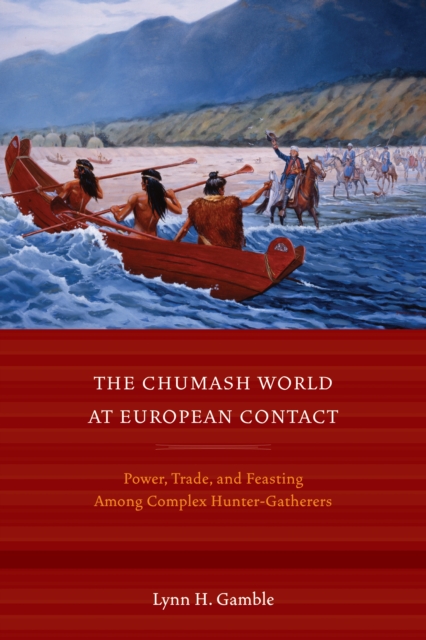
The Chumash world at European contact
When Spanish explorers and missionaries came onto Southern California's shores in 1769, they encountered the large towns and villages of the Chumash, a people who at that time were among the most advanced hunter-gatherer societies in the world. The Spanish were entertained and fed at lavish feasts hosted by chiefs who ruled over the settlements and who participated in extensive social and economic networks. In this first modern synthesis of data from the Chumash heartland, Lynn H. Gamble weaves together multiple sources of evidence to re-create the rich tapestry of Chumash society. Drawing from archaeology, historical documents, ethnography, and ecology, she describes daily life in the large mainland towns, focusing on Chumash culture, household organization, politics, economy, warfare, and more.
eBook

Muslim-Christian polemic during the Crusades : the letter from the people of Cyprus and Ibn Abī Ṭālib al-Dimashqī's response
\"This volume comprises an edition and English translation of the response in Arabic made by the fourteenth century scholar Ibn Abi Talib al-Dimashqi to a letter sent to him by anonymous Christians from Cyprus. The Christian letter was also sent to al-Dimashqi's contemporary Ibn Taymiyya, and this response is thus a parallel to Ibn Taymiyya's al-Jawab al-sahih.\" \"In their letter the Christians subtly suggest that the Qur'an supports Christian doctrines. Al-Dimashqi replies with a comprehensive series of elaborate and wide-ranging arguments that incorporate not only themes familiar from earlier polemical works but also his own original points. His response is thus an important source of information about the development of Muslim interfaith attitudes, and a significant example of polemic in the later medieval period. The edition presents the two parts of this correspondence in parallel Arabic and English versions, together with an extensive introduction, textual notes and commentary.\"--Jacket.
BOOK

Zamumo's Gifts
In 1540, Zamumo, the chief of the Altamahas in central Georgia, exchanged gifts with the Spanish conquistador Hernando de Soto. With these gifts began two centuries of exchanges that bound American Indians and the Spanish, English, and French who colonized the region. Whether they gave gifts for diplomacy or traded commodities for profit, Natives and newcomers alike used the exchange of goods such as cloth, deerskin, muskets, and sometimes people as a way of securing their influence. Gifts and trade enabled early colonies to survive and later colonies to prosper. Conversely, they upset the social balance of chiefdoms like Zamumo's and promoted the rise of new and powerful Indian confederacies like the Creeks and the Choctaws.Drawing on archaeological studies, colonial documents from three empires, and Native oral histories, Joseph M. Hall, Jr., offers fresh insights into broad segments of southeastern colonial history, including the success of Florida's Franciscan missionaries before 1640 and the impact of the Indian slave trade on French Louisiana after 1699. He also shows how gifts and trade shaped the Yamasee War, which pitted a number of southeastern tribes against English South Carolina in 1715-17. The exchanges at the heart of Zamumo's Gifts highlight how the history of Europeans and Native Americans cannot be understood without each other.
eBook

Body Battlegrounds
Body Battlegrounds explores the rich and complex lives of
society's body outlaws-individuals from myriad social locations who
oppose hegemonic norms, customs, and conventions about the body.
Original research chapters (based on textual analysis, qualitative
interviews, and participant observation) along with personal
narratives provide a window into the everyday lives of people
rewriting the norms of embodiment in sites like schools, sporting
events, and doctors' offices. Table of Contents
Introduction | Chris Bobel and Samantha Kwan Part I:
Going \"Natural\" • Body Hair Battlegrounds: The
Consequences, Reverberations, and Promises of Women Growing Their
Leg, Pubic, and Underarm Hair | Breanne Fahs • Radical
Doulas, Childbirth Activism, and the Politics of Embodiment |
Monica Basile • Caring for the Corpse: Embodied Transgression
and Transformation in Home Funeral Advocacy | Anne Esacove
Living Resistance: • Deconstructing Reconstructing: Challenging
Medical Advice Following Mastectomy | Joanna Rankin • My
Ten-Year Dreadlock Journey: Why I Love the \"Kink\" in My Hair . . .
Today | Cheryl Thompson • Living My Full Life: My
Rejecting Weight Loss as an Imperative for Recovery from Binge
Eating Disorder | Christina Fisanick • Pretty Brown:
Encounters with My Skin Color | Praveena Lakshmanan Part II:
Representing Resistance • Blood as Resistance:
Photography as Contemporary Menstrual Activism | Shayda Kafai
• Am I Pretty Enough for You Yet?: Resistance through Parody in
the Pretty or Ugly YouTube Trend | Katherine Phelps • The
Infidel in the Mirror: Mormon Women's Oppositional Embodiment
| Kelly Grove and Doug Schrock Living Resistance: • A Cystor's
Story: Polycystic Ovarian Syndrome and the Disruption of Normative
Femininity | Ledah McKellar • Old Bags Take a Stand: A
Face Off with Ageism in America | Faith Baum and Lori Petchers
• Making Up with My Body: Applying Cosmetics to Resist
Disembodiment | Haley Gentile • I Am a Person Now: Autism,
Indistinguishability, and (Non)optimal Outcome | Alyssa
Hillary Part III: Creating Community, Disrupting
Assumptions • Yelling and Pushing on the Bus: The
Complexity of Black Girls' Resistance | Stephanie D. Sears and
Maxine Leeds Craig • Big Gay Men's Performative Protest Against
Body Shaming: The Case of Girth and Mirth | Jason Whitesel
• \"What's Love Got to Do with It?\": The Embodied Activism of
Domestic Violence Survivors on Welfare | Sheila M. Katz Living
Resistance: • \"Your Signing Is So Beautiful!\": The Radical
Invisibility of ASL Interpreters in Public | Rachel Kolb •
Two Shakes | Rev. Adam Lawrence Dyer • \"Showing Our
Muslim\": Embracing the Hijab in the Era of Paradox | Sara
Rehman • \"Doing Out\": A Black Dandy Defies Gender Norms in the
Bronx | Mark Broomfield • Everybody: Making Fat Radio for
All of Us | Cat Pausé Part IV: Transforming Institutions
and Ideologies • Embodying Nonexistence: Encountering
Mono- and Cisnormativities in Everyday Life | J. E. Sumerau
• Freeing the Nipple: Encoding the Heterosexual Male Gaze into
Law | J. Shoshanna Ehrlich • Give Us a Twirl: Male Baton
Twirlers' Embodied Resistance in a Feminized Terrain | Trenton
M. Haltom • \"That Gentle Somebody\": Rethinking Black Female
Same-Sex Practices and Heteronormativity in Contemporary South
Africa | Taylor Riley Living Resistance:
eBook

On Records
Bridging the fields of indigenous, early American, memory, and media studies,On Recordsilluminates the problems of communication between cultures and across generations. Andrew Newman examines several controversial episodes in the historical narrative of the Delaware (Lenape) Indians, including the stories of their primordial migration to settle a homeland spanning the Delaware and Hudson Rivers, the arrival of the Dutch and the first colonial land fraud, William Penn's founding of Pennsylvania with a Great Treaty of Peace, and the \"infamous\" 1737 Pennsylvania Walking Purchase.
As Newman demonstrates, the quest for ideal records-authentic, authoritative, and objective, anchored in the past yet intelligible to the present-has haunted historical actors and scholars alike. Yet without \"proof,\" how can we know what really happened?On Recordsarticulates surprising connections among colonial documents, recorded oral traditions, and material and visual cultures. Its comprehensive, probing analysis of historical evidence yields a multifaceted understanding of events and reveals new insights into the divergent memories of a shared past.
eBook