
Catalogue Search | MBRL


Are you sure you want to remove the book from the shelf?

{{itemTitle}}
34
result(s) for
"Other geographical groupings: Oceans and seas, historical, political etc"
Sort by:
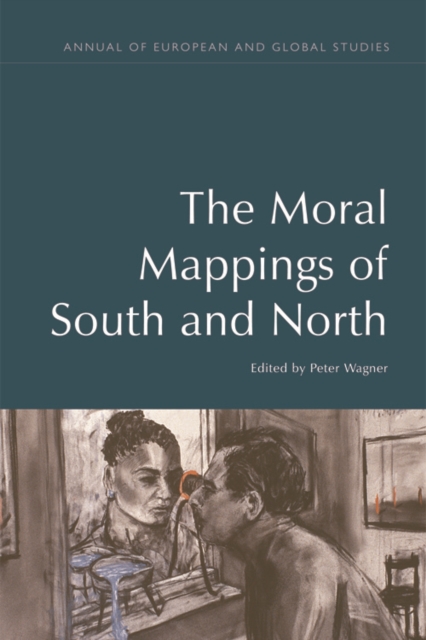
The Moral Mappings of South and North
What is the 'Global South' and where is it? The term 'Global South' marks a new attempt at providing order and meaning in the current global political constellation, replacing the term 'Third World'. But the term 'Global South' is fraught with many ambiguities. This book explores the possible meanings of this new distinction and assesses the advantages and disadvantages of adopting it for understanding the contemporary world. It casts a wide exploratory net, looking at how the way that we interpret the world has changed over time.
eBook

Livestock for Sale
The civitas Batavorum was a settlement on the north-western frontier of the Roman Empire, and it is now the site of numerous archaeological excavations. This book offers the most up-to-date look yet at what has been discovered, using the newest archaeological techniques, about the town and its economy, its military importance, and the religious and domestic buildings it held. It will be essential reading for anyone studying the economy of the Roman provincial countryside or the details of food supply for the Roman army and town.
eBook

Building Europe
Relying on internal sources, Wilfried Loth analyses the birth and subsequent development of the European Union, from the launch of the Council of Europe and the Schuman Declaration until the Euro crisis and the contested European presidential election of Jean-Claude Juncker. This book shines a light on the crises of the European integration, such as the failure of the European Defence Community, De Gaulle`s empty chair policy, or the rejection of the European Constitution in France and the Netherlands, but also highlights the indubitable successes that are the Franco-German reconciliation, the establishment of the European common market, and the establishment of an expanding common currency. What this study accomplishes, for the first time, is to illuminate the driving forces behind the European integration process and how it changed European politics and society.
eBook

The double kingdom under Taharqo : studies in the history of Kush and Egypt, c. 690-664 BC
The establishment of Kushite rule over Egypt during the eighth and seventh centuries BC resulted in a state of extraordinary geographic dimensions and ecological diversity, stretching from the tropics of Sudanese Nubia over 3,000 km to the Mediterranean. In The Double Kingdom under Taharqo, Jeremy Pope uses the copious documentary and archaeological evidence from Taharqo’s reign to address a series of questions which have dogged study of the Twenty-Fifth Dynasty: how was it possible for one king to control all of that territory? To what extent were the Kushite pharaohs’ strategies of governance influenced by the circumstances of their homeland versus the precedents of Egyptian and Libyan rule? And how did Kushite policies differ from those of their Saïte successors?
eBook

Debating Lapita
This volume comprises 23 chapters that focus on the archaeology of Lapita, a cultural horizon associated with the founding populations who first colonised much of the south west Pacific some 3000 years ago. The Lapita culture has been most clearly defined by its distinctive dentate-stamped decorated pottery and the design system represented on it and on further incised pots. Modern research now encompasses a whole range of aspects associated with Lapita and this is reflected in this volume. The broad overlapping themes of the volume—Lapita distribution and chronology, society and subsistence—relate to research questions that have long been debated in relation to Lapita.
eBook

Australia, the European Union and the New Trade Agenda
\"Australia (together with New Zealand) is one of the few Organisation for Economic Co-operation and Development (OECD) countries with which the EU does not have a comprehensive trade agreement. Australia and the EU are entering a new phase in the bilateral relationship, and the push towards a potential trade agreement has been steadily gaining momentum. This collection brings together diverse and deeply practical contributions to the forthcoming policy debate on the Australia–EU Free Trade Agreement (FTA), highlighting potential points of difficulty and possible gains from the agreement. This book makes two further contributions: it adds to the body of work reappraising the contemporary Australia–EU relationship; and provides a snapshot of current issues in trade policy—the ‘new trade agenda’—which is more complex and politically visible than ever. The issues confronting Australia and the EU in forthcoming negotiations are those confronting policy makers around the globe. They are testing public tolerance of decisions once viewed as dull and technocratic, and are redefining the academic treatment of trade policy. ‘… this book is especially important because it is talking about a very different type of trade agreement than the ones Australia has concluded recently with our major trading partners in East Asia. An agreement with the EU inevitably will focus on issues like services, investment, government procurement, and competition policy. These are major issues in their own right, are key parts of the new trade agenda, and are critical to Australia’s successful transition to a prosperous post–mining boom economy. In the absence of generalisable unilateral economic reform in this country, trade policy hopefully will provide an external source of pressure for reform. If this book adds to that pressure while also suggesting some of the tools needed for reform, it will have made a major contribution.’ Dr Mike Adams, Partner, Trading Nation Consulting\"
eBook

Global Allies
The global system of alliances that the United States built after the Second World War underpinned the stability and prosperity of the postwar order. But during the 20th century, the multilateral NATO alliance system in Europe and the bilateral San Francisco alliance system in Asia rarely interacted. This changed in the early 21st century, as US allies came together to fight and stabilise conflicts in the Middle East and Central Asia. This volume presents the first-ever comparative study of US alliances in Europe and Asia from the perspectives of US allies: the challenges, opportunities and shifting dynamics of these fundamental pillars of order. This volume is essential reading for those interested in contemporary and future regional and global security dynamics.
eBook
The New Pacific Diplomacy
Since 2009 there has been a fundamental shift in the way that the Pacific Island states engage with regional and world politics. The region has experienced, what Kiribati President Anote Tong has aptly called, a ‘paradigm shift’ in ideas about how Pacific diplomacy should be organised, and on what principles it should operate. Many leaders have called for a heightened Pacific voice in global affairs and a new commitment to establishing Pacific Island control of this diplomatic process. This change in thinking has been expressed in the establishment of new channels and arenas for Pacific diplomacy at the regional and global levels and new ways of connecting the two levels through active use of intermediate diplomatic associations. The New Pacific Diplomacy brings together a range of analyses and perspectives on these dramatic new developments in Pacific diplomacy at sub-regional, regional and global levels, and in the key sectors of global negotiation for Pacific states – fisheries, climate change, decolonisation, and trade.
eBook

Grave Reminders
Explores how Mycenaean builders perceived tomb construction, its costs and rewards.
eBook

Remembering the South African War
The experience of the South African War sharpened the desire to commemorate for a number of reasons. An increasingly literate public, a burgeoning populist press, an army reinforced by waves of volunteers and, to contemporaries at least, a shockingly high death toll embedded the war firmly in the national consciousness. In addition, with the fallen buried far from home those left behind required other forms of commemoration. For these reasons, the South African War was an important moment of transition in commemorative practice and foreshadowed the rituals of remembrance that engulfed Britain in the aftermath of the Great War. This work provides the first comprehensive survey of the memorialisation process in Britain in the aftermath of the South African War. The approach goes beyond the simple deconstruction of memorial iconography and, instead, looks at the often tortuous and lengthy gestation of remembrance sites, from the formation of committees to the raising of finance and debates over form. In the process both Edwardian Britain’s sense of self and the contested memory of the conflict in South Africa are thrown into relief. In the concluding sections of the book the focus falls on other forms of remembrance sites, namely the multi-volume histories produced by the War Office and The Times, and the seminal television documentaries of Kenneth Griffith. Once again the approach goes beyond simple textual deconstruction to place the sources firmly in their wider context by exploring both production and reception. By uncovering the themes and myths that underpinned these interpretations of the war, shifting patterns in how the war was represented and conceived are revealed.
eBook