
Catalogue Search | MBRL


Are you sure you want to remove the book from the shelf?

{{itemTitle}}
8,108
result(s) for
"Out of pocket costs"
Sort by:
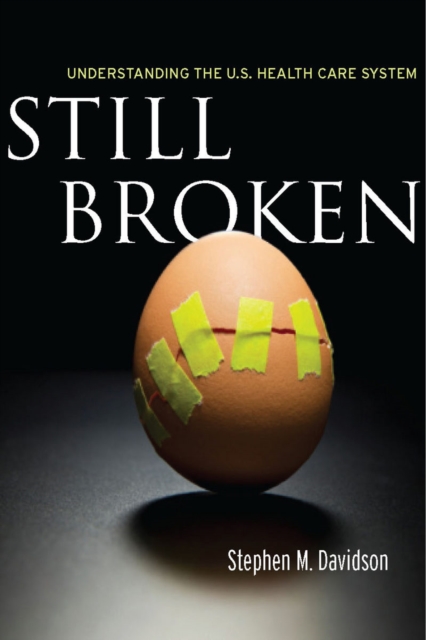
Still broken : understanding the U.S. health care system
The debate over health care policy in the U. S. did not end when President Obama signed the landmark Patient Protection and Affordable Care Act (PPACA) on March 23, 2010. Since then, half the states have sued and federal judges have issued conflicting rulings about the law's constitutionality. In addition, the new Republican-controlled House of Representatives voted to repeal it, and Republicans have pledged to bring it up again during negotiations over the 2012 federal budget. The continuing controversies over PPACA are only one reason that Still Broken: Understanding the U.S. Health Care System is a must-read for engaged citizens, policymakers, students, and scholars alike. The book takes a close look at our problems, proposes solutions to them, and explains how to navigate our political system to effect positive change. It will help readers: * Assess the arguments made by partisans on both sides of the continuing debate. * Understand why President Obama was able to get Congress to pass a comprehensive reform bill even though most of his predecessors tried and failed. * Understand why so many Americans are either confused about its value or actually oppose it. In the book's first part, Stephen M. Davidson paints a lucid picture of the way that the health system works and the forces that produced the monumental problems that we face today. Then, he makes a compelling case for overhauling our system, offering six elements for inclusion in any plan for change. Davidson devotes the last three chapters to a detailed examination of the politics of reform. This assessment will help readers to appreciate both the political achievement represented by passage of the new law and the reasons that opposition to the law remains so widespread, despite all the good it does for the public. Whatever compromises, if any, are accepted by negotiators in the end, the book makes clear why, to fully solve the system's problems, the underlying goal must be to change incentives for all players who participate in the system and, finally, why this goal cannot be achieved by relying solely on market-based solutions. Davidson's captivating and persuasive book demonstrates that only a solution with a large public-sector role can lead us to real reform.
eBook

Characterizing financial risk from out‐of‐pocket expenditures across dementia stages
INTRODUCTION Older adults with dementia incur considerable out‐of‐pocket (OOP) health care expenses, but it is unclear how their financial burden differs by dementia stage. METHODS We identified 2939 respondents aged ≥65 with dementia in the 2018 Health and Retirement Study, representing 9.8 million individuals on weighted analysis. We grouped respondents into four severity stages and examined their OOP expenditures, prevalence of financial risk (i.e., catastrophic or impoverishing levels of health care spending), and factors associated with financial risk. RESULTS Individuals with severe dementia had significantly higher OOP costs, with 21% experiencing catastrophic expenditures and 12% falling below poverty thresholds due to these costs. Regression analyses indicated nursing home residence, poor subjective health, advanced age, and other factors are associated with an increased odds of financial risk. DISCUSSION Financial risk increases in advanced dementia stages, likely reflecting more complex care needs and poorer overall health. Highlights Out‐of‐pocket health care costs increase with dementia severity. Twenty‐one percent of people with severe dementia spend at least 40% of their income on health care. The risk of impoverishment from health care costs increases in severe dementia. Care needs, poor health, and nursing home residence may contribute to financial risk.
Journal Article

Anticipated Out‐Of‐Pocket Costs and Prostate Cancer Management Among Men With Commercial Insurance
Introduction Men with newly diagnosed prostate cancer often appropriately elect for either immediate treatment or conservative management. The out‐of‐pocket costs they face vary by management strategy, with immediate treatment often superseding those of conservative management, potentially influencing patient decisions. We estimated the anticipated out‐of‐pocket costs that commercially insured men with newly diagnosed prostate cancer face and measured their association with immediate treatment. Methods From MarketScan, we identified men with newly diagnosed prostate cancer from 2010–2020. Separately, using actual out‐of‐pocket costs (summing deductible, copay, coinsurance) among patients undergoing arthroscopic meniscal repair (n = 383,187), we derived regression coefficients for patient‐level variables (e.g., health plan type) that inform their financial liability. We applied these coefficients to men with prostate cancer and estimated their predicted out‐of‐pocket costs, our main exposure. We sorted patients into quartiles and used logistic regression to calculate adjusted probabilities of immediate treatment (versus conservative management). Results We identified 58,206 men with prostate cancer and rank ordered them by predicted out‐of‐pocket cost. Approximately 12% of men had a predicted out‐of‐pocket cost of zero, and among those with non‐zero cost sharing, the median out‐of‐pocket cost was$350 (IQR: $ 275, $486). Across quartiles of predicted out‐of‐pocket costs, adjusted percentages of immediate treatment were in a narrow range between 77.8% (95% CI: 76.8%, 78.8%) for Quartile 1% and 78.6% (95% CI: 77.7%, 79.5%) for Quartile 4. Conclusion Among commercially insured men with prostate cancer, predicted out‐of‐pocket costs varied substantially. However, the choice of management, immediate treatment or conservative management, appears insensitive (i.e., inelastic) to patient anticipated financial liability.
Journal Article

The impact of management option on out-of-pocket costs and perceived financial burden among men with localised prostate cancer in Australia within 6 months of diagnosis
Objective. This study aimed to quantify the out-of-pocket (OOP) costs and perceived financial burden among Australian men with localised prostate cancer in the first 6 months after diagnosis, by primary management option. Methods. This cost-analysis quantified OOP costs using administrative claims data and self-reported survey data. Financial burden was assessed using the COmprehensive Score for financial Toxicity–Functional Assessment of Chronic Illness Therapy (COST-FACIT) tool. Participants were recruited into a randomised control trial from public or private treatment centres in Victoria and Queensland. Generalised linear models were used to predict OOP costs and COST-FACIT scores. Results. Median total OOP costs within 6 months of diagnosis for 256 Australian patients with localised prostate cancer was A $1172 (A$ 343–2548). Up to 50% of the sample reported A$0 costs for most medical services. Compared with those managed with active surveillance, men having active treatment had 6.4 (95% CI: 3.2–12.7) times greater total OOP costs. Management option, higher Gleason score at diagnosis and having multiple comorbidities were significant predictors of higher OOP costs. Overall high scores on the COST-FACIT indicated low levels of financial burden for the entire sample. Conclusion. Largely attributable to being managed with active surveillance, Australian men diagnosed with localised prostate cancer reported relatively low OOP costs and financial burden in the first 6 months post-diagnosis. Together with clinical outcomes, clinicians can use this up to date evidence on costs and perceived financial burdens to assist localised prostate cancer patients and their families make informed decisions about their preferred management option.
Journal Article

Need‐Based Mental Health Aid Allocation to Disadvantaged Patients Toward Universal Health Coverage in Bangladesh
Introduction Out‐of‐pocket (OOP) healthcare costs remain prohibitive in low‐resource settings, often pushing families into poverty. Universal health coverage (UHC) goals emphasise protecting households from financial hardship due to medical expenses. Objectives This study examines which socioeconomic and demographic factors predict the amount of free mental healthcare support received by applicants. Methodology We conducted a cross‐sectional analysis. Descriptive statistics summarised 286 applicant profiles (e.g., 66.8% female and 49% aged 28–48). Spearman and Pearson correlations assessed the relationship between applicants’ monthly treatment‐related OOP costs and aid received (log‐transformed values). A multiple linear regression was then fitted with log (free care amount) as the outcome and predictors including age group, sex, occupation, marital status, income source, reason for support and log (monthly treatment‐related OOP cost). Results The applicant profile was predominantly young, unmarried, female students relying on parental support, seeking aid mainly for financial hardship. Spearman's ρ showed a small but significant positive correlation between treatment cost and aid amount, confirmed by Pearson's r after log transformation (r ≈ 0.17, p < 0.01). In regression analysis, higher treatment cost strongly predicted more free aid (β ≈ 0.18, p = 0.003), indicating that donors allocate more resources to costlier cases. Households supported by a spouse's income received significantly less aid (β ≈ −0.93, p = 0.038), suggesting that more stable households needed less assistance. Parental income support was marginally associated with reduced aid (p ≈ 0.07), whereas student status showed a borderline positive effect (p ≈ 0.08). Conclusion This study highlights that free mental healthcare support in a resource‐poor setting is driven primarily by treatment cost and applicants’ perceived need. Those with higher medical expenses receive more aid, aligning with the principle of need‐based assistance. De‐identified administrative records of 286 mental health aid applicants in Bangladesh are analyzed to examine need‐based aid allocation. Higher out‐of‐pocket treatment costs are associated with larger aid awards. Applicants with spouses as primary earners receive substantially less aid, while students or those without stable income receive slightly more. Financial hardship appears to influence aid allocation more strongly than stated mental health need.
Journal Article
Out‐of‐pocket costs and burden among rural breast cancer survivors
Little is known about out‐of‐pocket (OOP) costs incurred for medical and health needs by rural breast cancer survivors and what factors may be associated with higher OOP costs and the associated economic burden. Data were examined for 432 survivors participating in the Rural Breast Cancer Survivor Intervention trial. OOP costs were collected using the Work and Finances Inventory survey at baseline and four assessments every 3 months. Mean and median OOP costs and burden (percent of monthly income spent on OOP costs) were reported and factors associated with OOP costs and burden identified with generalized linear models fitted with over‐dispersed gamma distributions and logarithmic links (OOP costs) and with beta distributions with logit link (OOP burden). OOP costs per month since the end of treatment were on average$232.7 (median $ 95.6), declined at the next assessment point to$186.5 (median $ 89.1), and thereafter remained at that level. Mean OOP burden was 9% at baseline and between 7% and 8% at the next assessments. Factors suggestive of contributing to higher OOP costs and OOP burden were the following: younger age, lower income, time in survivorship from diagnosis, and use of supportive services. OOP costs burden rural breast cancer survivors, particularly those who are younger and low income. Research should investigate the impact of OOP costs and interventions to reduce economic burden. Among 432 rural breast cancer survivors who had completed treatment, out‐of‐pocket costs related to cancer were more than $180 per month over a 1‐year period, burdening survivors with low income disproportionately. Further research is warranted to understand the consequences of this burden and develop the means to reduce its impact.
Journal Article

Out‐of‐pocket costs associated with head and neck cancer treatment
Background Out‐of‐pocket costs (OOPC) associated with treatment have significant implications on quality of life and survival in cancer patients. Head and neck cancer patients face unique treatment‐related challenges, but to date OOPC have been understudied in this population. Aims This study aims to identify and measure OOPC for patients with head and neck cancer (HNC) in Ontario. Methods HNC patients between 2015 and 2018 at Princess Margaret Cancer Centre in Toronto were recruited. Participants completed OOPC questionnaires and lost income questions during radiation, post‐surgery, and 3, 6, 12, and 24 months after completion of treatment. Associations between OOPC and treatment modality and disease site were tested with multivariable hurdle regression. Results A total of 1545 questionnaires were completed by 657 patients. Median estimated OOPC for the total duration of treatment for participants undergoing chemoradiation was$1452 [$ 0–14 616], for surgery with adjuvant radiation or chemoradiation (C/RT) was$1626, for radiation therapy alone was $ 635, and for surgery alone was$360. The major expenses for participants at the mid‐treatment time‐point was travel (mean $ 424, standard error of the mean [SEM]$34) and meals, parking, and accommodations (mean $ 617, SEM $67). In multivariable analysis, chemoradiation, surgery with C/RT, and radiation were associated with significantly higher OOPC than surgery alone during treatment (791% higher, p < .001; 539% higher, p < .001; 370% higher, p < .001 respectively) among patients with non‐zero OOPC. Participants with non‐zero OOPC in the laryngeal cancer group paid 49% lower OOPC than those with oropharyngeal cancers in adjusted analysis (p = .025). Conclusions Patients undergoing treatment for HNC pay significant OOPC. These costs are highest during treatment and gradually decrease over time. OOPC vary by patient demographics, clinical factors, and, in particular, treatment modality.
Journal Article

How much does it cost to care for survivors of colorectal cancer? Caregiver’s time, travel and out-of-pocket costs
Purpose
Cancer treatment is increasingly delivered in an outpatient setting. This may entail a considerable economic burden for family members and friends who support patients/survivors. We estimated financial and time costs associated with informal care for colorectal cancer.
Methods
Two hundred twenty-eight carers of colorectal cancer survivors diagnosed on October 2007–September 2009 were sent a questionnaire. Informal care costs included hospital- and domestic-based foregone caregiver time, travel expenses and out-of-pocket (OOP) costs during two phases: diagnosis and treatment and ongoing care (previous 30 days). Multiple regression was used to determine cost predictors.
Results
One hundred fifty-four completed questionnaires were received (response rate = 68 %). In the diagnosis and treatment phase, weekly informal care costs per person were: hospital-based costs, incurred by 99 % of carers, mean = €393 (interquartile range (IQR), €131–€541); domestic-based time costs, incurred by 85 %, mean = €609 (IQR, €170–€976); and domestic-based OOP costs, incurred by 68 %, mean = €69 (IQR, €0–€110). Ongoing costs included domestic-based time costs incurred by 66 % (mean = €66; IQR, €0–€594) and domestic-based OOP costs incurred by 52 % (mean = €52; IQR, €0–€64). The approximate average first year informal care cost was €29,842, of which 85 % was time costs, 13 % OOP costs and 2 % travel costs. Significant cost predictors included carer age, disease stage, and survivor age.
Conclusion
Informal caregiving associated with colorectal cancer entails considerable time and OOP costs. This burden is largely unrecognised by policymakers, service providers and society in general. These types of studies may facilitate health decision-makers in better assessing the consequences of changes in cancer care organisation and delivery.
Journal Article
Out-of-pocket costs for cancer survivors between 5 and 10 years from diagnosis: an Italian population-based study
Purpose
To illustrate the out-of-pocket (OOP) costs incurred by a population-based group of patients from 5 to 10 years since their cancer diagnosis in a country with a nationwide public health system.
Methods
Interviews on OOP costs to a sample of 5–10 year prevalent cases randomly extracted from four population-based cancer registries (CRs), two in the north and two in the south of Italy. The patients’ general practitioners (GPs) gave assurance about the patient’s physical and psychological condition for the interview. A zero-inflated negative binomial model was used to analyze OOP cost determinants.
Results
Two hundred six cancer patients were interviewed (48 % of the original sample). On average, a patient in the north spent €69 monthly, against €244 in the south. The main differences are for transport, room, and board (TRB) to reach the hospital and/or the cancer specialist (north €0; south €119). Everywhere, OOP costs without TRB costs were higher for patients with a low quality of life.
Conclusions
Despite the limited participation, our study sample’s characteristics are similar to those of the Italian cancer prevalence population, allowing us to generalize the results. The higher OOP costs in the south may be due to the scarcity of oncologic structures, obliging patients to seek assistance far from their residence.
Implications for cancer survivors
Cancer survivors need descriptive studies to show realistic data about their status. Future Italian and European descriptive studies on cancer survivorship should be based on population CRs and involve GPs in order to approach the patient at best.
Journal Article

Crisis of Abundance
In Crisis of Abundance: Rethinking How We Pay for Health Care, economist Arnold Kling argues that the way we finance health care matches neither the needs of patients nor the way medicine is practiced. The availability of \"premium medicine,\" combined with patients who are insulated from costs, means Americans are not getting maximum value per dollar spent.
eBook