
Catalogue Search | MBRL


Are you sure you want to remove the book from the shelf?

{{itemTitle}}
114
result(s) for
"Outcasts."
Sort by:

The outlaw album : stories
Twelve short stories depict people on the fringes of society, including an injured rapist who is cared for by a young girl and a husband who cruelly avenges the murder of his wife's pet.
Book

Outcasting: Enforcement in Domestic and International Law
This Artical offers a new way to understand the enforcement of domestic and international law that we call \"outcasting.\" Unlike the distinctive method that modern states use to enforce their law, outcasting is nonviolent: it does not rely on bureaucratic organizations, such as police or militia, that employ physical force to maintain order. Instead, outcasting involves denying the disobedient the benefits of social cooperation and membership. Law enforcement through outcasting in domestic law can be found throughout history — from medieval Iceland and classic canon law to modern-day public law. And it is ubiquitous in modern international law, from the World Trade Organization to the Universal Postal Union to the Montreal Protocol. Across radically different subject areas, international legal institutions use others (usually states) to enforce their rules and typically deploy outcasting rather than physical force. Seeing outcasting as a form of law enforcement not only helps us recognize that the traditional critique of international law — that it is not enforced and is therefore both ineffective and not real law — is based on a limited and inaccurate understanding of law enforcement. It also allows us to understand more fully when and how international law matters.
Journal Article

She would be king : a novel
Gbessa, exiled from the West African village of Lai, is starved, bitten by a viper, and left for dead, but still she survives. June Dey, raised on a plantation in Virginia, hides his unusual strength until a confrontation with the overseer forces him to flee. Norman Aragon, child of a white British colonizer and a Maroon slave from Jamaica, can fade from sight when the earth calls him. When the three meet in the settlement of Monrovia, their gifts help them salvage the tense relationship between the African American settlers and the indigenous tribes, as a new nation forms around them. -- Adapted from jacket.
Book

Citizen Science in Sweden’s Stigmatized Neighborhoods
Based on the synthesis of outside versus inside perspectives, this paper weighs the positive attributes of the so-called deprived place against its negative media image. Applying the concept of territorial stigmatization, small-scale citizen science was conducted to gain a unique understanding of the Swedish neighborhood from within. With the United Nations’ Sustainable Development Goal 11 in mind, this approach enables researchers to reach otherwise difficult to access young urban outcasts and probe the potential to overcome their community’s lack of political influence. An overlap between local media narratives and urban outcasts’ perceptions of “drug and crime” and “football and school” was revealed. Yet, this first-generation study also painted a somewhat different picture of the stigmatized neighborhood, supplying new insights about places that matter most for marginalized young males. In this Swedish case, their pictures revealed that the local corner market, football court and youth club act as an antidote for the effects of stigmatization. This Our Voice citizen science initiative proved to be a good measure of two communities’ abilities to withstand stigmatization, which is either tainted by false perceptions from the outside or weakened by crime from within. Finally, attempting to bypass structural discrimination, citizen scientists’ findings and researchers’ conclusions were made available to students, colleagues and guests at a poster presentation hosted by Mälardalen University and to concerned politicians from Eskilstuna City Hall as well as the broader public via a local Swedish television station.
Journal Article

Ghosts of the desert
\"To escape his troubled past, Norman heads to the Utah desert to lose himself in work. Having just received a research grant he plans to study the ghost towns and now-obsolete mines littering the inhospitable landscape. But when he comes across a desert-dwelling group of outcasts, and is taken captive by their charismatic yet ever-watchful leader, he is introduced to an alternate way of life that both repulses and attracts him. As Norman struggles to find his place and make sense of this strange new world -- with its perverse and unorthodox practices -- he must decide whether to take his chances and run, or yield, and risk becoming one of those around him\"--Amazon.com.
Book

Hide the Outcasts: Isaiah 16:3–4 and Fugitive Slave Laws
Isaiah 16:3–4, part of an obscure prophecy about ancient Moab, appeared frequently in nineteenth-century writings about slavery in the United States, particularly in the context of opposition to fugitive slave laws. The verses were linked with other biblical passages to create a network of proof texts to justify assisting persons who escaped slavery. Eventually, the line “hide the outcast” from verse 3 took on a life of its own as an abolitionist slogan, largely independently of its biblical context. Rebuttals of these uses of the texts by anti-abolitionist writers, which began to appear in the 1850s, criticized the decontextualization of the verses, and one novel response attempted to link the text to interracial intimacy. Despite these rebuttals, the use of the text continued apace throughout the 1850s–1860s in response to the 1850 Fugitive Slave Act and the execution of John Brown.
Journal Article

The misfit's manifesto
The author explores the status of being a misfit as something to be embraced, and social misfits as being individuals of value who have a place in society, in a work that encourages people who have had difficulty finding their way to pursue their goals.
Book

The Reject: Community, Politics, and Religion after the Subject
This book proposes a theory of the reject, a more adequate figure than the subject for thinking friendship, love, community, democracy, the postsecular, and the posthuman. Through close readings of Nancy, Deleuze, Derrida, Cixous, Clement, Bataille, Balibar, Ranciere, and Badiou, Goh shows how the reject has always been nascent in contemporary French thought. The recent turn to animals and bare life, as well as the rise of the Occupy movement, he argues, presents a special urgency to think the reject today. Thinking the reject most importantly helps to advance our commitment to affirm others without acculturating their differences. But the reject also offers, Goh proposes, a response finally commensurate with the radical horizon of Nancy's question of who comes after the subject.
eBook

The nobody people
When Avi Hirsch learns that his daughter Emmeline has special abilities, he tries to shield her against an increasingly hostile society. Carrie Norris can become invisible, but all she wants is to be seen by the people she loves. Fahima Deeb has faced prejudice her entire life, but her uncanny connection to machines offers her the opportunity to level the playing field. These are just a few of the ordinary nobodies with astonishing gifts who must now band together against bigotry and fear, even as one of their own actively works to destroy a fragile peace. Will their combined talents spark a much-needed revolution--or an apocalypse?
Book
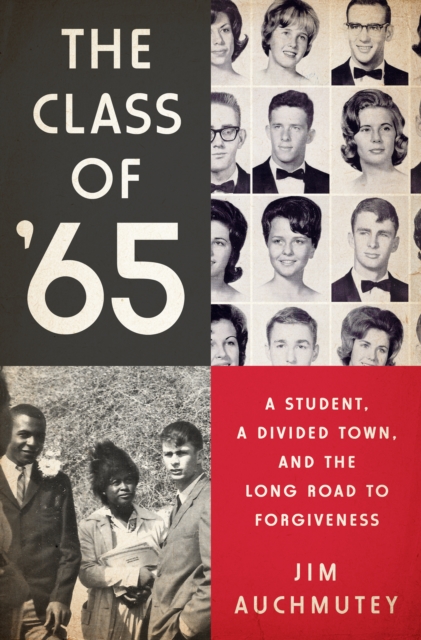
The Class of '65
Jim Auchmutey spent twenty-nine years at the Atlanta Journal-Constitution as a reporter and editor, twice winning the Cox Newspaper chain's writer of the year award. He first visited Koinonia Farm in 1980 and has written extensively about the commune, the South, race relations, religion, and history. He lives in Georgia.
eBook