
Catalogue Search | MBRL


Are you sure you want to remove the book from the shelf?

{{itemTitle}}
912,839
result(s) for
"Outcome"
Sort by:


Medical nihilism
This book defends medical nihilism, which is the view that we should have little confidence in the effectiveness of medical interventions. If we consider the frequency of failed medical interventions, the extent of misleading evidence in medical research, the thin theoretical basis of many interventions, and the malleability of empirical methods in medicine, and if we employ our best inductive framework, then our confidence in the effectiveness of medical interventions ought to be low. Part I articulates theoretical and conceptual groundwork, which offers a defense of a hybrid theory of disease, which forms the basis of a novel account of effectiveness, and this is applied to pharmacological science and to issues such as medicalization. Part II critically examines details of medical research. Even the very best methods in medical research, such as randomized trials and meta-analyses, are malleable and suffer from various biases. Methods of measuring the effectiveness of medical interventions systematically overestimate benefits and underestimate harms. Part III summarizes the arguments for medical nihilism and what this position entails for medical research and practice. To evaluate medical nihilism with care, the argument is stated in formal terms. Medical nihilism suggests that medical research must be modified, that clinical practice should be less aggressive in its therapeutic approaches, and that regulatory standards should be enhanced.
eBook

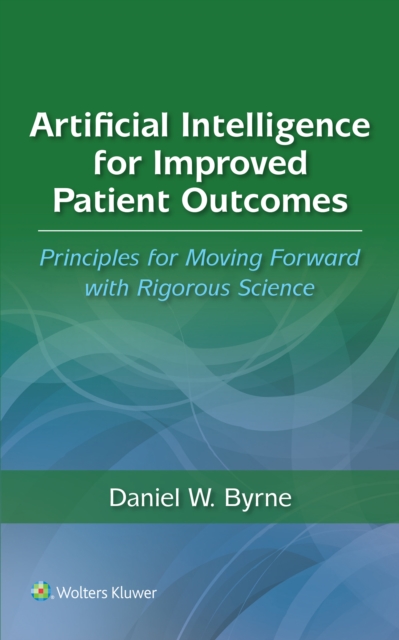
Artificial Intelligence for Improved Patient Outcomes
Artificial Intelligence for Improved Patient Outcomes provides new, relevant, and practical information on what AI can do in healthcare and how to assess whether AI is improving health outcomes. With clear insights and a balanced approach, this innovative book offers a one-stop guide on how to design and lead pragmatic real-world AI studies that yield rigorous scientific evidence-all in a manner that is safe and ethical. Daniel Byrne, Director of Artificial Intelligence Research at AVAIL (the Advanced Vanderbilt Artificial Intelligence Laboratory) and author of landmark pragmatic studies published in leading medical journals, shares four decades of experience as a biostatistician and AI researcher. Building on his first book, Publishing Your Medical Research, the author gives the reader the competitive advantage in creating reproducible AI research that will be accepted in prestigious high-impact medical journals.
eBook

Outcome assessment in advanced practice nursing
Awarded first place in the 2013 AJN Book of the Year Awards in the Advanced Practice Nursing category Named a Doody's Core Title \"This is an excellent and timely tool for advanced practice nurses.\" Score: 100, 5 stars -Doody's Medical Reviews Measuring the results of APN care has become increasingly important as a way to demonstrate.
eBook

Extreme intelligence : development, predicaments, implications
\"In this ambitious and highly original book, Sonja Falck explores the idea that a firm correlation has been demonstrated between higher intelligence and various successful life outcomes and achievements, alongside the contradictory documentation of extremely high intelligence being associated with various poor outcomes. Drawing on the author's own research interviews with the highly gifted, the book argues that understanding the dynamics of how extreme intelligence is cultivated, or hampered, interpersonally can facilitate better outcomes. It will be essential reading for anyone supporting or working with the highly gifted, as well as those researching the field of intelligence\"-- Provided by publisher.
Book

Potentially modifiable factors contributing to outcome from acute respiratory distress syndrome: the LUNG SAFE study
Purpose
To improve the outcome of the acute respiratory distress syndrome (ARDS), one needs to identify potentially modifiable factors associated with mortality.
Methods
The large observational study to understand the global impact of severe acute respiratory failure (LUNG SAFE) was an international, multicenter, prospective cohort study of patients with severe respiratory failure, conducted in the winter of 2014 in a convenience sample of 459 ICUs from 50 countries across five continents. A pre-specified secondary aim was to examine the factors associated with outcome. Analyses were restricted to patients (93.1 %) fulfilling ARDS criteria on day 1–2 who received invasive mechanical ventilation.
Results
2377 patients were included in the analysis. Potentially modifiable factors associated with increased hospital mortality in multivariable analyses include lower PEEP, higher peak inspiratory, plateau, and driving pressures, and increased respiratory rate. The impact of tidal volume on outcome was unclear. Having fewer ICU beds was also associated with higher hospital mortality. Non-modifiable factors associated with worsened outcome from ARDS included older age, active neoplasm, hematologic neoplasm, and chronic liver failure. Severity of illness indices including lower pH, lower PaO
2
/FiO
2
ratio, and higher non-pulmonary SOFA score were associated with poorer outcome. Of the 578 (24.3 %) patients with a limitation of life-sustaining therapies or measures decision, 498 (86.0 %) died in hospital. Factors associated with increased likelihood of limitation of life-sustaining therapies or measures decision included older age, immunosuppression, neoplasia, lower pH and increased non-pulmonary SOFA scores.
Conclusions
Higher PEEP, lower peak, plateau, and driving pressures, and lower respiratory rate are associated with improved survival from ARDS.
Trial Registration: ClinicalTrials.gov NCT02010073.
Journal Article

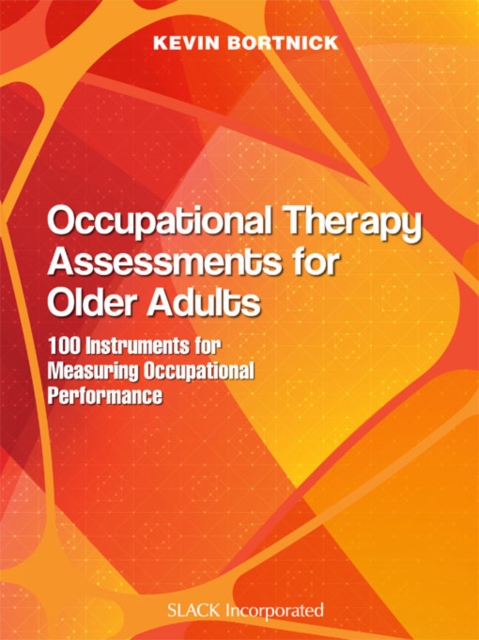
Occupational Therapy Assessment for Older Adults: 100 Instruments for Measuring Occupational Performance
The role of measurement and the benefits of outcome measures are defined as important tools used to document change in one or more constructs over time, help to describe a client's condition, formulate a prognosis, as well as to evaluate the effects of occupational therapy intervention. Occupational Therapy Assessments for Older Adults: 100 Instruments for Measuring Occupational Performance presents over 100 outcome measures in the form of vignettes that encompass a brief description of each instrument, a review of its psychometric properties, its advantages and disadvantages, administration procedures, permissions to use, author contact information, as well as where and how to procure the instrument. Occupational Therapy Assessments for Older Adults by Dr. Kevin Bortnick narrows down the list of possible choices for the occupational therapy student or clinician to only those with an amount of peer review, bibliographic citations, as well as acceptance within the profession. The text also includes research-based information with text citations and has over 100 tables, diagrams, and figures. Included in the review of each outcome measure: Description: A brief record of the measure. Psychometrics: A review of the level of research evidence that either supports or does not support the instrument, including such items as inter-rater, intra-rater, and test-retest reliabilities, as well as internal consistencies and construct validities among others. Advantages: Synopsis of the benefits of using the measure over others including its unique attributes. Disadvantages: A summary of its faults. For example, the amount of research evidence may be limited or the measure may be expensive. Administration: Information regarding how to administer, score, and interpret results. Permissions: How and where to procure the instrument, such as websites where it may be purchased or journal articles or publications that may contain the scale. Summary: A brief summation of important information. Occupational Therapy Assessments for Older Adults: 100 Instruments for Measuring Occupational Performance encourages occupational therapy and occupational therapy assistants to expand their thinking about the use of appropriate outcome measures with older adult populations. Using the appropriate outcome measure based on evidence can aid in the promotion of health, well-being, and participation of clients.
eBook