
Catalogue Search | MBRL


Are you sure you want to remove the book from the shelf?

{{itemTitle}}
42
result(s) for
"Ovid, 43 B.C.-17 A.D. or 18 A.D. Criticism and interpretation."
Sort by:


The Image of the Poet in Ovid’s Metamorphoses
Barbara Pavlock unmasks major figures in Ovid’s
Metamorphoses as surrogates for his narrative persona, highlighting the conflicted revisionist nature of the
Metamorphoses . Although Ovid ostensibly validates traditional customs and institutions, instability is in fact a defining feature of both the core epic values and his own poetics.
The Image of the Poet explores issues central to Ovid’s poetics—the status of the image, the generation of plots, repetition, opposition between refined and inflated epic style, the reliability of the narrative voice, and the interrelation of rhetoric and poetry. The work explores the constructed author and complements recent criticism focusing on the reader in the text.
2009 Outstanding Academic Title,
Choice Magazine
eBook

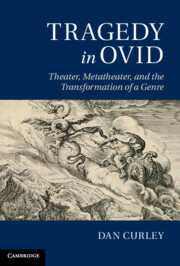
Tragedy in Ovid
Ovid is today best known for his grand epic, Metamorphoses, and elegiac works like the Ars Amatoria and Heroides. Yet he also wrote a Medea, now unfortunately lost. This play kindled in him a lifelong interest in the genre of tragedy, which informed his later poetry and enabled him to continue his career as a tragedian – if only on the page instead of the stage. This book surveys tragic characters, motifs and modalities in the Heroides and the Metamorphoses. In writing love letters, Ovid's heroines and heroes display their suffering in an epistolary theater. In telling transformation stories, Ovid offers an exploded view of the traditional theater, although his characters never stray too far from their dramatic origins. Both works constitute an intratextual network of tragic stories that anticipate the theatrical excesses of Seneca and reflect the all-encompassing spirit of Roman imperium.
eBook


Ovid and Hesiod
The influence on Ovid of Hesiod, the most important archaic Greek poet after Homer, has been underestimated. Yet, as this book shows, a profound engagement with Hesiod's themes is central to Ovid's poetic world. As a poet who praised women instead of men and opted for stylistic delicacy instead of epic grandeur, Hesiod is always contrasted with Homer. Ovid revives this epic rivalry by setting the Hesiodic character of his Metamorphoses against the Homeric character of Virgil's Aeneid. Dr Ziogas explores not only Ovid's intertextual engagement with Hesiod's works but also his dialogue with the rich scholarly, philosophical and literary tradition of Hesiodic reception. An important contribution to the study of Ovid and the wider poetry of the Augustan age, the book also forms an excellent case study in how the reception of previous traditions can become the driving force of poetic creation.
eBook

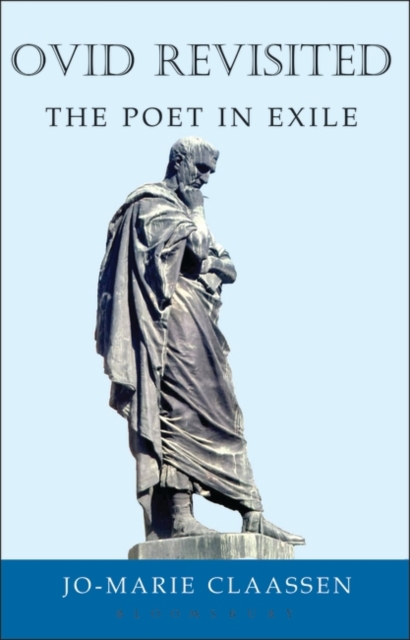
Ovid Revisited
In time for the bimillennium of Ovid's relegation to Tomis on the Black Sea by the emperor Augustus in 8 AD, Jo-Marie Claassen here revises and integrates into a more popular format two decades of scholarship on Ovid's exile. Some twenty articles and reviews from scholarly journals have been shortened, rearranged and merged into seven chapters, which, together with some new material, offer a wide-ranging overview of the exiled poet and his works. \"Ovid Revisited\" treats the poems from exile as the literary culmination of Ovid's oeuvre, ascribing the poet's resilience in the face of extreme hardship to the relief that his poetry afforded him. An introduction considers the phenomenon of Ovid's continued popularity, explains the importance of chronology in reading the exilic poems and gives a brief summary of the contents of the 'Tristia' and 'Epistulae ex Ponto'. The rest of the book ranges from consideration of Ovid's relationship with the emperor and with his own poetry, to his ubiquitous humour, to his skill in metrics, vocabulary and verbal play, and to his use of mythological figures from earlier parts of his oeuvre. The degree to which Ovid universalised the sufferings of the dispossessed is assessed in a chapter comparing his exilic works with modern exilic literature. An excursus considers various directions in Ovidian studies today.
eBook

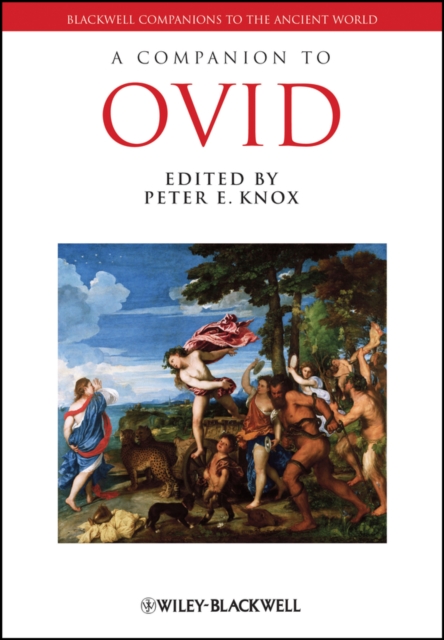
A companion to Ovid
Peter E. Knox is Professor of Classics at the University of Colorado. His publications include Ovid's Metamorphoses and the Traditions of Augustan Poetry (1986) and Ovid, Heroides: Select Epistles (1995), as well as many articles on a wide range of topics in Greek and Roman literature.
eBook