
Catalogue Search | MBRL


Are you sure you want to remove the book from the shelf?

{{itemTitle}}
414
result(s) for
"PERFORMING ARTS / Animation."
Sort by:

Funny pictures
This collection of essays explores the link between comedy and animation in studio-era cartoons, from filmdom's earliest days through the twentieth century. Written by a who's who of animation authorities, Funny Pictures offers a stimulating range of views on why animation became associated with comedy so early and so indelibly, and illustrates how animation and humor came together at a pivotal stage in the development of the motion picture industry. To examine some of the central assumptions about comedy and cartoons and to explore the key factors that promoted their fusion, the book analyzes many of the key filmic texts from the studio years that exemplify animated comedy. Funny Pictures also looks ahead to show how this vital American entertainment tradition still thrives today in works ranging from The Simpsons to the output of Pixar.
eBook

Japanese Animation
Japanese Animation: East Asian Perspectives makes
available for the first time to English readership a selection of
viewpoints from media practitioners, designers, educators, and
scholars working in the East Asian Pacific. This collection not
only engages a multidisciplinary approach in understanding the
subject of Japanese animation but also shows ways to research,
teach, and more fully explore this multidimensional world.
Presented in six sections, the translated essays cross-reference
each other. The collection adopts a wide range of critical,
historical, practical, and experimental approaches. This variety
provides a creative and fascinating edge for both specialist and
nonspecialist readers. Contributors' works share a common
relevance, interest, and involvement despite their regional
considerations and the different modes of analysis demonstrated.
They form a composite of teaching and research ideas on Japanese
animation.
eBook
Animation
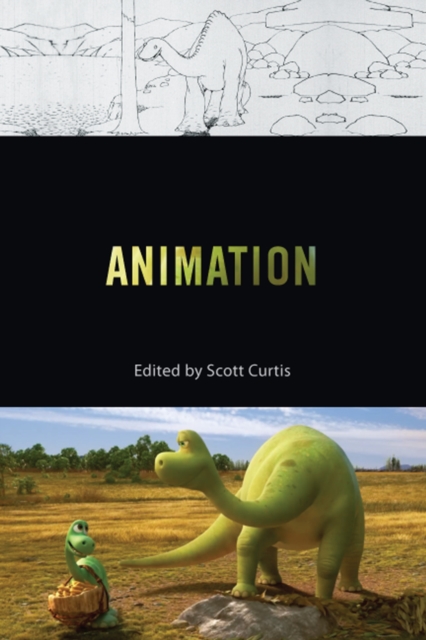
From the earliest motion pictures and cartoons of the 1900s, to the latest 3D animated feature and CGI blockbuster, animation has always been a part of the cinematic experience. While the boundaries between animation and live-action have often been carefully tended, the ubiquity of contemporary computer imaging certainly blurs those lines, thereby confirming the importance of animation for the history of American cinema. The last installment of the acclaimed Behind the Silver Screen series, Animation explores the variety of technologies and modes of production throughout the history of American animation: the artisanal, solitary labors of early animators such as Winsor McCay, or of independent animators such as Mary Ellen Bute; the industrial assembly lines of Hollywood studio-unit animation; the parsimonious production houses of the post-studio, post-war era; the collaborative approach of boutique animation and special-effect houses. Drawing on archival sources, this volume provides not only an overview of American animation history, but also, by focusing on the relationship between production and style, a unique approach to understanding animation in general.
eBook

The Anime Paradox
Founded on richly stylized expression, Anime has developed into an art with a high degree of sophistication that is comparable to that of the traditional theatrical forms of Noh, Bunraku, and Kabuki. By analyzing Anime through the lens of traditional Japanese theater, the patterns and practices in Anime can be mapped out. In The Anime Paradox, Stevie Suan utilizes this framework to reveal Anime's distinct form, examining and delineating the particular formal qualities of Anime's structure, conventions, aesthetics, and modes of viewing. However, the comparison works both ways-just as Japanese theater can give us analytical insights into Anime, Anime can enrich our understanding of Japanese classical theater.
eBook
The A to Z of animation and cartoons
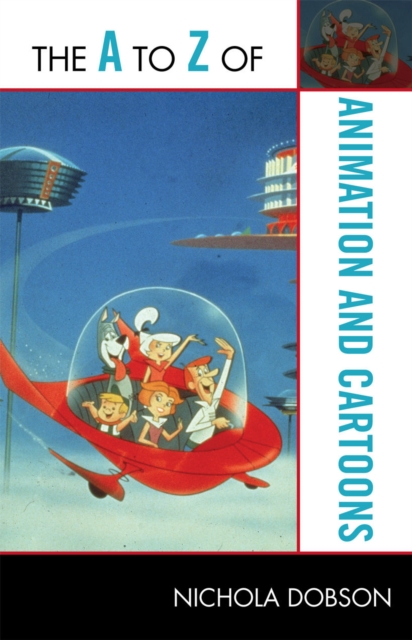
Animation was once a relatively simple matter, using fairly primitive means to produce rather short films of subjects that were generally comedic and often quite childish. However, things have changed, and they continue changing at a maddening pace. One new technique after another has made it easier, faster, and above all cheaper to produce the material, which has taken on an increasing variety of forms. The A to Z of Animation and Cartoons is an introduction to all aspects of animation history and its development as a technology and industry beyond the familiar cartoons from the Disney and Warner Bros. Studios. This is done through a chronology, an introductory essay, photos, a bibliography, and over 200 cross-referenced dictionary entries on animators, directors, studios, techniques, films, and some of the best-known characters.
eBook

Iwao Takamoto
Iwao Takamoto (1925-2007) spent a lifetime in the animation industry and was influential in the creation of some of the most beloved characters in the medium's history, including Scooby-Doo, Atom Ant,The Jetsons'Astro,The Flintstones'Great Gazoo, andThe Wacky Races'Penelope Pittstop and Muttley, all of whom he designed.Iwao Takamoto: My Life with a Thousand Charactersis the story of this legendary American artist, told in his own words.
Takamoto records his experiences growing up in the heart of Los Angeles as a self-described \"street kid\" and his wartime ordeal of being sent to a government internment camp for Japanese Americans. He recalls stories of how he and his teenaged friends still managed to function as normal teens despite the confinement of Manzanar.
The book chronicles his career, first with the Walt Disney Studios, where he worked directly with the famous \"Nine Old Men,\" and later for Hanna-Barbera, where he was a key artistic force. Packed with memorable stories of working in the trenches of two of Hollywood's most notable animation studios and filled with photographs and artwork, much of which has never before been published, this book is essential for any fan of animation and twentieth-century popular culture.
eBook

Working with Disney
In this volume Don Peri expands his extraordinary work conducting in-depth interviews with Disney employees and animators. These recent interviews include conversations with actors and performers rather than solely animators.
This book offers Peri's extensive interviews with Marc Davis, Frank Thomas, and Ollie Johnston, three of Walt Disney's famed \"Nine Old Men of Animation.\" Peri interviewed two Disney Mouseketeers-Bobby Burgess and Sharon Baird-from the original Mickey Mouse Club Show, providing valuable perspectives on how the Walt Disney Company worked with television. Lou Debney, a Disney television producer, discusses the company's engagement with television and live-action film. Walter Lantz talks about his work in the animation business, especially with Oswald the Lucky Rabbit. And Dave Hand discusses his legendary work on Snow White and the Seven Dwarfs.
Taken together, the interviews inWorking with Disneycreate an enlightening perspective on the Walt Disney Company as it grew from its animation roots into a media powerhouse.
eBook

Inside the Whimsy Works
In this never-before-published memoir from the vaults of the Walt Disney Archives, Disney Legend Jimmy Johnson (1917-1976) takes you from his beginnings as a studio gofer during the days ofSnow White and the Seven Dwarfsto the opening of Walt Disney World Resort. Johnson relates dozens of personal anecdotes with famous celebrities, beloved artists, and, of course, Walt and Roy Disney.
This book, also the story of how an empire-within-an-empire is born and nurtured, traces Johnson's innovations in merchandising, publishing, and direct marketing, to the formation of what is now Walt Disney Records. This fascinating biography explains how the records helped determine the course of Disney Theme Parks, television, and film through best-selling recordings by icons such as Annette Funicello, Fess Parker, Julie Andrews, Louis Armstrong, and Leopold Stokowski and the Philadelphia Orchestra.
Through Jimmy Johnson's remarkable journey, the film, TV, and recording industries grow up together as changes in tastes and technologies shape the world, while the legacy of Disney is developed as well as carefully sustained for the generations who cherish its stories, characters, and music.
eBook

The poetics of slumberland
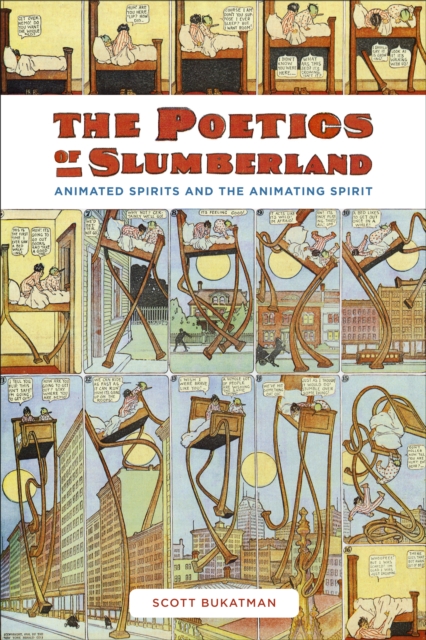
In The Poetics of Slumberland, Scott Bukatman celebrates play, plasmatic possibility, and the life of images in cartoons, comics, and cinema. Bukatman begins with Winsor McCay's Little Nemo in Slumberland to explore how and why the emerging media of comics and cartoons brilliantly captured a playful, rebellious energy characterized by hyperbolic emotion, physicality, and imagination. The book broadens to consider similar \"animated\" behaviors in seemingly disparate media—films about Jackson Pollock, Pablo Picasso, and Vincent van Gogh; the musical My Fair Lady and the story of Frankenstein; the slapstick comedies of Jerry Lewis; and contemporary comic superheroes—drawing them all together as the purveyors of embodied utopias of disorder.
eBook