
Catalogue Search | MBRL


Are you sure you want to remove the book from the shelf?

{{itemTitle}}
1,155
result(s) for
"PERFORMING ARTS / Dance / Modern."
Sort by:

Pilobolus : a story of dance and life
The dynamic history of theinnovative, beloved, and critically acclaimed dance theater company, withrevelatory behind-the-scenes details of its creators and significant works The ingeniously innovative and enduringly popularAmerican dance theatre company Pilobolus has helped redefine, remix, andrejuvenate the essence of dance with its eclectic sensibility and daringathleticism. Now, for the first time, the story of Pilobolus, from itscounterculture origins through its pop-culture triumphs and contemporary globalacclaim, is revealed in a book that will entrance longtime admirers andnewcomers alike. Written with unprecedented accessto the companywith insights from unpublished archival materials and interviewswith its founders, dancers, and current artistic directorsand featuring bothclassic and never-before-seen photos, Pilobolus offers previously untolddetails about the groups history and the creation of its most significantworks. Robert Pranzatelli describes the company's genesis in a Dartmouth danceclass in 1971 and how Pilobolus revolutionized dance with its blend ofsensuality, physical achievement, and visual wit. In these pages, the troupe performson Broadway, travels the world, and by the late 1980s secures a place in dancehistory, while its growth is marked by periods of internal conflict,challenges, and change. As Pilobolus continues to morph, invent, and thrive withthe arrival of new artists and collaborators, its story encompasses love, loss,grief, and rebirth, as well as insights into the secrets of the creativeprocesshow performers and choreographers think and work.More than ahistory, Pilobolus is a narrative of life and art, and the vitality thatinfuses and inspires both when they align and inhabit each other.
eBook
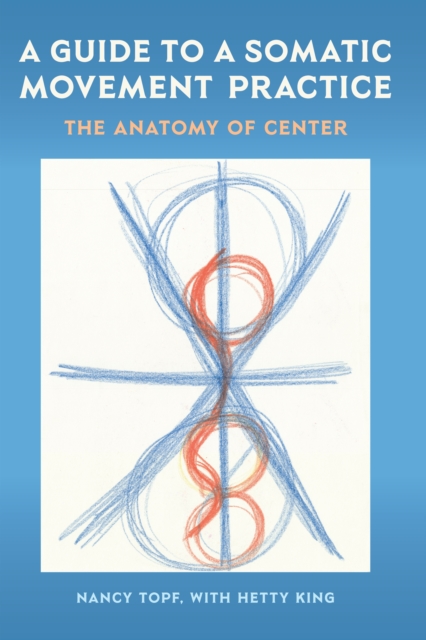
A Guide to a Somatic Movement Practice
An introduction to embodied movement through the work of
a dance education pioneer
In this introduction to the work of somatic dance education
pioneer Nancy Topf (1942-1998), readers are ushered on a journey to
explore the movement of the body through a close awareness of
anatomical form and function. Making available the full text of
Topf's The Anatomy of Center for the first time in print,
this guide helps professionals, teachers, and students of all
levels integrate embodied, somatic practices within contexts of
dance, physical education and therapy, health, and mental
well-being.
Hetty King, a movement educator certified in the Topf Technique®,
explains how the ideas in this work grew out of Topf's involvement
in developing Anatomical Release Technique-an important concept in
contemporary dance-and the influence of earlier innovators Barbara
Clark and Mabel Elsworth Todd, founder of the approach to movement
known as \"ideokinesis.\" Featuring lessons written as a dialogue
between teacher, student, and elements of the body, Topf's material
is accompanied by twenty-one activities that allow readers to use
the book as a self-guided manual. A Guide to a Somatic Movement
Practice is a widely applicable entry point into the tradition
of experiential anatomy and its mindful centering of the living,
breathing body.
eBook
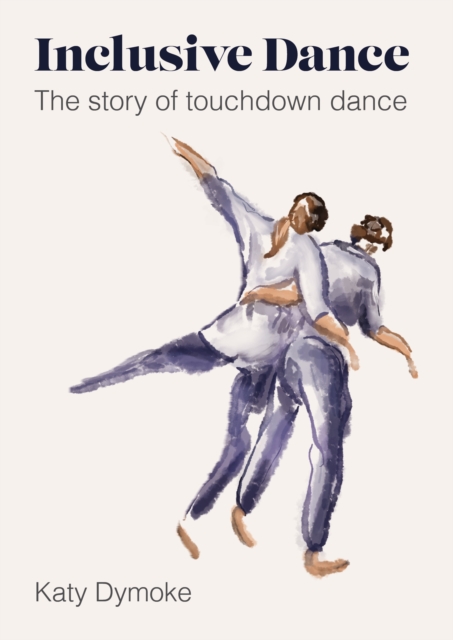
Inclusive Dance
Inclusive Dance is an ethnography of disability arts, and historiographic overview of the 1980s when many new disability arts groups came to fruition. Touchdown Dance was the research 'ambition' of dancer Steve Paxton and theatre maker and psychotherapist Anne Kilcoyne, involving visually impaired and sighted adults in Contact Improvisation - a dyadic movement form requiring physical contact. Katy Dymoke took over Touchdown Dance in 1994 and refers here to archives, accounts and personal experience to share the learning that has been shared over the years to today. Touch and movement are vital for accessibility and inclusion and modality specific approaches were devised to ensure a democratic process towards the inclusion of visually impaired people in a pro-touch activity. The continuum of movement based methods fills the gaps in polarities of visual and nonvisual and a two-way membrane interlinks all the participants in a body focused learning experience. The mutable membrane becomes a heuristic device for the relational realm, a locus for debate, for change. Touch deprivation, exclusion and inequality are the consequence of an inaccessible visually dominant society. Three point of view chapters - from two visually impaired and one sighted company dancer - further describe the performance work, revealing how lives are changed and why sociocultural inclusion is imperative.
eBook
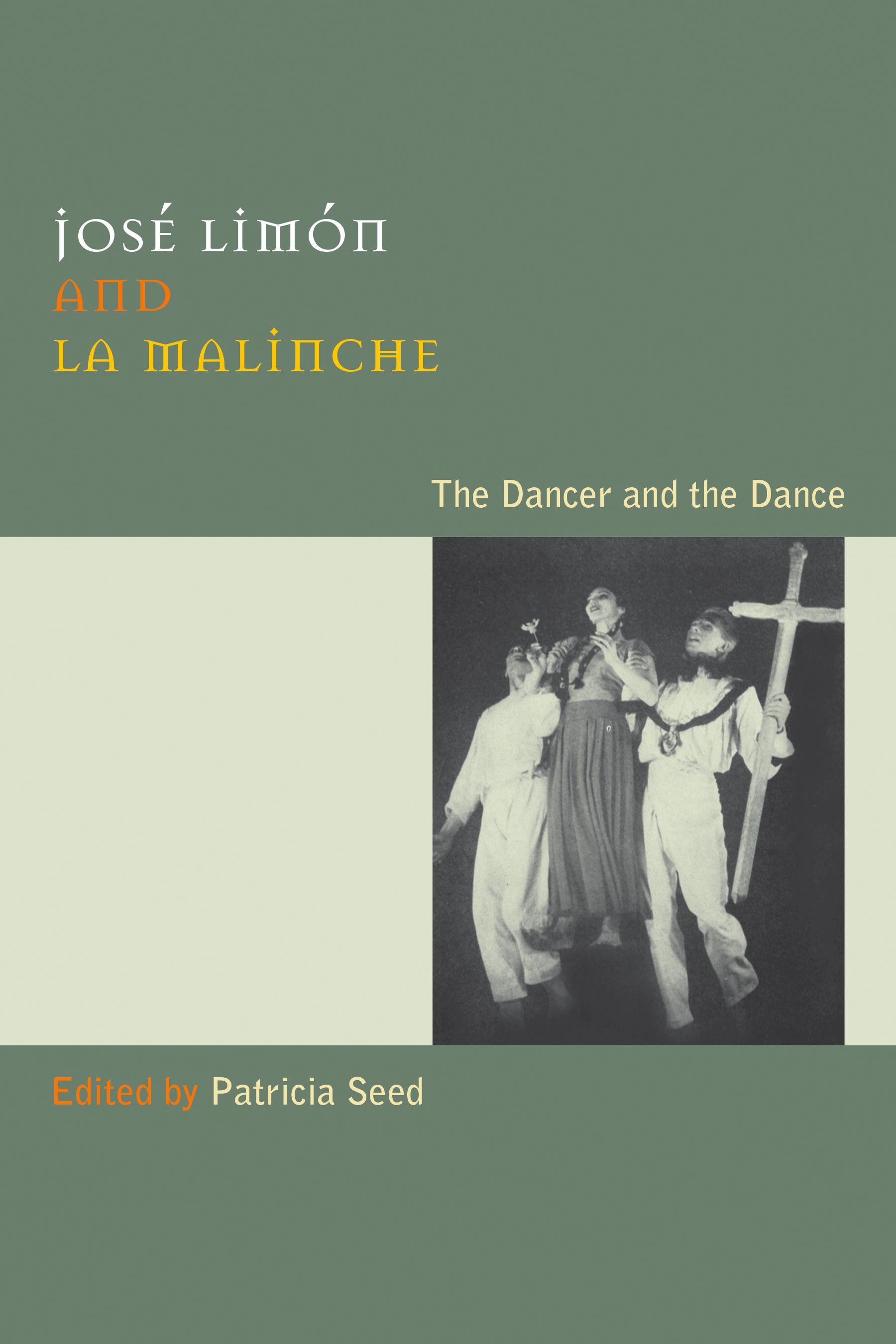
José Limón and La Malinche
José Limón (1908-1972) was one of the leading figures of modern dance in the twentieth century. Hailed by the New York Times as \"the finest male dancer of his time\" when the José Limón Dance Company debuted in 1947, Limón was also a renowned choreographer who won two Dance Magazine Awards and a Capezio Dance Award, two of dance's highest honors. In addition to directing his own dance company, Limón served as artistic director of the Lincoln Center's American Dance Theater and also taught choreography at the Juilliard School for many years. In this volume, scholars and artists from fields as diverse as dance history, art history, Mesoamerican ethnohistory, Mexican American studies, music studies, and Mexican history come together to explore one of José Limón's masterworks, the ballet La Malinche. Offering many points of entry into the dance, they examine La Malinche from various angles, such as Limón's life story and the influence of his Mexican heritage on his work, an analysis of the dance itself, the musical score composed by Norman Lloyd, the visual elements of props and costumes, the history and myth of La Malinche (the indigenous woman who served the Spanish conquistador Hernán Cortés as interpreter and mistress), La Malinche's continuing presence in Mexican American culture, and issues involved in a modern restaging of the dance. Also included in the book is a DVD written and directed by Patricia Harrington Delaney that presents the ballet in its entirety, accompanied by expert commentary that sets La Malinche within its artistic and historical context.
eBook
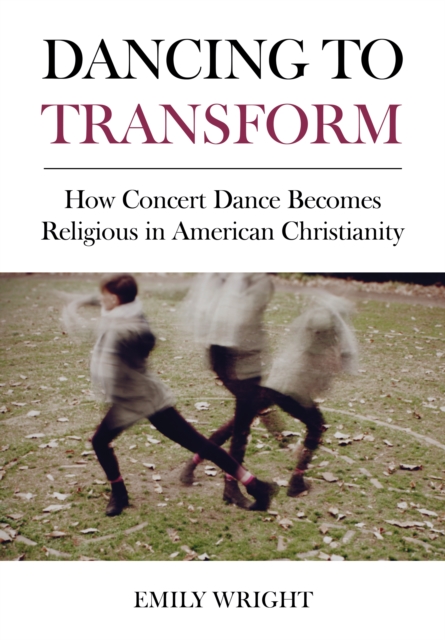
Dancing to Transform
Uses original studies of four dance companies to examine the religious lives of American Christians who are also professional dancers. Explores how practices of dancing and Christianity, and experience and performance contexts influence and shape approaches to creating, transforming and performing dance. 10 b/w illus.
eBook

Teaching Dancing with Ideokinetic Principles
In examining ideokinesis and its application to the teaching and practice of dancing, Drid Williams introduces readers to the work of Dr. Lulu Sweigard (1895-1974), a pioneer of ideokinetic principles. Drawing on her experiences during private instructional sessions with Sweigard over a two-year span, Williams discusses methods using imagery for improving body posture and alignment for ease of movement. Central to Williams's own teaching methods is the application of Sweigard's principles and general anatomical instruction, including how she used visual imagery to help prevent bodily injuries and increasing body awareness relative to movement. Williams also emphasizes the differences between kinesthetic (internal) and mirror (external) imagery and shares reactions from professional dancers who were taught using ideokinesis. Williams's account of teaching and practicing ideokinesis is supplemented with essays by Sweigard, William James, and Jean-Georges Noverre on dancing, posture, and habits. Teaching Dancing with Ideokinetic Principles offers an important historical perspective and valuable insights from years of teaching experience into how ideokinesis can shape a larger philosophy of the dance.
eBook

The Body of the People
The Body of the People is the first comprehensive study of dance and choreography in East Germany. More than twenty years after the fall of the Berlin Wall, Jens Richard Giersdorf investigates a national dance history in the German Democratic Republic, from its founding as a Communist state that supplanted the Soviet zone of occupation in 1949 through the aftermath of its collapse forty years later, examining complex themes of nationhood, ideology, resistance, and diaspora through an innovative mix of archival research, critical theory, personal narrative, and performance analysis. Giersdorf looks closely at uniquely East German dance forms—including mass exercise events, national folk dances, Marxist-Leninist visions staged by the dance ensemble of the armed forces, the vast amateur dance culture, East Germany’s version of Tanztheater, and socialist alternatives to rock ‘n’ roll—to demonstrate how dance was used both as a form of corporeal utopia and of embodied socialist propaganda and indoctrination.
The Body of the People also explores the artists working in the shadow of official culture who used dance and movement to critique and resist state power, notably Charlotte von Mahlsdorf, Arila Siegert, and Fine Kwiatkowski. Giersdorf considers a myriad of embodied responses to the Communist state even after reunification, analyzing the embodiment of the fall of the Berlin Wall in the works of Jo Fabian and Sasha Waltz, and the diasporic traces of East German culture abroad, exemplified by the Chilean choreographer Patricio Bunster.
eBook

Butoh
Both a refraction of the bombings of Hiroshima and Nagasaki and a protest against Western values, butoh is a form of Japanese dance theater that emerged in the aftermath of World War II. Sondra Fraleigh chronicles the growth of this provocative art form from its midcentury founding under a sign of darkness to its assimilation in the twenty-first century as a poignant performance medium with philosophical and political implications._x000B__x000B_Through highly descriptive, thoughtful, and emotional prose, Fraleigh traces the transformative alchemy of this metaphoric dance form by studying the international movement inspired by its aesthetic mixtures. While butoh has retained a special identity related to its Japanese background, it also has blossomed into a borderless art with a tolerant and inclusive morphology gaining prominence in a borderless century. _x000B__x000B_Employing intellectual and aesthetic perspectives to reveal the origins, major figures, and international development of the dance, Fraleigh documents the range and variety of butoh artists around the world with first-hand knowledge of butoh performances from 1973 to 2008. Her definitions of butoh's morphology, alchemy, and philosophy set a theoretical framework for poetic and engaging articulations of twenty butoh performances in Japan, Europe, India, and the West. With a blend of scholarly research and direct experience, she also signifies the unfinished nature of butoh and emphasizes its capacity to effect spiritual transformation and bridge cultural differences.
eBook


Come home Charley Patton
Come home Charley Patton is a moving and an imaginative memoir documenting the Civil Rights Era and contemporary southern culture. Intricately layered and deeply arresting, Ralph Lemon's research on the African American experience intertwines personal anecdotes and family remembrances with diaristic accounts of the making of a dance, as Lemon journeys the mythic roads of migration—visiting the sites of lynchings, following the paths of Civil Rights marches, and meeting the descendants of early blues musicians. Come home Charley Patton is a rich, transcendent text, and a historically-charged meditation on memory in America. It is a formidable finale for the Geography trilogy (including Geography and Tree), three books connected thematically by racial identity and the related dance projects choreographed by Lemon. Generously illustrated with family photos, original art, and photos of the performance, the book will take its place in the canon of great African American writing.
eBook