
Catalogue Search | MBRL


Are you sure you want to remove the book from the shelf?

{{itemTitle}}
2,621
result(s) for
"PERFORMING ARTS / Reference."
Sort by:

Humour and Irony in Dutch Post-war Fiction Film
If Dutch cinema is examined in academic studies, the focus is usually on pre-war films or on documentaries, but the post-war fiction film has been sporadically addressed. Many popular box-office successes have been steeped in jokes on parochial conflicts, vulgar behavior and/or on sexual display, towards which Dutch people have often felt ambivalent. At the same time, something like a 'Hollandse school', a term first coined in the 1980s, has manifested itself more firmly, with the work of Alex van Warmerdam, pervaded in deadpan irony as its biggest eye-catcher. Using seminal theories of humor and irony as an angle, this study scrutinizes a great number of Dutch films on the basis of categories such as low-class comedies; neurotic romances; deliberate camp; cosmic irony, or grotesque satire. Hence, Humour and Irony in Dutch Post-war Fiction Film makes surprising connections between films from various decades: Flodder and New Kids Turbo; Spetters and Simon; Rent a Friend and Ober;
eBook

American Postfeminist Cinema
In light of their tremendous gains in the political and professional sphere, and their ever expanding options, why do most contemporary American films aimed at women still focus almost exclusively on their pursuit of a heterosexual romantic relationship? American Postfeminist Cinema explores this question and is the first book to examine the symbiotic relationship between heterosexual romance and postfeminist culture. The book argues that since 1980, postfeminism's most salient tensions and anxieties have been reflected in the American romance film. Case studies of a broad range of Hollywood and independent films reveal how the postfeminist romance cycle is intertwined with contemporary women's ambivalence and broader cultural anxieties about women's changing social and political status. Key Features: Offers a new perspective on both popular American romance films and postfeminist cultural criticism by examining the symbiotic relationship between romance and postfeminism. Analyses the recurring narrative and discursive patterns of postfeminist cinema. Includes 13 case studies of popular postfeminist films and other media texts, including television programmes. Continues the tradition of feminist analysis of romance as a significant media genre for women.
eBook

Rethinking the Hollywood Teen Movie
Reconsidering tropes such as the male juvenile delinquent figure, the makeover and the teen vampire, the book uses a series of detailed case studies to provide an innovative overview of the Hollywood teen movie and its construction of teen identity.
eBook

French Film in Britain
In a market long dominated by Hollywood, French films are consistently the most widely distributed non-English language works. French cinema, however, appears to undergo a transformation as it reaches Britain, becoming something quite different to that experienced by audiences at home. Drawing on extensive archival research the authors examine in detail the discourses, debates and decisions which have determined the place accorded to French cinema in British film culture. In so doing they provide a fascinating account of this particular instance of transnational cinematic traffic while simultaneously shedding new light on British film history. From the early days of the Film Society, via the advent of the X certificate to the new possibilities of video and DVD, this book reveals the complex and detailed history of the distribution, exhibition, marketing and reception of French cinema in Britain.
eBook

War pictures : cinema, violence, and style in Britain, 1939-1945
In this original and engaging work, author Kent Puckett looks at how British filmmakers imagined, saw, and sought to represent its war during wartime through film. The Second World War posed unique representational challenges to Britain’s filmmakers. Because of its logistical enormity, the unprecedented scope of its destruction, its conceptual status as total, and the way it affected everyday life through aerial bombing, blackouts, rationing, and the demands of total mobilization, World War II created new, critical opportunities for cinematic representation.
Beginning with a close and critical analysis of Britain’s cultural scene, War Pictures examines where the historiography of war, the philosophy of violence, and aesthetics come together. Focusing on three films made in Britain during the second half of the Second World War—Michael Powell and Emeric Pressburger’s The Life and Death of Colonel Blimp (1943), Lawrence Olivier’s Henry V (1944), and David Lean’s Brief Encounter (1945)—Puckett treats these movies as objects of considerable historical interest but also as works that exploit the full resources of cinematic technique to engage with the idea, experience, and political complexity of war. By examining how cinema functioned as propaganda, criticism, and a form of self-analysis, War Pictures reveals how British filmmakers, writers, critics, and politicians understood the nature and consequence of total war as it related to ideas about freedom and security, national character, and the daunting persistence of human violence. While Powell and Pressburger, Olivier, and Lean developed deeply self-conscious wartime films, their specific and strategic use of cinematic eccentricity was an aesthetic response to broader contradictions that characterized the homefront in Britain between 1939 and 1945. This stylistic eccentricity shaped British thinking about war, violence, and commitment as well as both an answer to and an expression of a more general violence.
Although War Pictures focuses on a particularly intense moment in time, Puckett uses that particularity to make a larger argument about the pressure that war puts on aesthetic representation, past and present. Through cinema, Britain grappled with the paradoxical notion that, in order to preserve its character, it had not only to fight and to win but also to abandon exactly those old decencies, those “sporting-club rules,” that it sought also to protect.
eBook
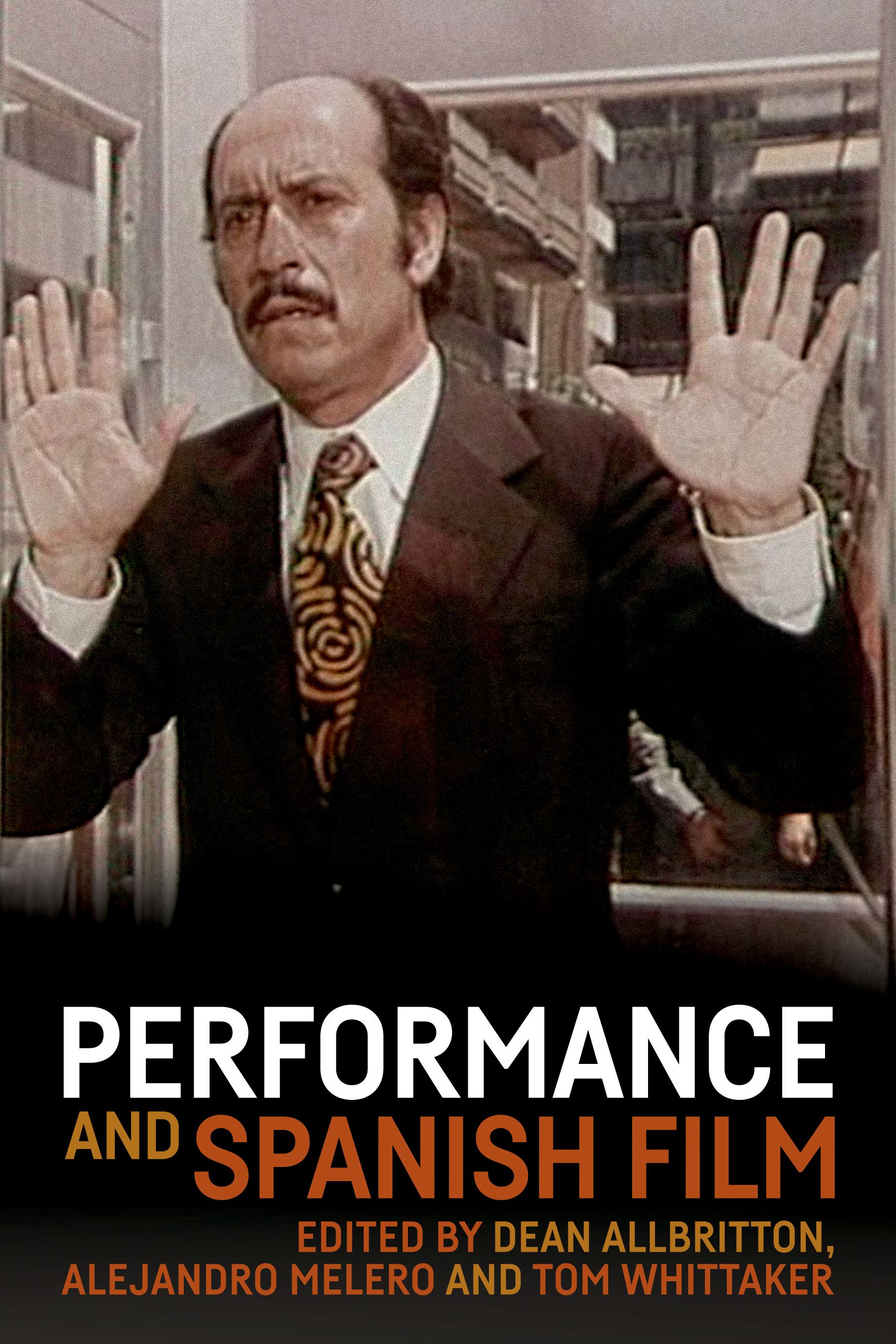
Performance and Spanish film
Performance and Spanish film is the first book to provide a detailed study of screen acting in Spanish film. With fifteen original essays by leading scholars of Spanish film, the book casts light on the manifold meanings, methods and influences of Spanish screen performance, from the silent era to the present day. In doing so, the book provides bold new readings of the work of significant Spanish actors and filmmakers, from Javier Bardem, Penélope Cruz and Alfredo Landa, to Pedro Almodóvar, Carlos Saura and Alejandro Amenábar. The fine-grained study of acting in each chapter also provides a means of exploring broader questions surrounding Spanish film practices, culture and society.Performance and Spanish film will be essential reading for both students and scholars of Spanish film alike, as well as to those more broadly interested in the history of screen acting.
eBook

Fiery Cinema
What was cinema in modern China? It was, this book tells us, a dynamic entity, not strictly tied to one media technology, one mode of operation, or one system of aesthetic code. It was, in Weihong Bao's term, an affective medium, a distinct notion of the medium as mediating environment with the power to stir passions, frame perception, and mold experience. InFiery Cinema,Bao traces the permutations of this affective medium from the early through the mid-twentieth century, exploring its role in aesthetics, politics, and social institutions.
Mapping the changing identity of cinema in China in relation to Republican-era print media, theatrical performance, radio broadcasting, television, and architecture, Bao has created an archaeology of Chinese media culture. Within this context, she grounds the question of spectatorial affect and media technology in China's experience of mechanized warfare, colonial modernity, and the shaping of the public into consumers, national citizens, and a revolutionary collective subject. Carrying on a close conversation with transnational media theory and history, she teases out the tension and affinity between vernacular, political modernist, and propagandistic articulations of mass culture in China's varied participation in modernity.
Fiery Cinemaadvances a radical rethinking of affect and medium as a key insight into the relationship of cinema to the public sphere and the making of the masses. By centering media politics in her inquiry of the forgotten future of cinema, Bao makes a major intervention into the theory and history of media.
eBook

Feminisms
This book combines compelling analyses of contemporary images of women and their narratives with insightful reflections and interviews on the developments and differentiation in the history, theory, and practice of women and film and in the larger field of media studies.
eBook

John Wayne’s World
In a film career that spanned five decades, John Wayne became a U.S. icon of heroic individualism and rugged masculinity. His widespread popularity, however, was not limited to the United States: he was beloved among moviegoers in Asia, Africa, Latin America, and Europe. InJohn Wayne's World, Russell Meeuf considers the actor's global popularity and makes the case that Wayne's depictions of masculinity in his most popular films of the 1950s reflected the turbulent social disruptions of global capitalism and modernization taking place in that decade.
John Wayne's Worldplaces Wayne at the center of gender- and nation-based ideologies, opening a dialogue between film history, gender studies, political and economic history, and popular culture. Moving chronologically, Meeuf provides new readings ofFort Apache,Red River,Hondo,The Searchers,Rio Bravo, andThe Alamoand connects Wayne's characters with a modern, transnational masculinity being reimagined after World War II. Considering Wayne's international productions, such asLegend of the LostandThe Barbarian and the Geisha, Meeuf shows how they resonated with U.S. ideological positions about Africa and Asia. Meeuf concludes that, in his later films, Wayne's star text shifted to one of grandfatherly nostalgia for the past, as his earlier brand of heroic masculinity became incompatible with the changing world of the 1960s and 1970s. The first academic book-length study of John Wayne in more than twenty years,John Wayne's Worldreveals a frequently overlooked history behind one of Hollywood's most iconic stars.
eBook

Hanan al-cinema : affections for the moving image
An examination of experimental cinema and media art from the Arabic-speaking world that explores filmmakers' creative and philosophical inventiveness in trying times. In this book, Laura Marks examines one of the world's most impressive, and affecting, bodies of independent and experimental cinema from the last twenty-five years: film and video works from the Arabic-speaking world. Some of these works' creative strategies are shared by filmmakers around the world; others arise from the particular economic, social, political, and historical circumstances of Arab countries, whose urgency, Marks argues, seems to demand experiment and invention. Grounded in a study of infrastructures for independent and experimental media art in the Arab world and a broad knowledge of hundreds of films and videos, Hanan al-Cinema approaches these works thematically. Topics include the nomadism of the highway, nostalgia for '70s radicalism, a romance with the archive, algorithmic and glitch media, haptic and networked space, and cinema of the body. Marks develops an aesthetic of enfolding and unfolding to elucidate the different ways that cinema can make events perceptible, seek connections among them, and unfold in the bodies and thoughts of audiences. The phrase Hanan al-cinema expresses the way movies sympathize with the world and the way audiences feel affection for, and are affected by, them. Marks's clear and expressive writing conveys these affections in works by such internationally recognized artists and filmmakers as Akram Zaatari, Elia Suleiman, Hassan Khan, Mounir Fatmi, and Joana Hadjithomas and Khalil Joreige, and others who should be better known.
eBook