
Catalogue Search | MBRL


Are you sure you want to remove the book from the shelf?

{{itemTitle}}
6,657
result(s) for
"PERFORMING ARTS - General"
Sort by:

Applying performance : live art, socially engaged theatre and affective practice
\"This book draws upon cognitive and affect theory to examine applications of contemporary performance practices in educational, social and community contexts. The writing is situated in the spaces between making and performance, exploring the processes of creating work defined variously as collaborative, participatory and socially engaged\"-- Provided by publisher.
Book

Performing Piety
In the 1980s, Egypt witnessed a growing revival of religiosity among large sectors of the population, including artists. Many pious stars retired from art, \"repented\" from \"sinful\" activities, and dedicated themselves to worship, preaching, and charity. Their public conversions were influential in spreading piety to the Egyptian upper class during the 1990s, which in turn enabled the development of pious markets for leisure and art, thus facilitating the return of artists as veiled actresses or religiously committed performers.
Revisiting the story she began in\"A Trade like Any Other\": Female Singers and Dancers in Egypt, Karin van Nieuwkerk draws on extensive fieldwork among performers to offer a unique history of the religious revival in Egypt through the lens of the performing arts. She highlights the narratives of celebrities who retired in the 1980s and early 1990s, including their spiritual journeys and their influence on the \"pietization\" of their fans, among whom are the wealthy, relatively secular, strata of Egyptian society. Van Nieuwkerk then turns to the emergence of a polemic public sphere in which secularists and Islamists debated Islam, art, and gender in the 1990s. Finally, she analyzes the Islamist project of \"art with a mission\" and the development of Islamic aesthetics, questioning whether the outcome has been to Islamize popular art or rather to popularize Islam. The result is an intimate thirty-year history of two spheres that have tremendous importance for Egypt-art production and piety.
eBook


Epistolary Entanglements in Film, Media and the Visual Arts
This collection departs from the observation that online forms of communication—the email, blog, text message, tweet—are actually haunted by old epistolary forms: the letter and the diary. By examining the omnipresence of writing across a variety of media, the collection adds the category of Epistolary Screens to genres of self-expression, both literary (letters, diaries, auto-biographies) and screenic (romance dramas, intercultural cinema, essay films, artists’ videos and online media). The category Epistolary encapsulates an increasingly paradoxical relation between writing and the self: first, it describes selves that are written in graphic detail via letters, diaries, blogs, texts, emails and tweets; second, it acknowledges that absence complicates communication, bringing people together in an entangled rather than ordered way. The collection concerns itself with the changing visual/textual texture of screen media and examines what is at stake for our understanding of self-expression when it takes Epistolary forms.
eBook

Embodied consciousness : performance technologies
\"This volume of essays combines research from neuroscience, consciousness studies, performer training systems, modes of creating a staged narrative, Asian aesthetics, and post-modern theories of performance in an examination of the relationship between consciousness and performance. Written by actors, directors, dancers, historians and theorists, the essays participate in the paradigm shift in the humanities and the arts from the textual to the performative. It is precisely that experience that is at the centre of the shift in the scientific study of consciousness. This collection of essays brings together a representation of this paradigm shift and the increasing body of research emerging at the intersections of consciousness and performance from theories of performance training to explorations on the role of performance in the construction of cultural aesthetics and community consciousness\"-- Provided by publisher.
Book
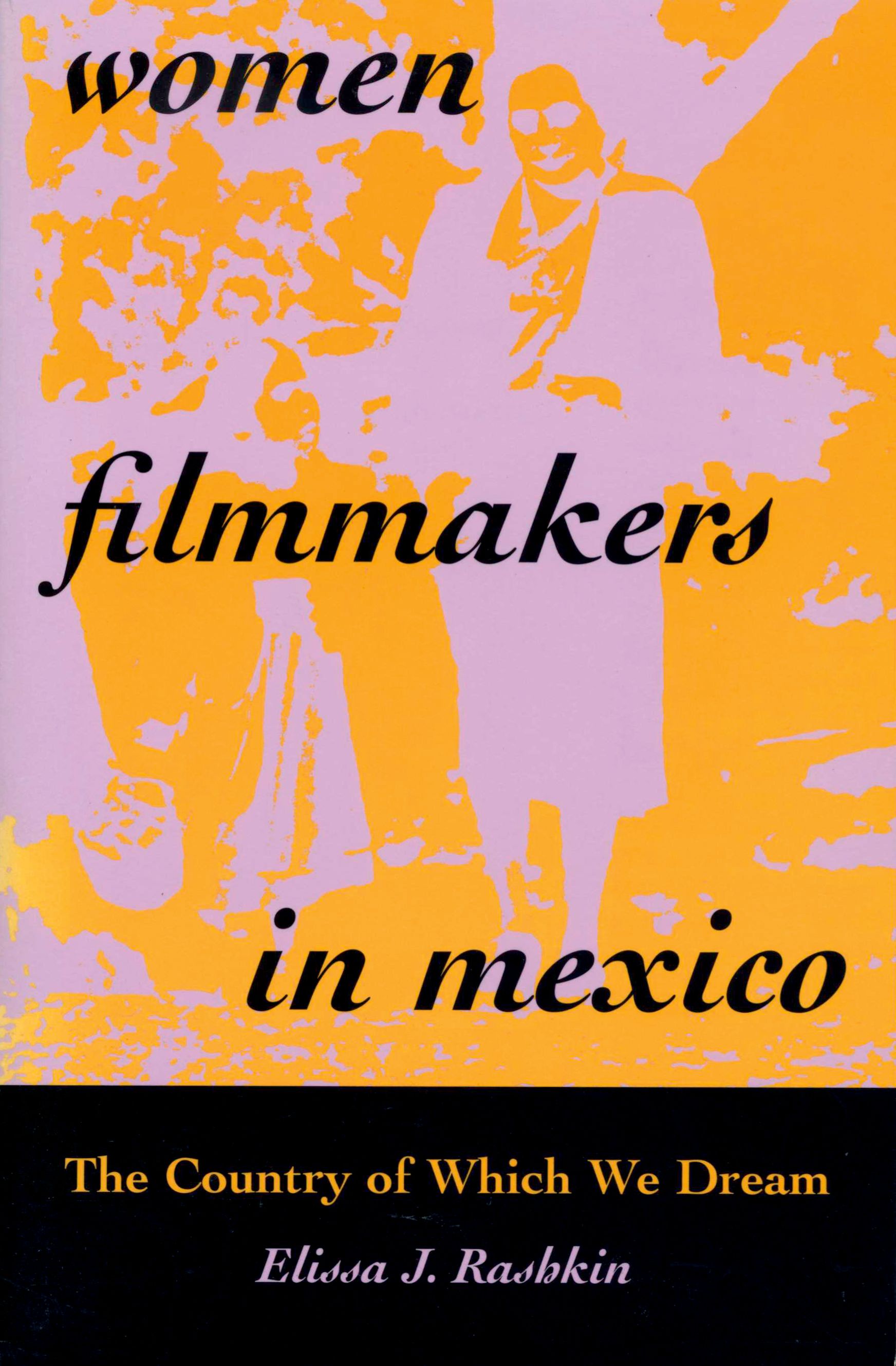
Women Filmmakers in Mexico
Women filmmakers in Mexico were rare until the 1980s and 1990s, when women began to direct feature films in unprecedented numbers. Their films have won acclaim at home and abroad, and the filmmakers have become key figures in contemporary Mexican cinema. In this book, Elissa Rashkin documents how and why women filmmakers have achieved these successes, as she explores how the women's movement, film studies programs, governmental film policy, and the transformation of the intellectual sector since the 1960s have all affected women's filmmaking in Mexico. After a historical overview of Mexican women's filmmaking from the 1930s onward, Rashkin focuses on the work of five contemporary directors—Marisa Sistach, Busi Cortés, Guita Schyfter, María Novaro, and Dana Rotberg. Portraying the filmmakers as intellectuals participating in the public life of the nation, Rashkin examines how these directors have addressed questions of national identity through their films, replacing the patriarchal images and stereotypes of the classic Mexican cinema with feminist visions of a democratic and tolerant society.
eBook

The actor's guide to creating a character : William Esper teaches the Meisner technique
\"Celebrated acting teacher Bill Esper's step-by-step approach to the central problem in acting -- learning to play a character -- as taught in the second year of his acting class\"-- Provided by publisher.
Book

European Cinema
In the face of renewed competition from Hollywood since the early 1980s and the challenges posed to Europe's national cinemas by the fall of the Wall in 1989, independent filmmaking in Europe has begun to re-invent itself. European Cinema: Face to Face with Hollywood re-assesses the different debates and presents a broader framework for understanding the forces at work since the 1960s. These include the interface of \"world cinema\" and the rise of Asian cinemas, the importance of the international film festival circuit, the role of television, as well as the changing aesthetics of auteur cinema. New audiences have different allegiances, and new technologies enable networks to reshape identities, but European cinema still has an important function in setting critical and creative agendas, even as its economic and institutional bases are in transition.
Onder invloed van de rivaliteit met Hollywood en de val van de muur in 1989 vond er in de jaren '90 in veel West-Europese landen een levendig debat plaats over de toekomst van de nationale filmtradities. Van het bestaan van zich onderscheidende 'nationale' stijlen, zoals bijvoorbeeld neo-realisme, zou niet langer kunnen worden uitgegaan. Film zou een benepen kunstvorm geworden zijn, die redding zoekt in het bewaren van de 'nationale' erfenis of hoopt op artistieke vernieuwing van televisie en door de overheid gesubsidieerde prestigeprojecten. In European Cinema blikt Thomas Elsaesser terug op het debat en geeft een genuanceerder beeld van verschillende factoren die sinds de jaren zestig een rol speelden. Er is o.m. aandacht voor de raakvlakken met de 'world cinema' en de opkomst van de Aziatische film, de invloed van het internationale film festival circuit, de rol van televisie en de veranderende esthetiek in auteur-cinema. Nieuwe toeschouwers hebben andere voorkeuren, en nieuwe technologieën bieden de mogelijkheid om bestaande identiteiten te hervormen, maar de Europese cinema heeft nog steeds een belangrijke functie in het vaststellen van kritische en creatieve agenda's, ook al is haar economische en institutionele basis in beweging.
eBook


The Eyes Have It
The Eyes Have Itexplores those rarified screen moments when viewers are confronted by sights that seem at once impossible and present, artificial and stimulating, illusory and definitive.Beginning with a penetrating study of five cornfield sequences-including The Wizard of Oz, Arizona Dream,andSigns-Murray Pomerance journeys through a vast array of cinematic moments, technical methods, and laborious collaborations from the 1930s to the 2000s to show how the viewer's experience of \"reality\" is put in context, challenged, and willfully engaged.Four meditations deal with \"reality effects\" from different philosophical and technical angles. \"Vivid Rivals\" assesses active participation and critical judgment in seeing effects with such works asDefiance, Cloverfield, Knowing,
Thelma & Louise, and more. \"The Two of Us\" considers double placement and doubled experience with such films asThe Prestige, Niagara,andA Stolen Life. \"Being There\" discusses cinematic performance and the problems of believability, highlighting such films asGran Torino, The Manchurian Candidate,
In Harm's Way, and other films. \"Fairy Land\" explores the art of scenic backing, focusing on the fictional world ofBrigadoon,which borrows from both hard-edged realism and evocative landscape painting.
eBook