
Catalogue Search | MBRL


Are you sure you want to remove the book from the shelf?

{{itemTitle}}
1,529
result(s) for
"PETROLEUM EXPORTING COUNTRIES"
Sort by:

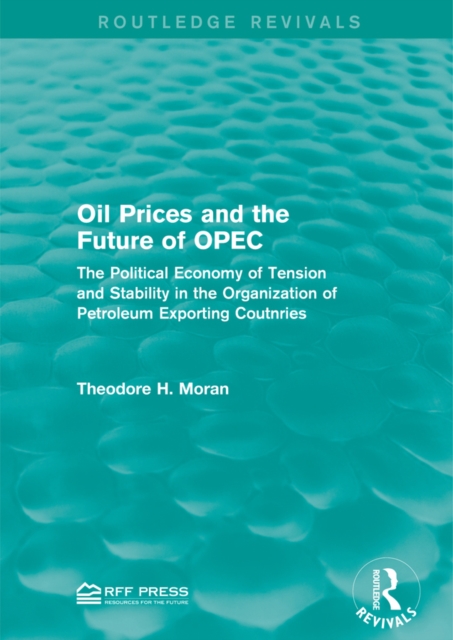
Oil Prices and the Future of OPEC
The policy of the United States and, by extension, that of many oil importing countries, toward OPEC countries is in large part a function of an estimate of the factors that condition oil decisions in exporting countries. In this title, originally published in 1978, Ted Moran examines how immune OPEC can expect to be to the struggles over market shares that traditionally have beset attempts to organize natural resource cartels. Moran’s research leads him to argue that skyrocketing commitments to growth and social betterment leave little slack in national budgets and thus preclude output reductions for any extended period, or at least act as a substantial deterrent, unless such reductions come in support of an effort to raise real oil prices substantially. For any student interested in international policy making, economic development, or environmental studies, this title offers fascinating insights into the oil industry.
Part I: Introduction ; Part II: The Revenue \"Needs\" of the OPEC States ; 1. Saudi Arabia 2. Iran 3. Iraq 4. Venezuela 5. Kuwait, Libya, and the Small Gulf States 6. Nigeria, Indonesia, Algeria, Ecuador, and Gabon 7. OPEC Revenue Needs and Export Preferences; Part III: OPEC Exports and Unwanted Spare Capacity ; Part IV: Implications and Conclusions ; Appendix A: Saudi Arabia; Appendix B: Iran
eBook


'X V. OPEC' Judgment No. SV 1/2021 (SV 1/2021-23)
Austrian Constitutional Court-Organization of the Petroleum Exporting Countries (OPEC) - immunity and inviolability of international organizations-European Convention on Human Rights (ECHR)-right of access to a court-'Waite and Kennedy v. Germany'.
Journal Article

Oil rents, economic growth, and CO2 emissions in 13 OPEC member economies: Asymmetry analyses
Oil rents significantly contribute to income in OPEC member economies and could have environmental consequences. The present study explores the asymmetrical effects of oil rents on CO 2 emissions in 13 current OPEC economies using a period 1970–2019, and also tests the Environmental Kuznets Curve (EKC) hypothesis. Long-run results show that economic growth has a positive effect, and its square term has a negative effect on CO 2 emissions in Algeria, Congo, Gabon, Kuwait, and Saudi Arabia, which validate the EKC in these countries. However, a U-shaped effect of income growth on emissions is substantiated in Angola. Moreover, rising oil rents have positive effects on CO 2 emissions in Saudi Arabia, Angola, Congo, Equatorial Guinea, Iran, Iraq, Kuwait, and Libya, and have negative impacts in Algeria, Nigeria, and the UAE. Decreasing oil rents reduce CO 2 emissions in Angola, Equatorial Guinea, Libya, and Saudi Arabia, and increase emissions in Algeria. Moreover, asymmetrical effects of oil rents on emissions are found in Angola, Congo, Iran, Iraq, Kuwait, Nigeria, Equatorial Guinea, Saudi Arabia, and the UAE. The short-run results show that the EKC is validated in Algeria, Congo, and Libya. However, economic growth shows a monotonic positive impact on emissions in Nigeria, the UAE, and Venezuela. Increasing oil rents show a positive impact on emissions in Angola, Congo, Iran, and Kuwait and carry a negative impact in Algeria and the UAE. In addition, decreasing oil rents increase CO 2 emissions in Algeria, Gabon, Nigeria, and Saudi Arabia. We recommend Angola, Congo, Equatorial Guinea, Iran, Iraq, Kuwait, Libya, and Saudi Arabia to adopt tight environmental policies in times of increasing oil rents to avoid the negative environmental consequences of oil rents.
Journal Article

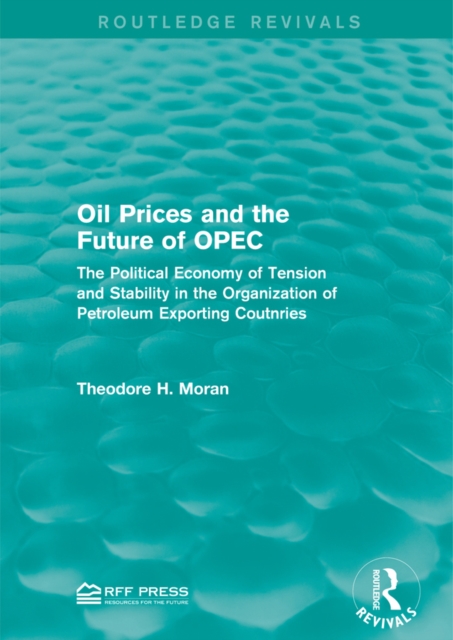
Oil Prices and the Future of OPEC
The policy of the United States and, by extension, that of many oil importing countries, toward OPEC countries is in large part a function of an estimate of the factors that condition oil decisions in exporting countries. In this title, originally published in 1978, Ted Moran examines how immune OPEC can expect to be to the struggles over market shares that traditionally have beset attempts to organize natural resource cartels. Moran's research leads him to argue that skyrocketing commitments to growth and social betterment leave little slack in national budgets and thus preclude output reductions for any extended period, or at least act as a substantial deterrent, unless such reductions come in support of an effort to raise real oil prices substantially. For any student interested in international policy making, economic development, or environmental studies, this title offers fascinating insights into the oil industry.
eBook