
Catalogue Search | MBRL


Are you sure you want to remove the book from the shelf?

{{itemTitle}}
42,766
result(s) for
"PHILIPPINES"
Sort by:

Tropical gardens of the Philippines
Aimed at gardening enthusiasts, Tropical Gardens contains a rare glimpse into some of the most beautiful tropical gardens in the world today. It presents 42 spectacular contemporary gardens, both big and small.
Book

Migration and New Media
How do parents and children care for each other when they are separated because of migration? The way in which transnational families maintain long-distance relationships has been revolutionised by the emergence of new media such as email, instant messaging, social networking sites, webcam and texting. A migrant mother can now call and text her left-behind children several times a day, peruse social networking sites and leave the webcam for 12 hours achieving a sense of co-presence.
Drawing on a long-term ethnographic study of prolonged separation between migrant mothers and their children who remain in the Philippines, this book develops groundbreaking theory for understanding both new media and the nature of mediated relationships. It brings together the perspectives of both the mothers and children and shows how the very nature of family relationships is changing. New media, understood as an emerging environment of polymedia, have become integral to the way family relationships are enacted and experienced. The theory of polymedia extends beyond the poignant case study and is developed as a major contribution for understanding the interconnections between digital media and interpersonal relationships.
\"[A] compelling read about the ‘connected transnational family’ … The most compelling aspect of this book, this reader would argue, is its simultaneous engagement with a broad range of entangled issues. It convincingly puts mothers/children, migration/communication, mediation/relationship, past/present/future as well as theory/research practice into close encounter throughout.\" - Nicole Shephard, LSE Review of Books
\"Mirca Madianou and Daniel Miller seem to have formed a dream team when they embarked on their mutual research project on transnational families and the role of ICTs ... In my view, the book succeeds in what many authors fruitlessly pursue: deriving convincing theory from an abundance of vast qualitative data. It is a highly engaging book that is rich in detail without drowning the reader in it. Its empirical and theoretical innovations make it a highly recommended book for any scholar working on media and migration, long-distance communication and the increasingly complex media environments that enfold us.\" - Kevin Smets, Communications
\"An exemplary and groundbreaking study, with contributions to theory and our understanding of polymedia in everyday life, this stands out as an extraordinary read on the technology of relationships.\" - Zizi Papacharissi, University of Illinois-Chicago, USA
\"This fascinating, richly detailed book investigates the role that fluency across multiple digital platforms plays in enabling mothering and caring to be sustained at a distance. A genuine breakthrough.\" - Nick Couldry , Goldmiths, University of London, UK
\"With deft weaving of interview material and theorization...Mirca Madianou and Daniel Miller have produced an important and useful theoretical intervention that advances our understanding of the social life of transnational communities.\" - Radha S. Hegde, Media, Culture, & Society
Mirca Madianou is Senior Lecturer in Media and Communication at the University of Leicester, UK. She is the author of Mediating the Nation and several articles on the social consequences of the media.
Daniel Miller is Professor of Material Culture at the Department of Anthropology, University College London, UK. His most recent books include Tales from Facebook and Digital Anthropology (edited with Heather Horst).
1. Introduction 2. Philippines at the Forefront of Globalisation 3. The Hidden Motivations of Migration 4. Crafting Love: Letters and Cassettes 5. The Cultural Contradictions of Transnational Motherhood: The Mothers’ Perspective 6. The Children’s Perspective 7. Technologies of Relationships 8. Polymedia 9. A Theory of Mediated Relationships 10. Appendix: A Note on Method
eBook

Philippines
\"In this book, readers will learn about the unique and defining features of the Philippines. Vibrant, full-color photos and carefully leveled text will engage young readers as they learn more about the key details of the country including geography, climate, culture, and resources. Compelling questions encourage further inquiry\"-- Provided by publisher.
Book

Communal Intimacy and the Violence of Politics
Communal Intimacy and the Violence of
Politics explores the notoriously brutal
Philippine war on drugs from below. Steffen Bo Jensen and
Karl Hapal examine how the war on drugs folded itself into communal
and intimate spheres in one Manila neighborhood, Bagong Silang.
Police killings have been regular occurrences since the birth of
Bagong Silang. Communal Intimacy and the Violence of
Politics shows that although the drug war was introduced from
the outside, it fit into and perpetuated already existing gendered
and generational structures. In Bagong Silang, the war on drugs
implicated local structures of authority, including a justice
system that had always been deeply integrated into communal
relations. The ways in which the war on drugs transformed these
intimate relations between the state and its citizens, and between
neighbors, may turn out to be the most lasting impact of Duterte's
infamously violent policies.
eBook


Counter-Hispanization in the Colonial Philippines
In Counter-Hispanization in the Colonial Philippines , the author analyzes the literature and politics of 'spiritual conquest' in order to demonstrate how it reflected the contribution of religious ministers to a protracted period of social anomie throughout the mission provinces between the sixteenth-eighteenth centuries. By tracking the prose of spiritual conquest with the history of the mission in official documents, religious correspondence, and public controversies, the author shows how, contrary to the general consensus in Philippine historiography, the literature and pastoral politics of spiritual conquest reinforced the frontier character of the religious provinces outside Manila in the Americas as well as the Philippines, by supplanting the (absence of) law in the name of supplementing or completing it. This frontier character accounts for the modern reinvention of native custom as well as the birth of literature and theater in the Tagalog vernacular.
eBook

Spotlight on the Philippines
Learn about the daily lives of the people and the country's unique culture festivals and dances.
BOOK
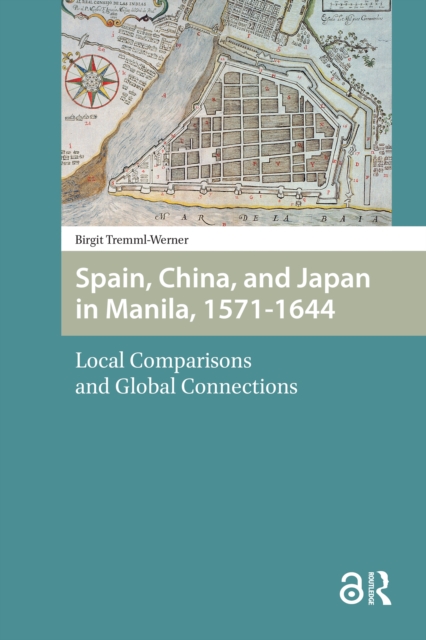
Spain, China, and Japan in Manila, 1571-1644
This book offers a new perspective on the connected histories of Spain, China, and Japan as they emerged and developed following Manila’s foundation as the capital of the Spanish Philippines in 1571. Examining a wealth of multilingual primary sources, Birgit Tremml-Werner shows that crosscultural encounters not only shaped Manila’s development as a “Eurasian” port city, but also had profound political, economic, and social ramifications for the three premodern states. Combining a systematic comparison with a focus on specific actors during this period, this book addresses many long-held misconceptions and offers a more balanced and multifaceted view of these nations’ histories.
eBook

All about the Philippines : stories, songs, crafts and games for kids
This family-friendly Philippines children's book is packed with fun facts about Filipino culture, history, and daily life!
BOOK

Policing America’s Empire
At the dawn of the twentieth century, the U.S. Army swiftly occupied Manila and then plunged into a decade-long pacification campaign with striking parallels to today’s war in Iraq. Armed with cutting-edge technology from America’s first information revolution, the U.S. colonial regime created the most modern police and intelligence units anywhere under the American flag. In
Policing America’s Empire Alfred W. McCoy shows how this imperial panopticon slowly crushed the Filipino revolutionary movement with a lethal mix of firepower, surveillance, and incriminating information. Even after Washington freed its colony and won global power in 1945, it would intervene in the Philippines periodically for the next half-century—using the country as a laboratory for counterinsurgency and rearming local security forces for repression. In trying to create a democracy in the Philippines, the United States unleashed profoundly undemocratic forces that persist to the present day. But security techniques bred in the tropical hothouse of colonial rule were not contained, McCoy shows, at this remote periphery of American power. Migrating homeward through both personnel and policies, these innovations helped shape a new federal security apparatus during World War I. Once established under the pressures of wartime mobilization, this distinctively American system of public-private surveillance persisted in various forms for the next fifty years, as an omnipresent,
sub rosa matrix that honeycombed U.S. society with active informers, secretive civilian organizations, and government counterintelligence agencies. In each succeeding global crisis, this covert nexus expanded its domestic operations, producing new contraventions of civil liberties—from the harassment of labor activists and ethnic communities during World War I, to the mass incarceration of Japanese Americans during World War II, all the way to the secret blacklisting of suspected communists during the Cold War. “With a breathtaking sweep of archival research, McCoy shows how repressive techniques developed in the colonial Philippines migrated back to the United States for use against people of color, aliens, and really any heterodox challenge to American power. This book proves Mark Twain’s adage that you cannot have an empire abroad and a republic at home.”—Bruce Cumings, University of Chicago “This book lays the Philippine body politic on the examination table to reveal the disease that lies within—crime, clandestine policing, and political scandal. But McCoy also draws the line from Manila to Baghdad, arguing that the seeds of controversial counterinsurgency tactics used in Iraq were sown in the anti-guerrilla operations in the Philippines. His arguments are forceful.”—Sheila S. Coronel, Columbia University “Conclusively, McCoy’s
Policing America’s Empire is an impressive historical piece of research that appeals not only to Southeast Asianists but also to those interested in examining the historical embedding and institutional ontogenesis of post-colonial states’ police power apparatuses and their apparently inherent propensity to implement illiberal practices of surveillance and repression.”—Salvador Santino F. Regilme, Jr.,
Journal of Current Southeast Asian Affairs “McCoy’s remarkable book . . . does justice both to its author’s deep knowledge of Philippine history as well as to his rare expertise in unmasking the seamy undersides of state power.”—
POLAR: Political and Legal Anthropology Review Winner, George McT. Kahin Prize, Southeast Asian Council of the Association for Asian Studies
eBook