
Catalogue Search | MBRL


Are you sure you want to remove the book from the shelf?

{{itemTitle}}
6,954
result(s) for
"PHILOSOPHY / Eastern"
Sort by:

Indian Philosophy A-Z
This alphabetical handbook defines and explains key concepts in classical Indian philosophy, identifies controversial issues, describes major traditions of thought, and locates influential thinkers in their intellectual and religious contexts.
eBook
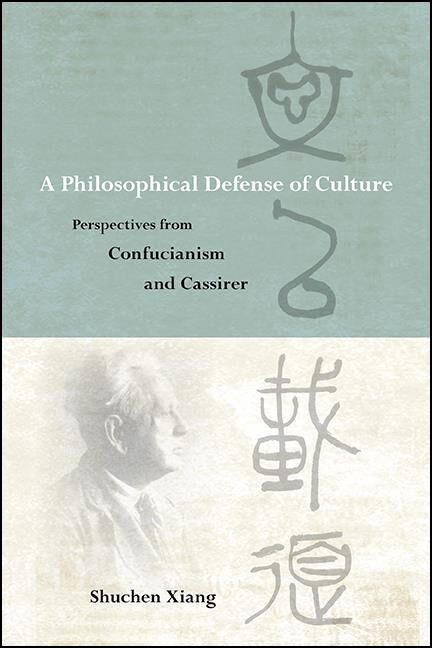
A Philosophical Defense of Culture
In A Philosophical Defense of Culture , Shuchen Xiang draws
on the Confucian philosophy of \"culture\" and Ernst Cassirer's
philosophy of symbolic forms to argue for the importance of
\"culture\" as a philosophic paradigm. A defining ideal of
Confucian-Chinese civilization, culture ( wen ) spans
everything from natural patterns and the individual units that make
up Chinese writing to literature and other refining vocations of
the human being. Wen is thus the soul of Confucian-Chinese
philosophy. Similarly, as a philosopher who bridged the classical
age of German humanism and postwar modernity, Cassirer implored his
and future generations to think of humankind in terms of their
culture and to think of the human being as a \"symbolic animal.\" The
philosophies of culture of these two traditions, very much
compatible, are of urgent relevance to our contemporary epoch.
Xiang describes the similarity of their projects by way of their
conception of the human being, her relationship to nature, the
relationship of human culture to nature, the importance of cultural
pluralism, and the role of the arts in human life, as well as the
metaphysical frameworks that gave rise to such conceptions.
Combining textual exegesis in classical Chinese texts and an
exposition of Cassirer's most important insights against the
backdrop of post-Kantian philosophy, this book is philosophy
written in a cosmopolitan mode, arguing for the contemporary
philosophical relevance of \"culture\" by drawing on and bringing
together two different but strikingly similar streams in our world
tradition.
eBook

Wilfrid Sellars
Wilfrid Sellars (1912-1989) has been called the most profound and systematic epistemological thinker of the twentieth century. Many of his ideas have become widely acknowledged, including his attack on the \"myth of the given,\" his functionalist treatment of intentional states, his proposal that psychological concepts are like theoretical concepts, and his suggestion that attributions of knowledge locate the knower \"in the logical space of reasons.\" Notoriously difficult to understand, Sellars' essays are not only complex but were never situated within a unified exposition of his thought.. Willem deVries addresses these difficulties and provides a careful reading and remarkable overview of Sellars' systematic philosophy. This clear, comprehensive, and authoritative work will become the standard point of reference for all philosophers seeking to understand Sellars's hugely significant body of work.
eBook

Yinyang
The concept of yinyang lies at the heart of Chinese thought and culture. The relationship between these two opposing, yet mutually dependent, forces is symbolized in the familiar black and white symbol that has become an icon in popular culture across the world. The real significance of yinyang is, however, more complex and subtle. This brilliant and comprehensive analysis by one of the leading authorities in the field captures the richness and multiplicity of the meanings and applications of yinyang, including its visual presentations. Through a vast range of historical and textual sources, the book examines the scope and role of yinyang, the philosophical significance of its various layers of meanings and its relation to numerous schools and traditions within Chinese (and Western) philosophy. By putting yinyang on a secure and clear philosophical footing, the book roots the concept in the original Chinese idiom, distancing it from Western assumptions, frameworks and terms, yet also seeking to connect its analysis to shared cross-cultural philosophical concerns.
eBook

Li Zhi, Confucianism, and the Virtue of Desire
Li Zhi (1527-1602) was a bestselling author with a devoted
readership. His biting, shrewd, and visionary writings with titles
like A Book to Hide and A Book to Burn were both
inspiring and inflammatory. Widely read from his own time to the
present, Li Zhi has long been acknowledged as an important figure
in Chinese cultural history. While he is esteemed as a stinging
social critic and an impassioned writer, Li Zhi's ideas have been
dismissed as lacking a deeper or constructive vision. Pauline C.
Lee convincingly shows us otherwise. Situating Li Zhi within the
highly charged world of the late-Ming culture of \"feelings,\" Lee
presents his slippery and unruly yet clear and robust ethical
vision. Li Zhi is a Confucian thinker whose consuming concern is a
powerful interior world of abundance, distinctive to each
individual: the realm of the emotions. Critical to his ideal of the
good life is the ability to express one's feelings well. In the
work's conclusion, Lee brings Li Zhi's insights into conversation
with contemporary philosophical debates about the role of feelings,
an ethics of authenticity, and the virtue of desire.
eBook

Zhang Zai's philosophy of qi
Qi (\"vital energy\") is one of the most important concepts in Chinese philosophy and culture, and neo-Confucian Zhang Zai plays a pivotal role in developing the notion. This book provides a thorough and proper understanding of his thoughts.
eBook

Beyond Oneness and Difference
Beyond Oneness and Difference considers the development of
one of the key concepts of Chinese intellectual history,
Li . A grasp of the strange history of this term and its
seemingly conflicting implications-as oneness and differentiation,
as the knowable and as what transcends knowledge, as the good and
as the transcendence of good and bad, as order and as
omnipresence-raises questions about the most basic building blocks
of our thinking. This exploration began in the book's companion
volume, Ironies of Oneness and Difference , which detailed
how formative Confucian and Daoist thinkers approached and
demarcated concepts of coherence, order, and value, identifying
both ironic and non-ironic trends in the elaboration of these core
ideas. In the present volume, Brook Ziporyn goes on to examine the
implications of Li as they develop in Neo-Daoist metaphysics and in
Chinese Buddhism, ultimately becoming foundational to Song and Ming
dynasty Neo-Confucianism, the orthodox ideology of late imperial
China. Ziporyn's interrogation goes beyond analysis to reveal the
unsuspected range of human thinking on these most fundamental
categories of ontology, metaphysics, epistemology, and ethics.
eBook

Confucius and the Analects Revisited
Featuring contributions by preeminent scholars of early China, Confucius and the Analects Revisited: New Perspectives on Composition, Dating, and Authorship advances and examines debates surrounding the history of the Confucian Analects.
eBook

What do philosophers believe?
What are the philosophical views of contemporary professional philosophers? We surveyed many professional philosophers in order to help determine their views on 30 central philosophical issues. This article documents the results. It also reveals correlations among philosophical views and between these views and factors such as age, gender, and nationality. A factor analysis suggests that an individual's views on these issues factor into a few underlying components that predict much of the variation in those views. The results of a metasurvey also suggest that many of the results of the survey are surprising: philosophers as a whole have quite inaccurate beliefs about the distribution of philosophical views in the profession.
Journal Article

Reason Unbound
This intriguing work offers a new perspective on Islamic Peripatetic philosophy, critiquing modern receptions of such thought and highlighting the contribution it can make to contemporary Western philosophy. Mohammad Azadpur focuses on the thought of Alfarabi and Avicenna, who, like ancient Greek philosophers and some of their successors, viewed philosophy as a series of spiritual exercises. However, Muslim Peripatetics differed from their Greek counterparts in assigning importance to prophecy. The Islamic philosophical account of the cultivation of the soul to the point of prophecy unfolds new vistas of intellectual and imaginative experience and accords the philosopher an exceptional dignity and freedom. With reference to both Islamic and Western philosophers, Azadpur discusses how Islamic Peripatetic thought can provide an antidote to some of modernity's philosophical problems. A discussion of the development of later Islamic Peripatetic thought is also included.
eBook